Showing posts with label Movie. Show all posts

Tuesday, March 08, 2011

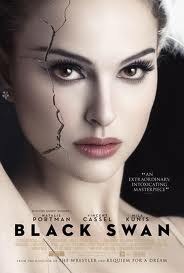
The ‘Black Swan’ Mara

by Shen Shi'an, The Buddhist Channel, March 6, 2011

Singapore -- ‘Black Swan’ tells the story of extreme clash of conflict in body and mind. A ballerina feels compelled by her idealism and expectations of others to play both the pure and restrained white swan and the malevolent and seductive black swan in a revised version of Swan Lake. In order to embody her roles perfectly, she swings to and from between goodness and evil. Can she play a perfect white and black swan at almost the same time? A whole list of other paradoxical extremes are explored too…


Perfection in dance is not just about hard discipline, but about letting go for natural ease too – even as the black swan. Where does creativity and control find a balancing point, or are the meant to be balanced at all? How much effortful grit is needed for effortless grace? There is control in true letting go and letting go in true control. Can stiff control and wanton passion be moderated? Is a good dancer ultimately repeatedly and robotically precise in the same old ways? If so, how is it original, raw and creative art? Even the revamped take on Swan Lake had to be covered repeatedly in rehearsals, rebirthing through heaven and hell.


Too schizophrenically improbable, perhaps it is not realistic for one person to rapidly and alternatively play both swans. Overly immersed in the roles and challenged by not being used to playing the doppelgänger ‘evil twin’, the ballerina develops psychosis, as she starts to internalise the black swan, who expresses her metamorphosis inside out by hallucinating the sprouting black feathers out of her body. The more she externalises the black swan, the more she internalises the black swan. In a vicious cyclic manner, she become the performance as the performance becomes her. The darker her consciousness became, the more she imagined another ballerina who plays the black swan too to be truly black-hearted too. This is the externalisation of inner demons.

In an artistically sickening way, the more indulgent she is, the more expressive she is. The more punishing her practice became, the more ‘rewarding’ it twistedly became. The creative arts for bettering the psyche can be damning and destructive too when taken to its extremes, as with any other thing. As with other controversial arts and even films, perhaps the Buddha’s teaching of the Middle Path should be heeded – to recognise that nothing should be taken to any extreme. Is this movie an extreme one then, of how the arts can become dark? Yes, in a way, but yet paradoxically extremely good as a cautionary tale!

Perhaps the performance arts for serious actors who become the acting is not karmically neutral after all? If one always plays villainous roles as if they are real, does one create some negative karma? Must drama always be so dramatic to be real, or is real life a subtler and grayer mix of light and darkness? Paralleling real life, she dies in the last scene of as the white swan, with her innocence killed by the black swan within. Seemingly a tragically bleak and beautiful ending, as she exclaims her last dance to be perfect. But is art worth dying for, especially that based on illusion? As her instructor advised earlier, ‘The only person standing in your way [of performing well] is you. It’s time to let her go. Lose yourself.’ But she had lost too much – she had lost sight of her perfect Buddha-nature too, overwhelmed by her inner Mara.

Thursday, February 17, 2011

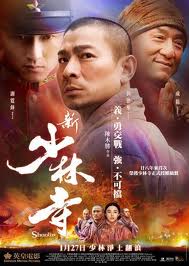
Some ‘Shaolin’ Showdown!

by Shen Shi'an, The Buddhist Channel, Feb 17, 2011

Singapore -- As usual, reflective of the prevalent Chinese Buddhist custom, the monks in the movie ‘Shaolin’ (which is an independent ‘sequel’ to ‘The Shaolin Temple’ made in 1982) chant ‘Amituofo’ (the name of Amitabha Buddha) a lot, in the face of various challenges, come what may. (This was also the case in the first Shaolin movie!) Also reflective of prevalent erroneous English subtitling, the words say ‘Buddha be praised!’


This is an improvement from ‘Oh my God!’ - that I witnessed in another Buddhist film! Who is Amituofo? His name means ‘the Buddha (fully enlightened being) of immeasurable light (of compassion and wisdom) and life (due to his immeasurable merits). ‘Namo Amituofo’, which is also commonly chanted, would mean ‘Praise to, or refuge in Amituofo’.


When fellow Buddhist greet one another with an exclamation of ‘Amituofo’, this expresses one’s wish for another to be aligned with Amituofo’s blessings, and with one’s own Buddha-nature, which is not different from Amituofo’s Buddha-nature. This is why his name is recited both in times of rejoice and empathy, for there is simply no moment when it is not beneficial to be mindful of Buddha. Ultimately, faithful single-minded mindfulness of Amituofo leads to birth in his Pure Land, where enlightenment is guaranteed. So prevalent are the Pure Land teachings that it becomes a catch phrase of the Chan (Chinese Zen) Shaolin monks too. Tragically yet inspiringly, many monks, including the abbot, are featured uttering ‘Amituofo’ as they sacrifice themselves to save the masses.

In the story, a power-crazed warlord, played by real-life Buddhist Andy Lau who wrote the film’s thoughtful Dharma-themed song ‘Awakening’, strives to wipe out every potential enemy, including his sworn brother. Despite the self-delusion that he is in total control, he was really controlled by his immense greed, hatred and suspicion, that gave him no peace of mind. In his words on his enemy, ‘If he does not die, I cannot sleep.’ What he needed to eradicate were his defilements, not anyone else. As his paranoia goes overboard, he endangers his family, the very ones he wanted to protect… leading to his daughter’s death and separation from his wife.

Stripped of his status and wealth, he remorsefully returns to Shaolin for refuge – both in the physical and spiritual sense. He becomes thoroughly humbled by the magnanimous monks, whom he had arrogantly ridiculed earlier. As we can guess, the path to true redemption from his grave negative karma isn’t going to run too smoothly. While he releases his grief and anger through training in the famed Shaolin martial arts, his past returns to haunt him, and he has to confront the archenemy who betrayed him. There is no escape from one’s conscience and karmic consequences! It wasn’t exactly with guns and swords this time though, but with power of the Buddha’s teachings.

Earlier as a warlord, he had budged into the monastery in murderous pursuit of a man. About to kill him, he was interrupted by the abbot, who advised that if only he lets go of his fear (of losing power) and deluded thinking, and abides in kindness instead, he would be able to see everywhere as a Pure Land, thus not ‘needing’ to kill. Rebutting him, he asked the abbot where Pure Land was, since war is raging right at the gates of the monastery. Indeed, this is tension between the ideology of an internal and an external Pure Land. One might be able to abide in peace and calm personally, but what about the countless others in turmoil and those who cause it? Recognising this, the monastery steps up its social engagement with its humanitarian efforts to help the needy.

It is challenging indeed to influence everyone to realise their internal Pure Land, which would make this world an instant Pure Land for all. This suffering ridden world is no Pure Land to most of us, which is precisely why we aspire to be reborn in an actual one adorned with Amituofo’s blessings. Between the desire to escape and that to stay to help is the Middle Path of doing one’s best to make this world a Pure Land, even as one practises to be born in a real Pure Land, so as to train swiftly under the tutelage of the enlightened, and to swiftly return to Samsara to guide the rest to the same liberation. In the Mahayana sutras, Amituofo’s Pure Land is universally recommended by other Buddhas to be the best spiritual school. This explains his great popularity!

The warlord renounces his worldly ways and becomes a diligent monk who finally redeems himself by showing his enemy that he needn’t become the demon he once was, that there is an alternative, by choosing to make peace with oneself and others. In saving the villain from himself, he also redeemed himself from the villain that he once was. In the Shaolin showdown that unfortunately destroyed the monastery, what left indestructible was the Buddhist spirit of selfless sacrifice for the greater good. The story also exemplifies how difficult it is for monastics to steer clear from convoluted human politics. Even Shaolin is not a Pure Land. There is no hard line between worldliness and spirituality. Yet, it also shows how fugitives of unjust law can always take refuge in the laws of the Buddhadharma. ‘Amituofo!’

Monday, January 24, 2011

Where Is Your ‘Hereafter’?

by Shen Shi'an, The Buddhist Channel, Jan 24, 2010

Singapore -- ‘Hereafter’ proposes something ‘simple’ yet mysterious. It speaks of the great possibility of existence hereafter, which seems certain to exist, yet being beyond the scope of our clear understanding.


Even the protagonist psychic featured, who is masterful in communicating with the deceased is unsure of where they go to after ‘hanging around’ for a while. In the Buddhist teachings, ‘hereafter’ can be many places indeed, for there are 31 planes of existence, which are more broadly classified into 6 main realms. And there is no fixed hereafter in the ‘forever and ever’ sense, due to the cycles of rebirth and dynamic changes in karma. This is why it takes more than an ordinary psychic to be able to discern the whereabouts of long deceased ones.

While the nihilistically ‘pragmatic’ might feel that the question of what lies hereafter to be the most irrelevant existential question of all, a sound answer does however gives us crucial spiritual bearings. As uttered in the film, ‘a life about death is no life at all’. True, but to really live life is to be concerned with death too, for it puts this short and vulnerable life in perspective. 

The Buddha spoke against the erroneous romanticism of the hereafter as eternal nothingness (that’s nihilism), and as eternal heaven or hell (that’s eternalism). Well, the subtle life force that is the consciousness is too powerful to be simply snubbed out at the end of this physical life, and what natural or supernatural justice is there to deserve everlasting pleasure or pain due to limited good and evil done?

The hereafter depicted in the film is one that is supposedly experienced by many – of blurred silhouettes against bright white light. In the Buddhist context, these figures can be other denizens of the in-between, of the weightless bardo state (when the consciousness stripped free from the body), or even the (de)forming manifestations of personal demons and guardians. With many coloured lights representative of various spiritual tendencies, a precarious state this is, as described in great detail in the Bardo Thodol (‘The Tibetan Book of the Dead’). When one follows the lights or beings one is attached to, one would be reborn accordingly. In the Mahayana teachings, the safest way out is to be mindful of Amituofo (Amitabha Buddha) by reciting his name with utmost sincerity, to which he will manifest and lead one to his Pure Land, where enlightenment is guaranteed.

Dying is not universally blissful, as often relayed by those with Near-death Experiences (NDE). If death is always nice, there would be no encounters with woeful wandering spirits! Though there are many culturally conditioned NDE accounts due to collective perceptions, there are many other different ones too. Those with unpleasant experiences seldom return to share them. This is due to the intensity of their negative karma, that barred them from second chances at the expired lives. Perhaps accidentally, the film might promote the use of psychic services to communicate with the deceased. While this can be comforting as a means to relay final messages, it can be dangerous if attachment and regret on both sides of the living and dead is reinforced, which might prevent the deceased from taking a good rebirth. And yes, as the story warns, beware of false prophets, fake mediums and pseudo psychic scientists!

On the science of the afterlife, the recently deceased Dr. Ian Stevenson of Virginia University had meticulously documented more than 3,000 cases of those with recollections of their past lives. Many children were discovered with such detailed memories, which upon rigorous investigation, correspond to persons who lived before they were born. In over 40 cases, there were discoveries of unusual birthmarks and birth defects, which matched post-mortem records of those the children claimed to have been. They even displayed familiar habits towards their previous surviving family members. While playing, many would also incorporate elements of their claimed past professions! Tellingly, they also had phillias and phobias linked to their manner of death.

Curiously, the director Clint Eastwood featured a scene where a boy shook his head upon hearing a preacher say there is nothing to fear about death if one believes in Christ. Perhaps he is open-minded enough to explore the possibility of making his next movie based on the phenomenon of rebirth? Still skeptical of the existence of any hereafter (and the worth of doing good)? Here is a sound fourfold way of reasoning to solve this problem, as advised by the Buddha in the Kalama Sutta. Firstly, if there is afterlife, and if there is the law of karma, you will have a good rebirth if you do good. Secondly, if there is no afterlife, and if there is no karma, you will live happily now, as you are free of ill will (since you do good). Thirdly, if evil befalls the evil, it will not affect you as you do no evil. Fourthly, if evil does not befall the evil, as you do no evil and do good instead, you are pure both ways. There you have it, the very assuring Four Assurances!

Original article here.

Tuesday, January 11, 2011

Gulliver's Travels Vs Moggallana's Journey

by Shen Shi'an, The Buddhist Channel, Jan 7, 2010

Singapore -- The movie tagline of the 2010 take on 'Gulliver's Travels' says, 'A magical land. A comedy of epic proportions.' The protagonist's encounter with Lilliput, though fantastical, shares real lessons too.


That's what makes fantasy stories truly magical - when they are creatively practical! Comedic as this version is, it does tell of a common tragedy too, of faulty habitual perceptions, of how we tend to judge one another by appearances. 


Literally 'huge' discrimination by size is featured in the film! Big guys are not always beasts or monsters; they can be gentle or funny giants too. (Oh yes, you won't miss the 'giant' product placement of a mega-sized iPhone as seen by Lilliputians!)

Gulliver the office mailman is used to belittling himself, calling himself one of the 'little people', who should preferably not even be seen or heard while he does his work. When he reaches the land of the tiny, he is forced to be the inverse, the big star, the centre of attraction. And hey, he starts to enjoy his status after being customarily demonised for a while at first. The ordinary guy became extraordinary in an extraordinary environment, simply by virtue of his relative size? He does have a genuine virtues too - a good heart, which is given the chance to shine.

A small nobody can indeed become a big somebody - but only if one's heart is big enough. Size does matter to some extent, but physical size does not matter as much as the size of the heart! This is another way of looking at 'mind over matter'! 
 
His was a case of reversal of fortune... which reverses to its extreme opposite when he later stumbles into a land of giants. This reminds me of Moggallana, the Buddha's disciple foremost in supernormal powers, who travelled to a distant world system, where he 'came' to be worm-sized, humbled in the mind-blowing presence of giant humans... with a giant Buddha! Buddhism is in tune with the reality of relativity - in terms of cosmic dimensions too. 

And any size is ultimately 'empty' of any inherent significance unless there is relative comparison!

Original article here.

Friday, October 01, 2010

'Detective Dee' for Dharma?

by Shen Shi'an, The Buddhist Channel, Oct 1, 2010

Singapore -- The movie 'Detective Dee and the Mystery of the Phantom Flame', which of course mixes fact and fiction, creatively and colourfully tells the story of how, in 690 A.D., a giant Bodhisattva-like image was made in the likeness of China's first and only female 'emperor', Wu Zetian. Its creation created unrest when her key supporting men seemingly spontaneously combusted in ominous ways shortly before the completion of the statue.

 As the statue is to be launched on the very day she formally ascends the throne, any mishap that challenges it is seen as dangerous rebellion. Desperate to uncover the murderer, she appoints the ingenious Dee Renjie, who was once an imprisoned rebel himself, to solve the mystery. Realising the gravity of guarding her rule for the peace and well-being of the nation, he embarked on solving the whodunit.

Perhaps somewhat true in spirit to history, the film paints Wu Zetian in a deliberately ambiguous light, as it is hard to tell if she really was unscrupulous in her ways to attain the throne, or if she had the best of intentions. While history is rewritten by its winners, it is at times sullied by its opponents too. Interestingly, upon hindsight today, despite her faults, many historians view her to had been a capable and attentive leader on the whole.

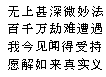
Empress Wu was also one of the most powerful champions of Buddhism in China. During her reign in the Tang Dynasty, Buddhism reached its golden age. This is partly due to her promotion of Buddhism over Confucianism and Daoism as the preferred state religion. Almost for sure, she did this to counter traditional Confucian thought against female rule too. Unbeknownst to many, the beautiful 'Verse for Opening Sutras'(???)is attributed to her, which is still chanted by many Buddhists today:


The unsurpassed, profound, and wonderful Dharma
Is difficult to encounter in thousands of millions of eons
Now that I see and hear it, I shall receive and uphold it
And vow to realise the Tathagata’s true message.


Wu commissioned the construction of many Buddha images, with the most outstanding being the huge statues chiselled into the Longmen Grottes. It is said that the largest Buddha image there, of Vairocana Buddha, was carved in her likeness - probably in an attempt to justify her rule with the 'blessings' of the enlightened! Did she do this out of great ego or great compassion for the masses? Was it to remind all that she 'received' a divine mandate from the Buddha, that she is one with him? Is it inevitable that the growth of politics and religion must intertwine in a love-hate relationship?

For a brief period, she claimed to be Maitreya Buddha to garner more support! However, according to the sutras, Maitreya arrives to be the next Buddha in some 56 billion years' time! Royalty in the past, no matter what nation they are of, often like to imagine or even sincerely believe they are 'enlightened' or endorsed by the heavens to rule, that they are even above the reproach of the wise. But if this is so, how can they ever be overthrown? When they fall out of divine favour?

The truth is, bad kings and queens are deluded, who manifest egoism instead of enlightenment. However, their rule does stand for the collective karma of the masses at that point in time. The sutras speak of the rare coming and going of great noble Wheel-turning kings though, who practise, rule and spread the Dharma. In recorded history, the great King Asoka of ancient India perhaps strove to be one. Nice try! May all leaders of all nations continue to awaken to universal compassion and wisdom, to rule in more enlightened ways!

Original article can be found here.

Tuesday, September 15, 2009

Who is 'The Time Traveller's Wife'?

by Shen Shi'an, The Buddhist Channel, Sep 2, 2009

Dharma Inspired Movie Review: www.thetimetravelerswifemovie.com

Singapore -- Adapted from the bestseller, ‘The Time Traveller’s Wife’ tells of a man’s peculiar condition, of being involuntarily subject to fading away, only to manifest in another time and place. It is suspected to be a medical anomaly, though Buddhism would see it essentially as karmic.

Time-travel is impossible though – as it would mess up the workings of cause and effect, with some effects becoming causes instead. Irreconcilable temporal paradoxes aside, the romantic story is really a wonderful skilful means for relaying important messages on life, love and loss. With Brad Pitt as the executive producer, who was involved in the making of ‘The Curious Case of Benjamin Button’, the story bears some similar themes on the passage of time.

When Henry time-travels, he always leaves and arrives naked. Nope, clothes and possessions cannot be brought along. This is reminiscent of how we come and depart from life itself – though when reborn, even one’s body cannot be brought along! The only baggage possible is one’s immaterial karma. Every time Henry re-manifests, he finds himself disoriented. Sounds like rebirth again, with a difference being his ready recollection of his ‘past lives’, which allows him to more readily increase in wisdom. Despite Henry’s repeated attempts to change the course of key unfortunate events in his past, he is unable to do so, which reminds us of how we cannot change our past; only our perception of it.

Being forced to live a new life every time he time-travels, Henry is able to visit many ‘random’ places and times, yet unable to find refuge anywhere. However, he is able to more or less will himself to visit a particular girl time and again, probably due to strong karmic affinity with her. Clare becomes his only anchor amidst the instability of it all. Her love became his refuge. For us Buddhists, the Dharma would be our true refuge, which is the unchanging truth and path that leads us to the transcendence of life and death. Sadly, even worldly love changes in time, which is what makes it worldly… though it can change to be purer, to be ever more spiritual love too.

Like Henry, we too travel back and forth in time. Yes, of course we travel forwards to the future. How do we travel backwards to the past then? By recollection of the past, by reconciling past regrets with remorse and remedial action. What else can we do? In a sense, Henry was stuck in the past too, as he still instinctively tries to alter its course many times. Of course, for the story to progress, he does get to change some minor events. It’s interesting how he sometimes re-manifests in a same place during a different time, as if forgetting the past when he was there… before feeling some deja vu. Sounds like how some recall past lives?

How do you love someone who is absent half or more of the time? How do you care for someone who comes and goes unexpectedly? Clare realises that her love doesn’t have to fade away just because Henry does. She also learns that love does not need to have and to hold always. The story brings the meaning of long-distance relationship to another dimension! The truth is, due to the practical demands and karmic unpredictability of life and death, we too are often unwittingly absent friends and lovers, also liable to ‘depart’ suddenly. Indeed, we can only love in the moment – in this moment; not in any other moment in the past or future. ‘Now’ is all we have. Even when Henry returns to the past, he has no choice but to live in the ‘now’ then.

At some point, Clare becomes frustrated with the cycle of waiting for Henry’s occasional returns, after which she would have to fret his disappearance into thin air. Henry himself said that he never wanted anything he could not stand losing… till he met her. However, all worldly love is mortal, with or without his unique condition. Is love futile then? Not al all. As Stonepeace put it, ‘Because everything changes from moment to moment, we should treasure everything in this moment. Because everything changes from moment to moment, we should not be attached to anything in this moment.’

Love that treasures the beloved despite changes, that is not clingy, must the the truest of love. In the case of Henry and Clare’s extraordinary relationship, it is much less conditional than ordinary love – because it is literally less physical and more ‘timeless’ – for in the heat of passion, Henry can vanish, and when he reappears, he is always younger or older! Then again, if the beloved changes too drastically, beyond recognition, who would the beloved really be? Wouldn’t loving someone else be the ’same’? Paradoxically, when love for one’s True Love becomes truly unconditional, not dependent on any conditions, who the beloved is doesn’t matter! It’s not fickleness though, because all will be loved equally too.

Henry catches a manifestation of himself dying in the future, and begins to worry for his family. Is it a curse or blessing to know how or when one will die? It would be a curse if one does not know how to face death graciously. It would be a blessing if one learns to accept one’s mortality, and makes the best of the moment before it becomes the last one. Since we will die eventually (unless we transcend the cycle of life and death in time), why not prepare for a meaningful exit, be we with or without knowledge of when we will leave? If we are able to recall our countless arrivals and departures like Henry, would be able to depart more gracefully?

If you can indeed travel back in time, what would you do? Our wisdom would guide us to undo our mistakes. Our compassion would guide us to help whoever we can help. Out of love for Clare, Henry even contemplated returning to the past, to tell a younger Clare not to wait for him. Before he ‘dies’, he likewise does not tell her of how he might return – also to relieve her of the burden of anticipation. Indeed, True Love releases attachment to the beloved, while not letting go of loving itself. This is how True Love gladly endures… life after life – like that of the great selfless Bodhisattvas and Buddhas!

Who is the time traveller’s wife? Beyond Clare alone, we too are like her at times – when we miss the absent beloved ones in our lives. Who is the time traveller? Beyond Henry alone, we too are are like him at times – when we we live on some other ‘timelines’, different from that of the beloved around us. When we live on the same timeline, we are present to one another. When otherwise, we become absent, invisible. Have you been ‘manifesting’ your presence with your love in the moment recently? Don’t wait until it is too late… because you can’t time-travel!

Friday, July 03, 2009

Lighting the way

The Star, June 30, 2009

Malaysian director Ng Lid Sine’s films, The Oil Lamp and The Abbot & The Orphan, clinched awards at the Vesak 2009 International Buddhist Film Festival recently

Kuala Lumpur, Malaysia -- TWO animated films produced by the Buddhist Institute Sunday Dhamma School (BISDS) at the Buddhist Maha Vihara in Brickfields, Kuala Lumpur, won awards at the recent inaugural Vesak 2009 International Buddhist Film Festival (May 9 to 15) in Sri Lanka.

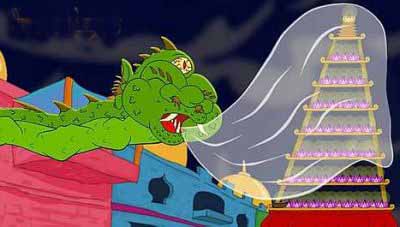
Tale of devotional offering: Mara, the evil one, blowing with all its might to extinguish a tower of oil lamp offerings.

The Oil Lamp clinched the first prize in the International Short Film Competition while The Abbot & The Orphan – The Shrine, Ep 1 received a merit award (the only merit award given by the organising committee) as it exceeded the 12 minute restriction for each short film. Both films were by Malaysian director Ng Lid Sine.

Satoshi Hirayama took second prize for his entry entitled Heart Sutra, a video poetry of the sutra that depicts oneness with the universe. Another Japanese director, Kazuhiko Mizushina, won third prize for Sneakarma, a black comedy, which tells the story of a youth’s intense attachment to sneakers.

Organised jointly by Light of Asia Foundation, The National Film Corporation of Sri Lanka and the Bandaranaike Memorial International Conference Hall, the film festival received over 200 feature, documentary and short films based on Buddhist themes, of which 60 were international entries. Filmmakers from Japan, South Korea, the United States, Britain, Australia, New Zealand, Russia, Germany, Greece, Spain, Italy, Poland, Canada, Brazil, India, Thailand, Malaysia and Sri Lanka competed in the film festival.

Seven shortlisted entries for the International Short Film Competition were showcased on Sri Lanka’s national television during the duration of the film fest. It is hoped that the film fest will continue to grow annually culminating to a grand event in time for the celebration of 2,600 years of Buddhism in 2011.

Ng, 47, director of Cartoon Workshop, received the awards in a ceremony at the New Theatre of the National Film Corporation Sri Lanka in Colombo on June 16. The Oil Lamp tells the tale of a devotional offering of light to Buddha by an old beggar woman. Her devotion is so strong that even Mara, the evil one, is defeated.

“The animation was done some years ago, hence the retro feel to it,” Ng explained. “Characters were based on Indian comic styles with a bit of Asterix thrown in. It took us about three months to complete it,” says Ng.

“The moral behind this nine-minute animation is not how much you give but how you give it.”

The Oil Lamp, says Ng, has never been shown to the local Buddhist community but was presented once to the late Chief High Priest of Malaysia and Singapore, Ven Dr K. Sri Dhammananda.

“The BISDS is continuously searching for ways to propagate the Buddha Dhamma (the Buddha’s teachings) in line with its 80th anniversary theme, ‘Dhamma in Motion’. This animation will most likely be among the movies that BISDS will screen from time to time.”

Presently, Ng is working on a local animated television series and The Abbot & The Orphan animation series, which revolves around an orphan who is cared for by an old and blind abbot.

According to a press release, the Chief High Priest of Malaysia Ven K. Sri Dhammaratana Nayaka Maha Thera was instrumental in getting the films submitted for the competition. He was happy with the success of the BISDS’ first foray in film production and hoped that the BISDS will receive more support for future film productions.

The BISDS principal, Ven. K Sridhamma Thera, said: “The two animated films which were co-produced with Cartoon Workshop were projects undertaken by the BISDS to propagate the Dhamma in its outreach programmes.

“We hope to produce more contemporary productions to enable us to reach out and touch the young minds who have embraced the digital world.”

The BISDS was established in 1929 by Sasana Abhiwurdhi Wardhana Society with the aim of educating children on the Buddhist teaching. It celebrated its 80th anniversary this year and is the oldest Buddhist Sunday School in the country.

The BISDS welcomes sponsors for the production of the The Abbot & The Orphan series as a novel way to disseminate the Buddha Dhamma. The Abbot & The Orphan DVD series which are in English and Mandarin are available from the Buddhist Maha Vihara (% 03-2274 1141).

For further enquiries, contact: Vineeta Serisena (tel: 012-2173 310), Catherine Heng (tel: 012-3921 683), Lau Kai Kong (tel: 012-6757 959) or Jackie Chong (tel: 012-3218 006).

Wednesday, June 17, 2009

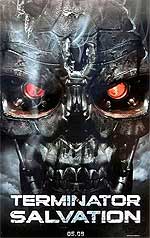
Terminators ‘R’ Us?


by Shen Shi’an, The Buddhist Channel, June 16, 2009

Dharma Inspired Movie Review: http://terminatorsalvation.warnerbros.com

Singapore -- The Terminator saga, as most would know, is about the anthropomorphism and demonisation of high technology. It is a series of extreme cautionary tales on the potential danger of humans going overboard with unchecked technologisation.

Technology is meant to be a means for relieving human suffering, for bringing ease into our lives. However, technology for our convenience can conveniently overtake us if we are unskillful in handling it. Do we make machines to more efficiently help or harm us? ‘Good’ technology might be as easy to master as it is to manipulate, though machines are really intrinsically empty of any fixed characteristics; just as we are. We choose.

In the movie series, we see human rage against merciless machines. But since they were man-made, that humans ‘toyed’ with, terminators ‘r’ us; not really the machines per se! Inhumane robots made by imperfect humans in their own ‘image’! That said, the saga is indeed about the love-hate relationship humans have with machines. Can sentience enter machines? Machines in the future are supposed to have evolved self-awareness, that is slanted towards self-preservation and destruction of anyone against them. Sounds suspiciously like unenlightened human-nature, except that their Mara-like behaviour does not hint of any Buddha-nature. What irony that humans are forced to use more machines to fight machines, with both sides advancing their technologies. It’s no wonder that the saga will continue!

More than a man versus machine action thriller, ‘Terminator Salvation’ is also a terse study of the borderline similarities and differences between both, with the introduction of a cyborg character ambivalent of his true identity. Are we mere biological machines, just as robots are mechanical ones? If a robot simulates sentience, how would we tell if it’s real or not? If the mimicry is realistic, would it be inhumane to terminate one? Which is worthier – robots which simulate compassion, or hardened humans who seem void of compassion? Can a robot develop Buddha-nature? Does a robot have a case if it denies being mere machine? Even if it appears unsure, does this make it any less possibly sentient?

The cyborg who is half-machine chooses his human side to betray the machines. This is while some humans choose their inhumane side by betraying other fellow humans. With a heart of gold, he fights with a lot of heart, while some humans have devolved to become cold, heartless but calculated fighting ‘machines’ – the very enemies they were to fight. The worst thing that happens in war is not losing to the enemy, but to become the enemy by losing one’s humanity. The cyborg makes the ultimate act of sacrifice by donating his human heart for another human. Take heart! What make us human cannot be programmed – it is the strength of the human heart. Compassion is a strength that eventually wins. Our salvation must come from terminating our hate, along with other defilements.

Does becoming a cyborg make us a better human or just a better machine? Is it an upgrade or downgrade? With humans becoming increasingly connected to peripheral electronic devices, will we eventually have their nano versions implanted within us? At what point will we be more machine than human? The machines saw humans as threats as their makers could unmake them. Do we see technology as a possible threat then? Shouldn’t we – to some extent? As John Conner, leader of the human rebels said, ‘If you are listening to this, you are the resistance.’

Resist greed that demands ever more ‘supreme’ technology. In the future, when machines become more powerful and interconnected, they might become more united than humankind. Beware the ills of placing all our eggs in one basket called technology! Collective human wisdom must evolve faster than all its technologies combined!

Thursday, May 07, 2009

A momentous meeting gives reel life to extraordinary monk

by Kumudini Hettiarachchi, Sunday Times (Sri Lanka), May 3, 2009

An encounter between an artist and Venerable Bhikkhu Sumedha gives rise to a film ‘The Truth is Unbelievable’

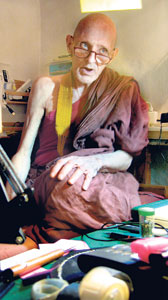
Colombo, Sri Lanka -- Their paths were not meant to cross until 20 days before his passing away, although many were the times she attempted to contact him.

The one and only meeting that did take place “at the right time” in a bare and humble cave up in the hills of Getambe in 2006, lasted from dawn to dusk, though he was very feeble and frail having had no solids for three weeks and no water for 10 days because “he had a problem with his throat and lungs and found it difficult to swallow”.

That single defining moment has yielded not only a very moving exhibition but also a meaningful film for posterity. As Sri Lanka celebrates the thrice-blessed day of the birth, attainment of enlightenment and passing away of Lord Buddha, audiences here will be able to witness not only the life and times of a man who cast aside worldly pleasures to follow in the footsteps of the Master but also messages and links between Buddhism and the modern world.

‘The Truth is Unbelievable’ is the result of that one and only “encounter of a different kind” between Venerable Bhikkhu Sumedha and dynamic Argentinian painter Cora de Lang.

Bhikkhu Sumedha passed away when he was 75 years old. His body had been ravaged by cancers that he had overcome but when I met him he was after a bad bout of pneumonia, says Cora who is in Sri Lanka with husband Richard Lang, the Director of the German Cultural Centre. Cora had got to know of Bhikkhu Sumedha through Richard who had to read up about important and interesting people when he took up a new posting.

“The first connection came when we saw a catalogue of the paintings of Bhikkhu Sumedha which had been put out by Deutsche Bank,” says Cora, explaining that Richard had pointed out the similarities between those paintings and hers.

Soon after, when she was in Kandy on a painting trip she tried to contact him but was not able to meet him, for he was in hospital. However, later she had got an address and a phone number for his humble abode, Manapa Dassana Lena, hidden away from the madding crowds up 108 steps, in Dulwela village close to the Getambe temple from Ven. Metta Vihari whom they were in contact with.

Richard, however, had gone to the cave earlier to invite Bhikkhu Sumedha to a conference and also to exhibit his paintings on the theme ‘Buddhism in Art’ during the 50th anniversary celebrations of the German Cultural Centre.

The monk while explaining that he was just a hermit had declined to attend the conference but agreed to the exhibition as he was “trying to paint the Dhamma”. Painting for Bhikkhu Sumedha was a form of meditation, says Cora. “It was a spiritual exercise. He sacrificed his art to Lord Buddha.”

He indulged in some “incredible works where you could actually go inside the paintings” and did sell some of his works, while also giving away many to friends and relatives, but Cora believes that as an ardent follower of the Buddha he did not handle cash. He had made arrangements for the funds to go to charities and to develop the Intensive Care Unit of the Peradeniya Hospital.

Although he agreed to be part of the exhibition to be held in August 2007, he clarified one small detail. “I will participate but I won’t be there,” he told Richard, who couldn’t believe his ears. Soon after, Cora had an exhibition in 2006 at Barefoot and it was then that Bhikkhu Sumedha, even though he had never met her, laid down a small condition, sending an e-mail to Richard asking whether she would agree to be the curator of his exhibition.

She was surprised -- it was a very Buddhist thing. Could she handle it?

Why did he pick her? She was assailed by doubts.

The exhibition was held in the meditation room of the Sambodhi Viharaya in Colombo 7, but he had passed away by that time, recalls Cora. If certain things were not meant to be they were not meant to be, she says adding that it was as if he was guiding the whole thing. She cites the example of a huge table that couldn’t be taken out of the room. Wracking her brains how to deal with it she had decided to cover it with white cloth, bought metres of it and hired a tailor to stitch it up. The day before the exhibition when they attempted to fit the cloth, it just would not. Desperate she wondered what to do when an idea crossed her mind – why not use his robes and “that was perfect”.

Cora reveals how Bhikkhu Sumedha who was Aja Iskander, a good artist back home, across the seas, in Switzerland came to don the robes of a monk in Sri Lanka forfeiting all worldly comforts and living in a wet and insect-filled cave. Born to a German mother and Egyptian father, Aja had lived a comfortable life with his mother in Switzerland, after his parents separated. “He held a German passport but never lived in Germany,” she says.

Life took its usual course for Aja – he married twice, had children. “He was very fond of his grand-daughter,” says Cora explaining that many were the visits they paid him in the cave.

Suddenly, as young people do, he decided to travel the world and came to Sri Lanka. Getting into the whirl of Colombo’s social circuit, it was at a party that something happened and he decided, “that life was over”. He went to Kataragama, thinking he would become a Swami and lived in a cave there, only to realize that the only path for him was the path of the Buddha.

Bhikkhu Sumedha was in touch with Ven. Nyanaponika – who was the Editor of the Buddhist Publication Society – in Kandy and it was he who invited him to the Manapa Dassana Lena, earlier occupied by a German Bhikkhuni. That was where he lived for 26 long years until his passing away.

The one and only meeting Cora had with Bhikkhu Sumedha is vivid in her mind. She was painting in Galle when Richard called her and said that he had received a message that the monk who was very ill had left hospital saying that he had certain things to do.

Richard felt it was time to see him as Bhikkhu Sumedha had contacted him and said that the time was close. She came back home to Colombo from Galle and early next morning it was that they journeyed along with Ven. Metta Vihari to Dulwela. Having heard before that he was averse to being filmed, she just grabbed a not-so-sophisticated camera, more for taping his voice.

As they climbed the 108 steps, others had beaten them to it. A crowd had gathered, bringing with them small offerings such as king coconuts. Two nurses were also there, one weeping softly.

“He was very kind to simple people and helped the villagers, attending to their wounds,” says Cora.

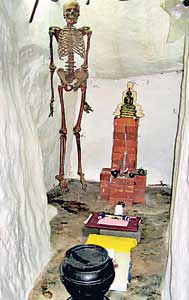
The moment they entered, he started speaking. “He was expecting us,” says Cora, explaining that he was sitting on his bed and in one corner of the cave there was a skeleton moving gingerly. When she gestured carefully that she would like to tape what he was saying he gave a sign that it was okay.

The simple cave seemed like a message……there was a bronze statue with the words scribbled on a piece of paper, “DNR” indicating do not resuscitate. Art installations were scattered everywhere. Even a small toilet constructed by Jagath Wijesiri who was by his side until the very end, had been turned into a work of art.

“He saw in advance his death,” says Cora who felt as if she was part of the process of accepting her own father’s death.

For 12 long hours he spoke, “heavy matter – non-stop”, while they filmed and wondered how this frail monk could hold forth like this. “First part was more for us and the second a kind of message to the world,” she says…..lot of material, speaking in German, English, Sinhala, Pali et al. He spoke of modern things – parallel worlds, the modern world with internet and the teachings of the Buddha. He was full of energy – sometimes provocative, also providing his own answers because he had experienced it all, marriage, kids, love, hate, separation.

As the evening shadows lengthened, they sensed he was tiring out and bade him goodbye, with the hope that they would see him again. But as they went down the steps, his voice rang out and still she hears the echoes in her mind ……..“Remember, remember, everything is anichcha (impermanent)”.

It was his final goodbye.

Cora knows of a wish Bhikkhu Sumedha had. He wished to be known as that “Sri Lankan monk” and not a German monk, truly reflecting his love for this land.

---------------
‘The Truth is Unbelievable’ will be screened on May 11 at 5 p.m. and 7.30 p.m. at the BMICH as part of the Vesak Film Festival. It was shown at the Swansea Bay Film Festival in Wales in 2008 and will go to the International Film Festival in Phuket, Thailand and also to Cairo and South Africa.

Wolverine's Animal & Buddha-Nature

by Shen Shi'an, The Buddhist Channel, May 5, 2009

Dharma Inspired Movie Review: www.wolverinemovie.net

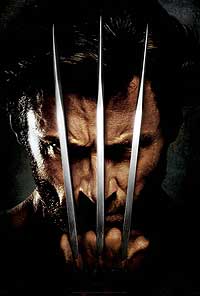
Singapore -- As featured in ‘X-Men Origins: Wolverine’, through of human birth as brothers, Wolverine and Sabretooth were mutants with opposite inclinations. Wolverine was more slanted towards human-nature - in the humane way, while Sabretooth was more slanted towards animal-nature - in a savage way.

While Wolverine was haunted by recurring nightmares of the brutal wars he had fought in, Sabretooth increasingly relished in killing openly. Both clearly had asura-nature (demi-godly nature) though - that strong instinct to fight.

The truth is, like them, we all have various fleeting natures, though Buddha-nature is always constant in the background. Sabretooth thought he was being true to his bestial nature, while Wolverine saw that as having bad faith to himself and everyone else he endangers. Sabretooth became so bestial that he chooses to hunt his own kind for the promise of power, while Wolverine, as we know, came to be a protector of ostracised mutants, while trying to bridge the discrimination between humans and mutants.

Wolverine rejected his mutant abilities at first, seeing them more as a curse than a gift. As he put it, a gift can be returned. But if he couldn’t return his karmic specialties, he might as well make the best of them - which is what he eventually does. However, he still retained his streaks of animal-asura-nature in terms of vengefulness. While his rage is likely to be seen as righteous as many fans, vengeance is never right because it is mere destructive might, that doesn’t offers chance for repentance.

If you are virtually or near indestructible like Wolverine or Sabretooth, what and who will you choose to destroy or protect? Having awesome power is never really the problem. Absolute power only absolutely corrupts those who give in to their Mara-nature. The greater power we have, the more attention should we pay on realising our Buddha-nature!

Thursday, April 16, 2009

Bittersweet 'School Days with a Pig'

by Shen Shi'an, The Buddhist Channel, April 14, 2009

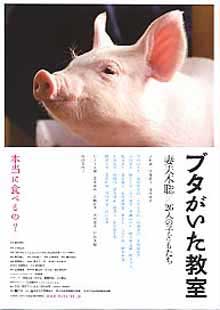
Singapore -- The award-winning movie ‘School Days with a Pig’ tells of a teacher’s special project for his class of grade 6 students to learn more deeply about the connection between life and food - by raising a piglet together, before eventually eating it.


This premise is actually rather disturbing (though there is not a single gory scene) as it’s quite bizarre that both the teacher and 28 students were agreeable to the conclusion of the project in the first place. It’s easy to assume the film to be a cutesy comedy with piggy misadventures, but the ending is such that it becomes a ‘horror’ movie - albeit not readily depicted. As expected, the class splits into two factions as the story progresses.

One side feels that pigs are to be eaten, and since humans need food anyway, while the other feels that it lacks compassion. What missed dwelling into was the fact that humans don’t really require any animal produce to survive. It’s out of ignorance and greed that meat-eating is perpetuated. Throughout most of the show, the teacher doesn’t educate on the possibility of taking up a kinder diet (vegetarianism or veganism), and remains mostly neutral and ambivalent, letting the class debate on the future of the pig.

Naturally, the pig gets named (P-chan) by the kids, which some felt to be a mistake - because it meant bonding with him, making the prospect of departure harder. Even the ones who were initially pro-eating him became attached to some degree. Some start questioning why P-chan must be eaten - especially since he became not just like a classmate, but a pet and friend too.

This reminds us of a famous quote by George Bernard Shaw - ‘Animals are my friends… and I don’t eat my friends.’ In fact, the Buddha even encouraged us to befriend all sentient beings with loving-kindness (Metta), and to practise harmlessness. The issue of hypocrisy arose too… Why would it be okay to eat other living beings if it’s not okay to eat P-chan? Is it just because they became attached to P-chan? But must attachment be a requisite for universal kindness to function? Not at all. The teacher didn’t want to use a chicken because he felt it would be ‘too easy’.

He wanted the kids to learn to care for an animal well, to maximise the lessons learnt. The kids learn to nurture P-chan, play with him, feed him and defend him. They even built a house for him, clearing his poop and pee, and he becomes the jolly mascot of the school.

The more the bonding deepens, the more disturbing it becomes as the date for the kids’ graduation looms closer. For what is their kindness to him ultimately for, when P-chan is to be sent to the slaughterhouse? Does the bad faith not intensify?

As the kids became preoccupied with P-chan, even eating less to save leftovers for P-chan, some parents wondered if they attend school to learn or to raise a pig. That’s short-sighted of course, because raising a pig offers opportunities to learn about priceless lessons such as unconditional love and responsibility to a fellow sentient being.

The film consists of many one-line debating points on the ethics of eating P-chan versus not. Here are some… One says that since the project’s conclusion was to eat P-chan, they should do just that, as a matter of principle. But isn’t sticking to principles rigidly and needlessly itself a poor principle in practice? Is raising an animal to eat cruel, or is it the eating itself that is so? What’s the difference between creating a supply for meat and sustaining a demand for meat? In the Lankavatara Sutra, the irrefutable economics of the interdependence of the meat-seller (killer) and meat-buyer (eater) is stated - a cycle of violence that one can opt out of.

Pigs, and any other animals, don’t exist just to be killed and eaten by others, just as humans don’t. Humans are the ones who decide how to relate to weaker beings. When we choose the easy way out for our convenience and greed, we are really spiritually weak beings, truly incapable of caring for other beings. If so, humans shouldn’t domesticate animals in the first place to exploit them. '

We don’t need to eat animals to stay alive, while animals need us not to eat them to stay alive. Since there was domestication of P-chan with no way to return him to the wild, the kids ought to care for him throughout his natural lifespan. Someone remarked that P-chan already lived a full life of six months, but to measure lifespan unnaturally by the yardstick of slaughterhouses is as twisted as it is to let someone determine you own lifespan.

Another kid rationalised that after P-chan is killed, he would just be meat, no longer P-chan. This is unsound logic, because one still kills P-chan as P-chan. Yet another rationalised that killing and eating is entirely not related, that eating inherits the life of the eaten to let them be part of us. If so, why are we not eating our beloved family and friends when they pass away?

The matter of discrimination arose a few times. Isn’t it clearly favourtism to fight for P-chan’s life, while eating other pigs? Isn’t it clearly speciesim to not eat P-chan, while eating other animals? A cook saw pigs as monsters, who are nevertheless ‘delicious’ when cooked well (with vegetarian seasonings actually). But isn’t the one who demonises and exploits animals the real monster? The kids mistakenly assume that pig farmers love pigs like pets, that they too feel attachment to them before they get killed. If the attachment is so real, why let them be killed… continuously in countless numbers? They have probably gotten numb to the suffering of the pigs.

A child feels that if they are responsible for P-chan’s uncertain future, they should eat him. This would save others the heartache of probably ‘needing’ to send him to the slaugherhouse later. This was accused as being heartless by another. The class hoped to handover P-chan to juniors to care for him as there was no farm which wanted to adopt him for life. Should P-chan be killed simply due to their lack of time to care for him? A class of grade 3 students volunteer to take over, but were deemed too small and young. But couldn’t they be taught how to care for them as a team with more guiding teachers? Isn’t it better to learn to respect life from young?

The ending of the story is a distasteful one. The class cast equal votes for letting P-chan be adopted by the grade 3 students versus sending P-chan to a ‘meat-centre’, which is really euphemism for a bloodily merciless slaughterhouse. The teacher was forced to take a side by casting the deciding vote. He chose the latter, because he felt that the kids were already overburdened by the whole issue. This is bad decision because he chose the easy way out for everyone - by sacrificing P-chan. He was just selfishly ridding self-chosen human misery by subjecting an animal to ultimate misery.

It also hinted that all domesticated animals should die and be eaten in the end? The truth is, the voting was totally unnecessary - because only P-chan’s vote mattered. How could he vote, since he can’t speak? He could vote a resounding ‘Yes! I want to live!’ by screaming and kicking when he faces the knife. It is this final scene of P-chan’s life that the kids and the audience never get witness. The teacher truly failed in teaching the kids about the source of their non-vegetarian food - by not arranging an excursion for them to see this.

The P-chan adventure was only half-lived. It does not do justice to P-chan, since it was partially based on a true story. Seeing P-chan go under the knife, not that I want to, could save many more animals. The movie was unfortunately just another desensitised film that failed to deliver greater lessons on respect for life.

When Siddhartha (the Buddha-to-be) was a child, he once rescued a swan shot by his cousin Devadatta. Reluctant to hand it over to him, it was judged by the wise that the swan belonged to those who saw value in its life, not its death, to those who wanted to save it, not to those who wanted to kill it. In this sense, the teacher’s special project to educate on the meaning of life and death had failed… in his own hands. If the kids were to be taught the true meaning of responsibility for P-chan all the way, they ought to kill him personally (since they voted for the death sentence).

Why pay others do the dirty job? Then again, true responsibility would mean not even considering killing as an option. It’s disturbing how the teacher voted against letting the grade 3 students take over when he had the final say over P-chan’s life. Also disturbing was how the pro-life half of the class never spoke up more enthusiastically to win the teacher’s vote. How could they collectively think that an early death is better for a hale and hearty P-chan?

What if sick and aged parents are involved here? Would we send our parents to the slaughterhouse? Also in the Lankavatara Sutra, the Buddha taught that all animals (all beings in fact) had been our parents at some point in time in our many previous lives. Even more disturbing was that the grade 3 students were deliberately concealed from the fact that P-chan would be sent away to be killed.

The bitter hard truth of the source of their meat was not passed down to them. However, I hope it has been passed on to you - via this review. May all beings be free from harm and danger. May all beings be well and happy.

Wednesday, April 15, 2009

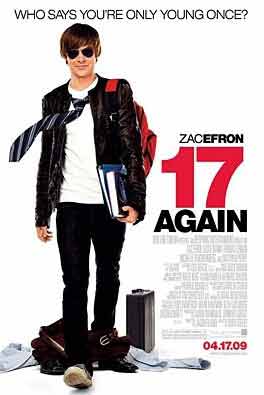
Fancy Being '17 Again'?

by Shen Shi'an, The Buddhist Channel, April 14, 2009

Singapore -- In a sense, the movie ‘17 Again’ is yet another version of ‘Groundhog Day’. A 37-year-old man gets to relive being 17. His renewed adolescent angst is combined with near mid-blue crisis though, as he realises how dear his family is to him and how urgent it is to reconcile with them.


He finally tries to father her teenage daughter with appropriate brotherly advice, and relearns how to charm his estranged wife as he once did. He gets a fair second chance as they did not realise it was him redeeming himself, thus being free of prejudice against him.

The truth is, we can consciously change ourselves to be ‘reborn’ spiritually for the better here and now. There’s no need to await some freaky magical or cosmic time warp to give us the opportunity to set things right. You don’t have to wait till your next life to be 17 again! There are always second chances, but we do not always take them in time. Even when we take them a little too late, it’s better late than never.

Similar to Groundhog Day, when he finally reconciles with his family, the time warp ends and normal life ensues. As long as we are caught in senseless cycles where we do not break through our negative habits, we are already trapped in a time warp too, even if we fail to recognise this due to lack of mindfulness. Are you living a truly normal life now? If not, it’s time to change.

Tuesday, April 07, 2009

Buddhism documentaries to air in Taiwan

CCTV.com, Apr 3, 2009

Taipei, Taiwan -- Three documentaries on Buddhism produced on the Mainland have been officially released in Taipei on the heels of the World Buddhism Forum,which closed on Tuesday.


One of the documentaries is "Master Xuan Zang," a film recording the Tang Dynasty monk's legendary journey to India, the cradle of Buddhist culture.

The second is a six-episode feature on the rise and fall of the Tang royal temple--- the "Famen Temple." Third is a 46-part TV documentary "Thousand-Year Buddhism Path", a vivid account of the inheritance and development of Buddhism in China.

Three documentaries on Buddhism produced on the Mainland have been officially released in Taipei on the heels of the World Buddhism Forum,which closed on Tuesday.

Gao Feng, vice-president of China Central Television said, "I believed the show will attract wide attention. Followers of Buddhism will be enlightened, and the mass public will feel the power and splendor of Chinese culture."

The "Thousand-Year Buddhism Path" is by the same cast who shot the widely-acclaimed 12-episode documentary, --the "Palace Museum". The production exhaustively visited over 200 temples over seven years. It's a million-yuan production. Both the "Thousand-Year Buddhism Path" and "Famen Temple" have aired on CCTV. People from local Buddhist and cultural circles are earnestly awaiting the chance to see them in Taiwan.

Imparting the Dhamma

By MAJORIE CHIEW, The Star, April 2, 2009

The Abbot & The Orphan is a new cartoon series with a mission

Kuala Lumpur, Malaysia -- IN this age of the Internet, printed literature may not be as effective as multimedia in reaching out to the young.


That is why Ng Lid Sine, 47, has come up with a cartoon series, The Abbot & The Orphan, to capture the interest of children and teach them moral lessons along the way.

Ng has come up with a cartoon series, The Abbot & The Orphan, to capture the interest of the young and teach them moral lessons along the way.

“Children today are so privileged. They have everything, so they may find it difficult to grasp the dhamma (Buddhist teachings). I want to share with them the story of a child who has nothing, not even parents,” says Ng, who wrote the script for the series, inspired by his observations around the Buddhist Maha Vihara in Brickfields, Kuala Lumpur.

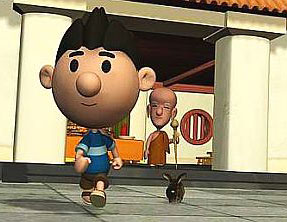
The Abbot & The Orphan revolves around an orphan named Butterfly (featuring the voice of Ng Zen Ian) who has nothing. He is cared for by a blind and old abbot (voiced by Vijaya Samaravickrama).

“The characters of the abbot and the orphan are a reflection of the unsatisfactory nature of life. The whole drama becomes a stage to display and unfold Buddha’s teachings,” explains Ng, who is animation director of Cartoon Workshop, a Selangor-based local production house for animated and educational series.

The Abbot & The Orphan – The Shrine, Episode 1 in English and Mandarin was recently released on DVD in conjunction with the 80th anniversary of the Buddhist Institute Sunday Dhamma School (BISDS) housed in the Buddhist Maha Vihara.

The school was set up in 1929 by the Sasana Abhiwurdhi Wardhana Society. The oldest Buddhist Sunday School in the country, it has over 1,300 students (aged six to 20) and 200 volunteer teachers and staff.

Vandana, a collection of Buddhist recitals in Pali during the puja (offering) ceremony, was also launched. This DVD includes Karaniya Metta Sutta, the discourse on loving-kindness recited by Buddhist monks to bless devotees. Both DVDs are produced by Cartoon Workshop and BISDS.

Cartoon Workshop executive producer Catherine Heng says: “The Abbot & The Orphan series consists of eight episodes. A team of animators took four months to produce the first 20-minute episode of the 3D animated series. Voice talents come from students and staff members of BISDS.”

Heng, a volunteer teacher at BISDS, says: “Some 4,000 copies of Vandana and The Abbot & The Orphan have been produced with donations from sponsors. The second DVD,

The Abbot & The Orphan – Belief, Episode 2, is in the post-production stage and scheduled for release by middle of the year.

“In this episode, Butterfly is tricked by a fortune-teller who gave him two magic stones in exchange for goats. The storyline is aimed at instilling awareness that one should not believe blindly but investigate the truth.”

heng adds that there are plans to host the animation series on the BISDS website (www.bisds.org) to make it easily available to the Buddhist community.

The animation project also nurtures the creative talents of the Sunday school attendees, especially the children.

Vineeta Serisena, deputy principal of BISDS and animation series consultant, says: “The animation series is appealing, yet simple enough for children to understand. It has a deeper meaning within.”

To coincide with the BISDS anniversary and to commemorate the 90th birthday anniversary of the late Ven K. Sri Dhammananda on March 18, CDs containing dhamma talks by Dhammananda were launched.

Dhammananda had given 5,600 dhamma talks locally and abroad. Those interested in sponsoring The Abbot & The Orphan series can contact 03-2274 1141.

Tuesday, February 10, 2009

The Buddhism of 'Benjamin Button'

by Shen Shi'an, The Buddhist Channel, Feb 6, 2009

Dharma-Inspired Movie Review: www.benjaminbutton.com

Singapore -- 'The Curious Case of Benjamin Button' is based on a 'simple' premise. How would one (Benjamin) who lives life backwards (born old and dies young) experience it? Ben is not a hero; and not even an anti-hero – he is really the everyman who lived life with an extraordinary condition.


Though fantastical, the story remarkably highlights realistic themes on the significance of life and death. Reflecting on life in reverse seems to spur more insightful hindsights (literally) on itself! Below are some to share.
Meeting in the Middle

Daisy, Ben's love interest remarks when they are both in their prime that they are finally 'meeting in the middle'. The truth is, we are always 'meeting in the middle', in the flowing river of time. Buddhism sees the present moment as the centre of time's passage, which is but a measurement of change. We are always smack in the centre, between the past and the future. In fact, now is the only moment we have. There is no need to pine for the transpired past or for the unshaped future, while every moment taken care of now creates happy memories and a better future.

Existential Crisis

Prince Siddhartha, the Buddha-to-be stumbled upon the grim realities of ageing, sickness and death, thereupon becoming bent on seeking the path to transcend the suffering they entail. Though Ben doesn't realise enlightenment, he does become more enlightened in his approach to life. However, his passing, being in the state of an infant, did not hint that he passed in a more awakened state. Then again, there's always the next life to resume the path to enlightenment, and the potential to recall past lessons learnt.

Life as Disease

It is perfectly natural for the audience to feel empathy for Ben's bizarre condition, but should we really feel sorry for him? The truth is, we too are in a similar condition. Ben advances towards death (and rebirth) just as we do, albeit in a physically reverse way. Forward and reverse are relative notions too. We could just as well see our collective condition to be much more bizarre – since it's the reverse of Ben's. Ben did not really see himself to have a disease but this is perhaps our problem too – to not see the unenlightened life as problematic, a 'fatal' existential disease that we die of continually via the cycles of rebirth. The cure for endless rebirths though, is to be found within the same rounds of rebirth.

Direction of Time

A clockmaker creates a monumental clock that runs backwards, in the hope that turning back the clock can bring back the past, to give the young lost at war a second chance to live full lives. In Buddhism, time travel is impossible, since it messes up the intricate network of cause and effect of everything that had happened. However, we can relive the past to reminisce or relearn missed lessons, letting the past transform us in the present, instead of trying to transform the past itself. Even though we die, we will be reborn time and again, till we master all we should learn to transcend life and death.

Unpredictability of Life

To tragicomedic effect, the old man Mr Daws repeatedly asks, 'Did I ever tell you I was struck by lightning seven times? Once when I was… just in the field, just tending to my cows/ just sittin' in my truck just minding my own business/ repairing a leak on the roof/ just crossing the road to get the mail/ walking my dog down the road…' Though the chances of being struck by lightning are infinitesimally small, Mr Daws does remind us that life is not just unpredictable once, but often! As Queenie, Ben's foster mother said, 'You never know what's comin' for ya.' Mr Daws later remarks, 'God keeps reminding me I'm lucky to be alive.' It's unfortunate that he 'needed' to be reminded so many times! But what about others? Ironically, despite Mr Daw's naggy reminders of unpredictability above, most of us are going to forget them soon!

Purpose of Life

Ben's favourite childhood story is one of Rudyard Kipling's 'Just So Stories' called 'The Sing-Song of Old Man Kangaroo', about an animal that wanted to be different from all others. Ben exclaims that "This is just how I am", while Captain Mike later says "You gotta do what you're meant to do." But the question is how should we be different, and what are we really meant to be? In the story, the Kangaroo got more than he bargained for in the negative sense, though what he went through had positive transformative effects too. In Buddhism, the goal is not so much to be different from the crowd, but to be similar to the Buddhas, with perfect compassion and wisdom.

Gods and Monsters

Ben, who was born small but old, was ostracised from birth by his father, who assumed he was 'a creature not meant to last', while Queenie, Ben's foster mother believes that God has his reasons for creating him the way he is, that he is still a miraculous child of God. This prompts some questions. Who is the true monster? The creator of one or the one created? The one who assumes another is a monster or the one assumed to be a monster? Though fictitious, the author F. Scott Fritzgerald has his g(o)od reasons for creating Ben – for imparting many lessons! The inscrutability of a creator who is both a healer and destroyer is illustrated when Ben musters self-confidence (and/or faith?) to walk during a faith-healing session, while the healer drops dead right after.

Youth and Old Age

Perhaps gently touching on the subject of spring-autumn and 'underage' love relationships, Ben's case asks how do we decide if a one is too young or too old to be with someone else, granted that maturity sometimes has little to do with one's years? Some people are 'old souls', not unlike Ben, who despite getting younger physically, was becoming more seasoned with life. Never judge a person by his or her years or appearance! It is also possible to be reborn a child prodigy with ready skills well-honed from a past life. Youth is a state of mind more than the state of one's body. If we are able to live each moment anew, without clinging to self-limiting misperceptions gathered from the past, are we not always young? Though ageing is continual, the changes brought about can be gradual, hardly noticeable. Impermanence of youth does not sneak up on us; it already is happening!

Inevitability of Death

Ben realises that despite his unique condition, death is still inevitable. As his first encounter with death, he is surprised when he discovers a literally 'old' friend to had passed away. He later discovers the deaths of many when out at a war in which he almost dies. Death is seen as an equaliser of all mortals, that cannot be cheated (other than via attaining spiritual liberation). Not only is it eventual, it can come suddenly too. When Ben hears news that his foster-mother had passed on, he did not seem overly grievous or passive; just reflective. Perhaps he had learnt to have a more equanimous Middle Path attitude towards death?

Death Doing Apart

One of Ben's main sources of suffering was to see loved ones already conventionally older than him pass away before him. Then again, in real life, the young often witness the passing of elders too, just as elders sometimes witness the passing of the young. However, as Stonepeace put it, 'Though you might lose your lover (to departure or death), you need not lose your love.' Do we only learn to treasure the beloved when we know they will come to pass? Or rather, we should treasure the beloved now because they are already passing by, changing from moment to moment, even if subtly.

Symmetry of Time

The story of Ben's life illustrates an amazing symmetry of time in terms of the stages between birth and death. Just as we were small and helpless at birth, we get increasingly shrivelled and hapless when old. It's the other way round for Ben, yet the characteristics of ageing are similar. Ben develops dementia when he becomes a boy, not unlike how an old person might become senile. All children should reflect on the truth that their parents meticulously cared for them when they could not eat, walk, defecate or remember lessons properly. If so, what excuse do we have to be impatient towards our aged and sick parents when they can no longer eat, walk, defecate or remember well? The roles of guardianship in parent-child relationship switch in time. Though we began life in baby diapers, we could end up in adult diapers later!

Unconditional Love

Daisy wondered if Ben would still love her when she becomes old and saggy, while Ben asks if she will still love him when he has acne as a teenager. How conditional or unconditional is our love? There is really no way to be sure until the ravages of time transform the beloved to test our love. Paradoxically, love is to accept the beloved as they are, while also accepting that they will change in time to be who they are not now. An attribute of true love is that it must make peace with change, yet be unchanging in its devotion to be continually caring despite these changes.

Letting Go of Life

Into this life we come alone, with nothing, and we will leave it alone too… The cycle of samsaric rebirth is personal, yet common to us all. Captain Mike tells Ben, 'You can be as mad as a mad dog at the way things went. You could swear, curse the fates, but when it comes to the end, you have to let go.' True, though the more you are habitually resentful of life while alive, the more likely will you be resentful of life and/or death while passing away. Habits shape us. How we live is going to shape a lot of how we going to leave. As the Zen saying goes, 'To learn to live, learn to die. To learn to die, learn to live.'

Treasuring the Moment

Time seeps away, even as you try to cling to the moment. All we can do is to cherish the present moment best we can. If you love, you might regret (due to eventual loss). If you do not love, you might regret too (for not having cared). The question is 'How to love well without regrets?' As Stonepeace wrote, 'Because everything changes from moment to moment, we should treasure everything in this moment. Because everything changes from moment to moment, we should not be attached to anything in this moment.' Was Ben's wish to remember how Daisy and he were in their common middle-age attachment? Maybe. Compare this with Elizabeth, with whom he had an affair, who simply wrote him a goodbye note that read 'It was nice to have met you.' Ben remarked to Daisy, 'I was thinking how nothing lasts, and what a shame that is.' To which she replies, 'Some things last.' She doesn't say what these things are though. Could it be love? Or memories? What are we doing to create that which endures timelessly? How about the cultivation of compassion and wisdom to benefit one and all, to become more enlightened from day to day, moment to moment?

Renunciation for Love

Ben leaves Daisy and their daughter before she becomes old enough to know him, to form attachment to him. It was also a bid to avoid giving Daisy suffering when she eventually has to take care of him when he becomes a young child. It was renunciation of family not due to lack of love, but out of love. However, as he was still attached, he returns abruptly for a visit, thereby disrupting Daisy's new family (with a new husband) a little, stirring up mixed emotions. True Love lets go in good time. Perhaps he shouldn't have returned - if Daisy was already happy with their past times together? Love can still be love at a distance.

Never Too Late

Ben writes this to his daughter, 'For what it's worth: it's never too late or, in my case, too early to be whoever you want to be. There's no time limit, stop whenever you want. You can change or stay the same, there are no rules to this thing. We can make the best or the worst of it. I hope you make the best of it. And I hope you see things that startle you. I hope you feel things you never felt before. I hope you meet people with a different point of view. I hope you live a life you're proud of. If you find that you're not, I hope you have the strength to start all over again.' Indeed! In the course of countless rebirths from moment to moment and from life to life, it is truly never too late to try again, to change, but change must always take place in the now.

Cause and Effect

Ben says, 'Our lives are defined by opportunities, even the ones we miss.' Sounds a tad fatalistic, because our lives are defined by the opportunities we actively create too. Ben writes, 'Sometimes we're on a collision course, and we just don't know it. Whether it's by accident or by design, there's not a thing we can do about it.' He was reflecting on how Daisy could have missed a car accident if some event along the network of events that led up to it was otherwise. In the Mahayana Buddhist context, even accidents are never truly accidental, but are results of the natural karmic interplay of causes, conditions and effects. The good news is that with adequate spiritual cultivation, misfortunes can be minimised or averted.

Hummingbird of Time

Captain Mike talked about how hummingbirds' hearts might explode if you hold their wings still, that they beat in the shape of the sign for infinity. This seems symbolic of how it is impossible to pause the passing of time, which flows on ad infinitum. Hummingbirds however also symbolise stoppers of time due to their ability to hover in a one spot. Of course, this is an illusion, as their tiny wings need to flap furiously… in time! Their ability to fly forwards and backwards also remind us of how we can look back into our past to inspire our future. A hummingbird appears at unlikely places in the story, once at sea and once during a storm. This perhaps represents how the moments were as if frozen in time, to be recalled vividly in time to come? Just as a hummingbird needs to fly mindfully to navigate its way, we too need to mindfully learn from what happens in time, and from the passing of time itself. (If you have more Dharma lessons to share on this movie, please send them to moonpointer@gmail.com for further compilation!)
Thursday, January 29, 2009

The 'Twilight' or Dawn of Desire?

by Shen Shi'an, The Buddhist Channel, Jan 21, 2009

Singapore -- What if you have the power of great strength and speed, and are able to remain ever youthful? Sounds like invincible eternal life? Not really, as the vampires in the movie 'Twilight', like others, can die too - especially when slayed by other equally powerful vampires.


What literally sucks about being a vampire is that you need blood to survive. The film doesn't clearly depict that Edward, the teenage vampire protagonist, sees his raison d'etre to be.

Apparently, he has gone to school so many times that he made a huge 'artwork' with his numerous graduation caps in jest. Does repeated schooling make him wiser? With a wider perspective of history, shouldn't it make him much more enlightened? Looks like he missed Dharma education! The vampires in this story don't need sleep too. Imagine the amount of time on hand! Why not simply enlighten oneself and help enlighten others best one can? There's simply no nobler cause.

It is an unwritten rule for the vampires that they try to stay clear of the affairs of humans - lest their identities get disclosed. For the survival of their kind, they would even hesitate to save a human in need. Now, what is the point of living entirely for your own kind? With such great power at stake, it's no wonder that some vampires fight one another. Seems like a perpetual demonic-bestial Asura-like existence. (Asuras are demi-gods who battle among themselves and with the gods for greater power.)

However, while typical vampires relish human blood attained by murder, Edward's family is what he erroneously calls 'vegetarian' - because they only drink animal blood. Trick question - are such vampires more 'humanitarian'? Is being humane limited to humans? Or is the real test of humanitarianism how anyone relates to those weaker than themselves?

Edward's clan run into conflict with another band of vampires, who are ruthless in their killing of humans, leading to a chase where they try to run from while hunting the other. This kind of reminds me of the frequent high tension between the activist causes of pro-vegetarians and pro-meat-eaters!

The stance of the first is that meat isn't necessary for food, while the latter believes its their unquestionable birthright, that animals are meant to be food. With a strong sense of what is right and what isn't, Edward and company is forced to kill one of the wayward vampires who threaten to harm Bella (Edward's human love interest), which would bring more needless attention to the discreet vampires, harming their reputation while endangering them. This is reminiscent of the X-Men impartially subduing fellow mutants in the Brotherhood of Evil Mutants!

Edward has the power to read minds, saying that money and sex are the items on most people's minds. Look like he forgot to read his own mind deeply enough. He could not understand his attraction to Bella, how he never had much human bloodlust till he met her. Seems like a subtle imagery of the marriage of sex and violence here. However, Edward maintains his abstinence from taking her blood, while claiming he does not have the strength to stay away from her. While Edward keeps his temptations in check, Bella would rather he give in to his. This almost seems like a cheeky message on understanding the desires that drive teenage sex, while urging abstention!

Some say life has value only because there is death. Not always true - though impending death does make us treasure our lives more. Essentially, no one really dies (or is born) since there is rebirth - but life has to be lived in the here and now. Bella laments that she is 'dying already', from moment to moment, hinting of her anguish of impermanence. He replies that that's the way it's supposed to be. If so, why is he defying the universal law of impermanence?

Then again, as in the opening paragraph, vampires don't really live forever - if they are real! Bella craves eternal love and asks to be turned into a vampire by him. Edward asks, 'Is it not enough just to have a long and happy life together?' As long as unenlightened, what guarantee is there that eternal life with the beloved will result in eternal happiness?

An 'eternal' love-hate relationship might persist instead! While Edward seems able to cope with the impermanence of his lover, Bella could not cope with the transience of hers. I guess such are the makings of intriguing love stories, that draw legions of fans, with their heavily samsaric dilemmas.