Wednesday, April 15, 2009

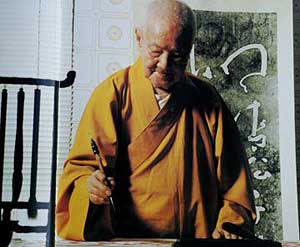
Farewell to a much-loved monk/artist

By Victor Chin, Malaysia Insider, April 14, 2009

Kuala Lumpur, Malaysia — There are quite a few festivals that fall in April. For the Chinese community, there’s the annual Ts’ing-ming when they visit the graves in honour of their ancestors.


For the Christians they observe Good Friday and Easter, the death and rebirth of their saviour Jesus Christ. And the Thais who live here celebrate Songkran, the annual water festival signalling their lunar New Year.

It is in this mixed mood of death and birth that I write about two nonagenarian Malaysian artists. The venerable Bo-Yeun, 96, passed away this week and Fung Yow Chork, 91, is critically ill in hospital (I shall write about him in another article).

In the early years, there were two well-known artists/monks in Penang. One was the late venerable Chuk Mor from the Triple Wisdom Temple and the other was Bo-Yeun from the Kek Lok Si temple. After many years, Bo-Yuen left Penang in 1961 to set up the Hu-Bin Vihara in Petaling Jaya.

They were among the first batch of young monks who migrated from Fujian, China, to serve in the local temples. Their passing marks the end of that line of descendants from China.

Apart from looking after the spiritual well-being of those who came to the temples and the duties of running those places of worship, they acquired other skills. In the old days, to be an accomplished person one had to be able to read, write, sing, paint and do martial arts.

Such was the case with Bo-Yeun, who was both respected as a monk with a large following as well as a Chinese brush painter/poet/calligrapher, and perhaps a secret martial arts expert too. The National Art Gallery honoured him with a major exhibition in July 2000 and his artworks have been collected widely over the years. A few examples of his works will explain why.

Every Chinese brush artist likes to paint landscapes; this one by Bo-Yeun is a typical example (right). It shows a bird’s eye view of the geography with the darkest black marks in the foreground being the tree tops. The middle ground, mid-black ink, is marked with buildings suggesting a village. Finally, the distant mountains are brushed in with light grey ink.

The artistry is in the void left unpainted in between the land form to suggest perhaps the lake or the river and is finished off with three junks. This painting is done with an economy of shapes, lines and colours and is so sure of hand that it can only be the work of a well-practised artist.

The Eastern tradition of aesthetics and ethics places nature and its environment at the same level the Western counterparts do for their religious and historical scenes. To the Chinese or the Japanese artist, the placement of a rock in a garden or in a painting touches upon the divine.

Then the poem over the landscape speaks of the metaphysical world of nature – the sound of wind and breeze and the fragrance in the air that hints at the promise of spring.

This ink painting of the orchids, done in 1982, is my favorite of the many that the monk has done and he did paint plants and flowers endlessly.

What I like most in this work is the clear display of his command of a process of painting called the ‘i-hua’ or ‘i-pi-hua’ (one stroke or the primordial lone). Each line of the leave is done at one go, making its turn and twist, pushing and lifting the right size brush with just the amount of ink for the journey.

The orchid flowers with their many petals are also done in this practised and elegant way and the calligraphy too. This is a faultless composition if ever there was one in his vast collection of artworks.

Finally, the most prodigious part of his artistic output is his calligraphy. He had a signature style with his brushwork to a point of abstraction.

To those in the know about Chinese written characters, his artworks are especially appealing and valued. Anyone could approach him when he was alive and actively painting to request for a number of written works, single or in pairs or within any combination. He was ever so happy to oblige.

Bo-Yeun’s artistic and spiritual contribution to Malaysia for most of his adult life is a great legacy for the country. We’ll somehow all miss his presence. But for those lucky ones who have known him and got one or more of his artworks, his ethereal presence will live on like the butterfly, flowers, mountains and streams in his art.

Tuesday, April 14, 2009

30 Hours Famine (World Vision Malaysia)

Would you participate?


for more information, please visit World Vision Malaysia Website.

Wednesday, April 08, 2009

The pursuit of happiness in a Buddhist vehicle

By Gyalsten K Dorji, Kuensel Online, April 9, 2009

Sogyal Rinpoche’s two-day instruction on meditation practice

Timphu, Bhutan
-- “Hello, how are you, my darlings?” Sogyal Rinpoche beamed at his audience, many of whom were students and also included Lyonchhoen Jigmi Y Thinley, inside a hall at the YDF complex, Thimphu.


“Buddhism is cool, it’s very cool, and meditation at the highest level is chilling out.” What became immediately noticeable about Sogyal Rinpoche, author of the international bestseller, The Tibetan Book of Living and Dying, was his somewhat funny nature. He joked all the while and continued to refer to his audience as “my darlings”.

But also observable was the warmth and happiness in his eyes. Perhaps, this would have been reassuring to some as he was in Bhutan to talk about how to achieve happiness or inner peace using the Buddhist vehicle.

“What you need to understand isn’t only the outer, but the innermost meaning, which makes Buddhism what it is,” he said. Sogyal Rinpoche began by explaining concepts such as inner peace. “I think this is very much connected with Bhutan’s Gross National Happiness,” he said.

Inner peace may sound lofty and unattainable, reserved for learned monks meditating in a cave for years. But, in fact, the first step towards it was, “very simple: don’t harm others, don’t keep malice, always forgive.”

One of the basic principles of Buddhism is interdependence, the idea that all things are connected. “When you help others, it helps you, when you harm others, it harms you,” he said. Understanding this simple cause and effect process, he said, leads to the next step in Buddhism, the practice of tolerance, non-violence and compassion. This, he repeatedly emphasised, required examining the nature of mind, understanding it and finally “taming” it through meditation.

One of the ways to master this technique was a combination of three methods, what he referred to as, the “unifying practice.” This required gazing at an object of beauty that invoked inspiration and calmed the mind, such as an image of the Buddha or Guru Rinpoche, the sky, a mountain, or even a rock. The other two elements were focusing on the breath or reciting a prayer. Combined, this method, if persisted with, would lead to a calmer and clearer mind and, eventually, inner peace.

Besides providing many more practical meditation techniques, he also translated Buddhist prayers and terminology into English and explained their meanings and purposes.

Throughout his teachings, Sogyal Rinpoche used his tongue in cheek humour to entertain. He frequently teased audience members and made fun of himself. More importantly, he used it to sustain the attention of the audience, especially the youth, whom he was pleased to see in attendance.

He remarked that today’s younger generation in the Himalayan region needed to understand the Dharma in a more practical way. “The offerings, the rituals, some of them are quite putting off as a result of lack of explanation,” he said.

While explaining the concept of emptiness, he noticed some students talking. He gently asked them to keep still. He told them that if they wanted to understand Buddhism, “not only listen with your ears, but with your eyes, your body, your mind and your heart too, then you’ll hear more deeply and not be distracted.”

On the second day of the teachings, Sogyal Rinpoche opened the floor to questions. The first question was on not understanding the Choekyed prayers Bhutanese recited.

Rinpoche answered that change was needed. He said even some monks did not know what they recited. He thought monks firstly needed to educate themselves thoroughly and then become more involved with the community.

They need to come out of the monasteries, he said.

“Can I be frank? Well, even if you don’t want me to, I will. You need to study more, listen to teachings more.”

The Rinpoche, who is also the founder of Rigpa, a network of more than 130 Buddhist centres in 41 countries that presents Buddhism through methods more relevant to modern life, frequently travels the world holding such teachings. Although his visits to Bhutan are infrequent, he said he would come more often as he has received repeated invitations to conduct such teachings.

“I’ll make Bhutan a priority because it’s the only independent Mahayana-Vajrayana nation, it’s a rising nation with such extraordinary promise,” he said.

Rinpoche’s cheerfulness remained constant throughout his teachings. Jigme Dorji, a class 11 Mothitang student, described the teachings as “user-friendly”. Pema Rinzin, a lawyer, said this was his “most fruitful weekend”.

“I wish you all great success, and that Bhutan becomes a peaceful, developed, intelligent, and prosperous nation, but understanding the dharma in a real way is an important and an integral part to the development of Bhutan,” said Rinpoche.

The earth nurtures us all


by Daisaku Ikeda, Joy Online, 7 April 2009

Tokyo, Japan -- Life is diverse. Human beings are diverse-that is the natural way of things.


During my first visit to the United States in the '60s, I witnessed an incident at a local park where an African-American boy had been excluded from playing with his white counterparts and had run away in anger and humiliation.

It may have been a small, insignificant episode, but I felt I had caught a glimpse of the dark abyss of prejudice that lay behind it. This caused me to think deeply about the problem of racial discrimination.

Tragically, difference-of culture, nationality or religion - has time and time again been used to divide and classify people into categories and to discriminate against certain groups. History has seen members of the same human family divided and led into one endless conflict after another.

I feel that the United States is the world's most culturally diverse country, and that for this reason it has the potential to become an ideal nation, transforming the energy of different cultures into a shared effort of construction.

The Japanese still have to learn and grow a great deal in this regard. Koreans and other Asian people living in Japan still suffer terrible discrimination and the Japanese in general have little appreciation of the value of diversity.

Encounters between different culyure are not always amicable. The reality of opposing interests and even hostility must be acknowledged. So, what can be done to promote harmonious relationships?

Buddhism teaches that we must seek harmony on a more profound level. We must achieve a state of compassion deep enough to enable us to find our common humanity and transcend distinctions between ourselves and others.

This is not a denial of the individual self. It is the fusion of self and other, an expansion of the limited self which is shackled by our ego, toward a greater self whose scale is as limitless and unbounded as the universe.

I once talked to an African American man who told me how he had always been obsessed with his roots. He couldn't shake off the thought that his people had been brought to America as slaves. He continued, ''I'm sure that white people harbour similar thoughts about us.

They loathe to treat people who were once slaves as their equals. For that reason, I despised white Americans. It was impossible for me to like them when I recalled how we, our parents, our grandparents, and our ancestors before them had been exploited, abused and discriminated against by the white man."

"From childhood, each time I was bullied or suffered discrimination, it was driven home to me that I was black. I even came to deplore the blood running through my own veins. When I learned about Buddhist view of the interconnectedness of all life, it put the whole issue of racial difference into perspective. I realised that I had been caught up in stressing the differences in the colour of our skin."

To try to locate the "roots" of one’s identity in a particular racial or ethnic group is an illusion. It is like a mirage in the desert. Such a sense of identity, far from serving as a common "homeland of life" that can be shared by all, only heightens distitictions between oneself and others, and becomes an underlying cause of conflict and strife.

And indeed, if members of each group retreat, seeking only their own roots and origins, society can fracture along a thousand fissure lines, dividing neighbour against neighbour, with tragic results.

What is needed today is a fundamental transformation in our understanding of what is to be human. We must not yoke ourselves to nationality or to ethnicity. We must not think of ourselves as powerless.

We must not regard ourselves as slaves to our genes. Fundamentally, we have limitless and immense potential. Fundamentally, each human being is one with the universe. Each individual has immense power and infinite worth!

There are many people who have suffered terrible wounds, bitter sorrows and hardship as a result of discrimination. While legal and other reforms can offer some protection against this, it will not be enough to bring people happiness, because the fundamental cause is prejudice and bias rooted deeply in people's hearts. Unless people change their hearts, discrimination will continue to manifest itself in ever more despicable forms.

It is vital to establish in each person's heart a new and more profound view of the human being, 'one which stresses the inherent dignity and equality of all human' beings.

I believe that the most certain answer to the problem of racial discrimination is a human revolution, an inner reformation in the depths of people's lives to transform the egoism that justifies the subjugation of others and to replace it with a compassionate outlook that makes no distinction between self and other and strives for co-existence among all peoples.

Discrimination is absolutely an evil. Those whose minds are so trapped in delusion injure the lives of others, as well as themselves.

A student with a physical disability once asked me for advice about how to face discrimination and bullying. My advice was that he had to become stronger. That too, is part of the struggle for recognition of the value of each unique and different person, the Having our rights recognised by others is not just a matter of having people behave sympathetically toward us. We must live with dignity and be proud of ourselves as individuals, regardless of our situation.

Those who deride or make fun of us are cruel and wrong for ignor¬ing our right to be treated as human beings. We must never let their taunts get to us. Developing our own strength of character is a vic¬tory for human rights.

I have always believed that we should recognise differences and, because of them, work harder to get to know and understand each other as human beings.

Those who can enjoy differ¬ences and discover the greatest beauty and value in them are masters in life.

The Earth nurtures us all. It revitalises all people withhout dis¬tinction. A vibrant wellspring of pure compassion surges from its soil, and if we can find our deepest .roots in this spring of all-embracing life, then superticial differences of gender and race will no longer divide, but will enrich us all.

Tuesday, April 07, 2009

Buddhist Economics

By E. F. Schumacher. The E.F. Schumacher Society, April 5, 2009

Washington, USA -- "Right Livelihood" is one of the requirements of the Buddha’s Noble Eightfold Path. It is clear, therefore, that there must be such a thing as Buddhist economics.


Buddhist countries have often stated that they wish to remain faithful to their heritage. So Burma: “The New Burma sees no conflict between religious values and economic progress. Spiritual health and material well-being are not enemies: they are natural allies.”1 Or: “We can blend successfully the religious and spiritual values of our heritage with the benefits of modern technology.”2 Or: “We Burmans have a sacred duty to conform both our dreams and our acts to our faith. This we shall ever do.”3

All the same, such countries invariably assume that they can model their economic development plans in accordance with modern economics, and they call upon modern economists from so-called advanced countries to advise them, to formulate the policies to be pursued, and to construct the grand design for development, the Five-Year Plan or whatever it may be called. No one seems to think that a Buddhist way of life would call for Buddhist economics, just as the modern materialist way of life has brought forth modern economics.

Economists themselves, like most specialists, normally suffer from a kind of metaphysical blindness, assuming that theirs is a science of absolute and invariable truths, without any presuppositions. Some go as far as to claim that economic laws are as free from "metaphysics" or "values" as the law of gravitation. We need not, however, get involved in arguments of methodology. Instead, let us take some fundamentals and see what they look like when viewed by a modern economist and a Buddhist economist.

There is universal agreement that a fundamental source of wealth is human labour. Now, the modern economist has been brought up to consider "labour" or work as little more than a necessary evil. From the point of view of the employer, it is in any case simply an item of cost, to be reduced to a minimum if it can not be eliminated altogether, say, by automation. From the point of view of the workman, it is a "disutility"; to work is to make a sacrifice of one’s leisure and comfort, and wages are a kind of compensation for the sacrifice. Hence the ideal from the point of view of the employer is to have output without employees, and the ideal from the point of view of the employee is to have income without employment.

The consequences of these attitudes both in theory and in practice are, of course, extremely far-reaching. If the ideal with regard to work is to get rid of it, every method that "reduces the work load" is a good thing. The most potent method, short of automation, is the so-called "division of labour" and the classical example is the pin factory eulogised in Adam Smith’s Wealth of Nations.4 Here it is not a matter of ordinary specialisation, which mankind has practiced from time immemorial, but of dividing up every complete process of production into minute parts, so that the final product can be produced at great speed without anyone having had to contribute more than a totally insignificant and, in most cases, unskilled movement of his limbs.

The Buddhist point of view takes the function of work to be at least threefold: to give man a chance to utilise and develop his faculties; to enable him to overcome his ego-centredness by joining with other people in a common task; and to bring forth the goods and services needed for a becoming existence. Again, the consequences that flow from this view are endless. To organise work in such a manner that it becomes meaningless, boring, stultifying, or nerve-racking for the worker would be little short of criminal; it would indicate a greater concern with goods than with people, an evil lack of compassion and a soul-destroying degree of attachment to the most primitive side of this worldly existence. Equally, to strive for leisure as an alternative to work would be considered a complete misunderstanding of one of the basic truths of human existence, namely that work and leisure are complementary parts of the same living process and cannot be separated without destroying the joy of work and the bliss of leisure.

From the Buddhist point of view, there are therefore two types of mechanisation which must be clearly distinguished: one that enhances a man’s skill and power and one that turns the work of man over to a mechanical slave, leaving man in a position of having to serve the slave. How to tell the one from the other? “The craftsman himself,” says Ananda Coomaraswamy, a man equally competent to talk about the modern West as the ancient East, “can always, if allowed to, draw the delicate distinction between the machine and the tool. The carpet loom is a tool, a contrivance for holding warp threads at a stretch for the pile to be woven round them by the craftsmen’s fingers; but the power loom is a machine, and its significance as a destroyer of culture lies in the fact that it does the essentially human part of the work.”5 It is clear, therefore, that Buddhist economics must be very different from the economics of modern materialism, since the Buddhist sees the essence of civilisation not in a multiplication of wants but in the purification of human character. Character, at the same time, is formed primarily by a man’s work. And work, properly conducted in conditions of human dignity and freedom, blesses those who do it and equally their products. The Indian philosopher and economist J. C. Kumarappa sums the matter up as follows:

If the nature of the work is properly appreciated and applied, it will stand in the same relation to the higher faculties as food is to the physical body. It nourishes and enlivens the higher man and urges him to produce the best he is capable of. It directs his free will along the proper course and disciplines the animal in him into progressive channels. It furnishes an excellent background for man to display his scale of values and develop his personality.6

If a man has no chance of obtaining work he is in a desperate position, not simply because he lacks an income but because he lacks this nourishing and enlivening factor of disciplined work which nothing can replace. A modern economist may engage in highly sophisticated calculations on whether full employment "pays" or whether it might be more "economic" to run an economy at less than full employment so as to insure a greater mobility of labour, a better stability of wages, and so forth. His fundamental criterion of success is simply the total quantity of goods produced during a given period of time. “If the marginal urgency of goods is low,” says Professor Galbraith in The Affluent Society, “then so is the urgency of employing the last man or the last million men in the labour force.”7 And again: “If . . . we can afford some unemployment in the interest of stability—a proposition, incidentally, of impeccably conservative antecedents—then we can afford to give those who are unemployed the goods that enable them to sustain their accustomed standard of living.”

From a Buddhist point of view, this is standing the truth on its head by considering goods as more important than people and consumption as more important than creative activity. It means shifting the emphasis from the worker to the product of work, that is, from the human to the subhuman, a surrender to the forces of evil. The very start of Buddhist economic planning would be a planning for full employment, and the primary purpose of this would in fact be employment for everyone who needs an "outside" job: it would not be the maximisation of employment nor the maximisation of production. Women, on the whole, do not need an "outside" job, and the large-scale employment of women in offices or factories would be considered a sign of serious economic failure. In particular, to let mothers of young children work in factories while the children run wild would be as uneconomic in the eyes of a Buddhist economist as the employment of a skilled worker as a soldier in the eyes of a modern economist.

While the materialist is mainly interested in goods, the Buddhist is mainly interested in liberation. But Buddhism is "The Middle Way" and therefore in no way antagonistic to physical well-being. It is not wealth that stands in the way of liberation but the attachment to wealth; not the enjoyment of pleasurable things but the craving for them. The keynote of Buddhist economics, therefore, is simplicity and non-violence. From an economist’s point of view, the marvel of the Buddhist way of life is the utter rationality of its pattern—amazingly small means leading to extraordinarily satisfactory results.

For the modern economist this is very difficult to understand. He is used to measuring the "standard of living" by the amount of annual consumption, assuming all the time that a man who consumes more is "better off" than a man who consumes less. A Buddhist economist would consider this approach excessively irrational: since consumption is merely a means to human well-being, the aim should be to obtain the maximum of well-being with the minimum of consumption. Thus, if the purpose of clothing is a certain amount of temperature comfort and an attractive appearance, the task is to attain this purpose with the smallest possible effort, that is, with the smallest annual destruction of cloth and with the help of designs that involve the smallest possible input of toil. The less toil there is, the more time and strength is left for artistic creativity. It would be highly uneconomic, for instance, to go in for complicated tailoring, like the modern West, when a much more beautiful effect can be achieved by the skillful draping of uncut material. It would be the height of folly to make material so that it should wear out quickly and the height of barbarity to make anything ugly, shabby, or mean. What has just been said about clothing applies equally to all other human requirements. The ownership and the consumption of goods is a means to an end, and Buddhist economics is the systematic study of how to attain given ends with the minimum means.

Modern economics, on the other hand, considers consumption to be the sole end and purpose of all economic activity, taking the factors of production—and, labour, and capital—as the means. The former, in short, tries to maximise human satisfactions by the optimal pattern of consumption, while the latter tries to maximise consumption by the optimal pattern of productive effort. It is easy to see that the effort needed to sustain a way of life which seeks to attain the optimal pattern of consumption is likely to be much smaller than the effort needed to sustain a drive for maximum consumption. We need not be surprised, therefore, that the pressure and strain of living is very much less in say, Burma, than it is in the United States, in spite of the fact that the amount of labour-saving machinery used in the former country is only a minute fraction of the amount used in the latter.

Simplicity and non-violence are obviously closely related. The optimal pattern of consumption, producing a high degree of human satisfaction by means of a relatively low rate of consumption, allows people to live without great pressure and strain and to fulfill the primary injunction of Buddhist teaching: “Cease to do evil; try to do good.” As physical resources are everywhere limited, people satisfying their needs by means of a modest use of resources are obviously less likely to be at each other’s throats than people depending upon a high rate of use. Equally, people who live in highly self-sufficient local communities are less likely to get involved in large-scale violence than people whose existence depends on world-wide systems of trade.

From the point of view of Buddhist economics, therefore, production from local resources for local needs is the most rational way of economic life, while dependence on imports from afar and the consequent need to produce for export to unknown and distant peoples is highly uneconomic and justifiable only in exceptional cases and on a small scale. Just as the modern economist would admit that a high rate of consumption of transport services between a man’s home and his place of work signifies a misfortune and not a high standard of life, so the Buddhist would hold that to satisfy human wants from faraway sources rather than from sources nearby signifies failure rather than success. The former tends to take statistics showing an increase in the number of ton/miles per head of the population carried by a country’s transport system as proof of economic progress, while to the latter—the Buddhist economist—the same statistics would indicate a highly undesirable deterioration in the pattern of consumption.

Another striking difference between modern economics and Buddhist economics arises over the use of natural resources. Bertrand de Jouvenel, the eminent French political philosopher, has characterised "Western man" in words which may be taken as a fair description of the modern economist:

He tends to count nothing as an expenditure, other than human effort; he does not seem to mind how much mineral matter he wastes and, far worse, how much living matter he destroys. He does not seem to realize at all that human life is a dependent part of an ecosystem of many different forms of life. As the world is ruled from towns where men are cut off from any form of life other than human, the feeling of belonging to an ecosystem is not revived. This results in a harsh and improvident treatment of things upon which we ultimately depend, such as water and trees.8

The teaching of the Buddha, on the other hand, enjoins a reverent and non-violent attitude not only to all sentient beings but also, with great emphasis, to trees. Every follower of the Buddha ought to plant a tree every few years and look after it until it is safely established, and the Buddhist economist can demonstrate without difficulty that the universal observation of this rule would result in a high rate of genuine economic development independent of any foreign aid. Much of the economic decay of southeast Asia (as of many other parts of the world) is undoubtedly due to a heedless and shameful neglect of trees.

Modern economics does not distinguish between renewable and non-renewable materials, as its very method is to equalise and quantify everything by means of a money price. Thus, taking various alternative fuels, like coal, oil, wood, or water-power: the only difference between them recognised by modern economics is relative cost per equivalent unit. The cheapest is automatically the one to be preferred, as to do otherwise would be irrational and "uneconomic." From a Buddhist point of view, of course, this will not do; the essential difference between non-renewable fuels like coal and oil on the one hand and renewable fuels like wood and water-power on the other cannot be simply overlooked. Non-renewable goods must be used only if they are indispensable, and then only with the greatest care and the most meticulous concern for conservation. To use them heedlessly or extravagantly is an act of violence, and while complete non-violence may not be attainable on this earth, there is nonetheless an ineluctable duty on man to aim at the ideal of non-violence in all he does.

Just as a modern European economist would not consider it a great achievement if all European art treasures were sold to America at attractive prices, so the Buddhist economist would insist that a population basing its economic life on non-renewable fuels is living parasitically, on capital instead of income. Such a way of life could have no permanence and could therefore be justified only as a purely temporary expedient. As the world’s resources of non-renewable fuels—coal, oil, and natural gas—are exceedingly unevenly distributed over the globe and undoubtedly limited in quantity, it is clear that their exploitation at an ever-increasing rate is an act of violence against nature which must almost inevitably lead to violence between men.

This fact alone might give food for thought even to those people in Buddhist countries who care nothing for the religious and spiritual values of their heritage and ardently desire to embrace the materialism of modern economics at the fastest possible speed. Before they dismiss Buddhist economics as nothing better than a nostalgic dream, they might wish to consider whether the path of economic development outlined by modern economics is likely to lead them to places where they really want to be. Towards the end of his courageous book The Challenge of Man’s Future, Professor Harrison Brown of the California Institute of Technology gives the following appraisal:

Thus we see that, just as industrial society is fundamentally unstable and subject to reversion to agrarian existence, so within it the conditions which offer individual freedom are unstable in their ability to avoid the conditions which impose rigid organisation and totalitarian control. Indeed, when we examine all the foreseeable difficulties which threaten the survival of industrial civilisation, it is difficult to see how the achievement of stability and the maintenance of individual liberty can be made compatible.9

Even if this were dismissed as a long-term view there is the immediate question of whether "modernisation," as currently practised without regard to religious and spiritual values, is actually producing agreeable results. As far as the masses are concerned, the results appear to be disastrous—a collapse of the rural economy, a rising tide of unemployment in town and country, and the growth of a city proletariat without nourishment for either body or soul.

It is in the light of both immediate experience and long term prospects that the study of Buddhist economics could be recommended even to those who believe that economic growth is more important than any spiritual or religious values. For it is not a question of choosing between "modern growth" and "traditional stagnation." It is a question of finding the right path of development, the Middle Way between materialist heedlessness and traditionalist immobility, in short, of finding "Right Livelihood."

Endnotes

The essay "Buddhist Economics" was first published in Asia: A Handbook, edited by Guy Wint, published by Anthony Blond Ltd., London, 1966. In 1973 it was collected with other essays by Ernest Friedrich Schumacher in Small Is Beautiful: Economics as if People Mattered. The book has been translated into 27 different languages and in 1995 was named by the London Times Literary Supplement as one of the hundred most influential books written after World War II.

In December of 2001, Mrs. Vreni Schumacher and Hartley and Marks Publishers kindly extended permission to include "Buddhist Economics" in the pamphlet, An Economics of Peace, available from the E. F. Schumacher Society, 140 Jug End Road, Great Barrington, MA 01230 USA, (413) 528-1737 , www.smallisbeautiful.org.

http://www.smallisbeautiful.org/buddhist_economics/english.html
Buddhism documentaries to air in Taiwan

CCTV.com, Apr 3, 2009

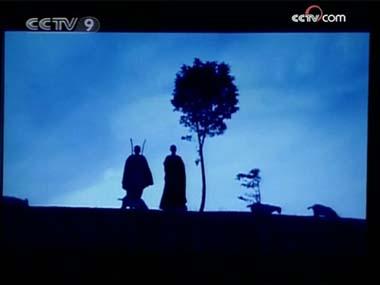
Taipei, Taiwan -- Three documentaries on Buddhism produced on the Mainland have been officially released in Taipei on the heels of the World Buddhism Forum,which closed on Tuesday.


One of the documentaries is "Master Xuan Zang," a film recording the Tang Dynasty monk's legendary journey to India, the cradle of Buddhist culture.

The second is a six-episode feature on the rise and fall of the Tang royal temple--- the "Famen Temple." Third is a 46-part TV documentary "Thousand-Year Buddhism Path", a vivid account of the inheritance and development of Buddhism in China.

Three documentaries on Buddhism produced on the Mainland have been officially released in Taipei on the heels of the World Buddhism Forum,which closed on Tuesday.

Gao Feng, vice-president of China Central Television said, "I believed the show will attract wide attention. Followers of Buddhism will be enlightened, and the mass public will feel the power and splendor of Chinese culture."

The "Thousand-Year Buddhism Path" is by the same cast who shot the widely-acclaimed 12-episode documentary, --the "Palace Museum". The production exhaustively visited over 200 temples over seven years. It's a million-yuan production. Both the "Thousand-Year Buddhism Path" and "Famen Temple" have aired on CCTV. People from local Buddhist and cultural circles are earnestly awaiting the chance to see them in Taiwan.

Imparting the Dhamma

By MAJORIE CHIEW, The Star, April 2, 2009

The Abbot & The Orphan is a new cartoon series with a mission

Kuala Lumpur, Malaysia -- IN this age of the Internet, printed literature may not be as effective as multimedia in reaching out to the young.


That is why Ng Lid Sine, 47, has come up with a cartoon series, The Abbot & The Orphan, to capture the interest of children and teach them moral lessons along the way.

Ng has come up with a cartoon series, The Abbot & The Orphan, to capture the interest of the young and teach them moral lessons along the way.

“Children today are so privileged. They have everything, so they may find it difficult to grasp the dhamma (Buddhist teachings). I want to share with them the story of a child who has nothing, not even parents,” says Ng, who wrote the script for the series, inspired by his observations around the Buddhist Maha Vihara in Brickfields, Kuala Lumpur.

The Abbot & The Orphan revolves around an orphan named Butterfly (featuring the voice of Ng Zen Ian) who has nothing. He is cared for by a blind and old abbot (voiced by Vijaya Samaravickrama).

“The characters of the abbot and the orphan are a reflection of the unsatisfactory nature of life. The whole drama becomes a stage to display and unfold Buddha’s teachings,” explains Ng, who is animation director of Cartoon Workshop, a Selangor-based local production house for animated and educational series.

The Abbot & The Orphan – The Shrine, Episode 1 in English and Mandarin was recently released on DVD in conjunction with the 80th anniversary of the Buddhist Institute Sunday Dhamma School (BISDS) housed in the Buddhist Maha Vihara.

The school was set up in 1929 by the Sasana Abhiwurdhi Wardhana Society. The oldest Buddhist Sunday School in the country, it has over 1,300 students (aged six to 20) and 200 volunteer teachers and staff.

Vandana, a collection of Buddhist recitals in Pali during the puja (offering) ceremony, was also launched. This DVD includes Karaniya Metta Sutta, the discourse on loving-kindness recited by Buddhist monks to bless devotees. Both DVDs are produced by Cartoon Workshop and BISDS.

Cartoon Workshop executive producer Catherine Heng says: “The Abbot & The Orphan series consists of eight episodes. A team of animators took four months to produce the first 20-minute episode of the 3D animated series. Voice talents come from students and staff members of BISDS.”

Heng, a volunteer teacher at BISDS, says: “Some 4,000 copies of Vandana and The Abbot & The Orphan have been produced with donations from sponsors. The second DVD,

The Abbot & The Orphan – Belief, Episode 2, is in the post-production stage and scheduled for release by middle of the year.

“In this episode, Butterfly is tricked by a fortune-teller who gave him two magic stones in exchange for goats. The storyline is aimed at instilling awareness that one should not believe blindly but investigate the truth.”

heng adds that there are plans to host the animation series on the BISDS website (www.bisds.org) to make it easily available to the Buddhist community.

The animation project also nurtures the creative talents of the Sunday school attendees, especially the children.

Vineeta Serisena, deputy principal of BISDS and animation series consultant, says: “The animation series is appealing, yet simple enough for children to understand. It has a deeper meaning within.”

To coincide with the BISDS anniversary and to commemorate the 90th birthday anniversary of the late Ven K. Sri Dhammananda on March 18, CDs containing dhamma talks by Dhammananda were launched.

Dhammananda had given 5,600 dhamma talks locally and abroad. Those interested in sponsoring The Abbot & The Orphan series can contact 03-2274 1141.

Thursday, April 02, 2009

Dalai Lama completes 50 yrs in exile in India

by Anand Sankar, Business Standard, April 1, 2009

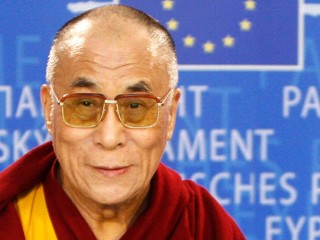
New Delhi, India -- Tibetan spiritual leader in exile, the 14th Dalai Lama, Tenzin Gyatso, today called upon the Chinese government to throw open Tibet to “independent, impartial observers” immediately.


Only that, he said, would settle the trading of opinions that occurs when the Tibetan Government in Exile and the People's Republic of China (PRC) sit down for dialogue.

The 74-year-old Buddhist monk was speaking to journalists in New Delhi on the eve of the 50th year of his exile in India.

On March 31, 1959, he evaded Chinese troops and entered India through the region of Tawang in Arunachal Pradesh. The Dalai Lama said he wanted to use the occasion to “tell India how much it has done for the Tibetan refugee community and himself.” “We are burdened to thank India,” he said. The Indian government considers Tibet to be a part of the PRC.

Through the day he visited five places of religious importance in New Delhi to pray for “peace in India and happiness for its people.” The journey started at the Gandhi Smriti, the spot where Mahatma Gandhi was assassinated and halted at the Acharya Sushil Muni Ashram, Nizamuddin Chilan, Judah Hyam Synagogue, Gurudwara Rakab Ganj, The Cathedral Church of Redemption, Mahabodhi Society and the Laxmi Narayan Temple. At all the spots, he prayed according to the traditions prevalent there and explained later that during his 50-year stay in India he had gained “new knowledge from following traditions other than Buddhism.”

Commenting on Chinese claims that Tibetan activists were gravitating towards violent protests, the Nobel Peace Laureate said: “No, I don't think so. Among 100,000 exiles, one or two may be.” He did acknowledge growing criticism of his Middle Way approach, which does not seek independence from China, from the younger Tibetans. “There are quite a number critical of our stand. That is their different opinion.” The PRC, in its official stand, states conditions are better for Tibetans under Chinese rule.

Recalling that he started taking his titular responsibility aged 16, he said he felt he has been correct on the major decisions and “many Tibetans agree also.” He said education is the key for the Tibetans to continue to fight for their rights.

The Dalai Lama said his fascination in the future was to learn more from science and science in turn to learn from Buddhism. “Meeting scientists makes me immensely happy,” he said.

Finally, the Dalai Lama was asked to comment on the upcoming general elections, especially the perceived “communalisation” of politics. He cheekily responded: “As far as Indian politics is concerned, I am happy to see it from a distance. A BJP leader came to seek my blessings during the last elections, as well as his opponents. I bless them all. I should be neutral.”

Monday, March 30, 2009

Actor Evan Brennan finds Nirvana as ‘Buddha’

By Jenna Scherer, Boston Herald, March 26, 2009

Boston, MA (USA) -- For most Westerners, knowledge of the Buddha doesn’t extend beyond a few groovy aphorisms and dime-store statuettes of a fat, smiling monk.

But one Westerner, actor Evan Brenner, is out to tell the full story. Brenner is currently performing his one-man show “The Buddha - In His Own Words,” at the Boston Center for the Arts before moving the production to the Cambridge YMCA.


Speaking from his New York City apartment, Brenner explained that the Buddha - also known as Siddhartha Gautama, an Indian nobleman who abandoned his life of privilege to find enlightenment - was just as human as the rest of us.

Herald: When did you first become interested in Buddhism?

Brenner: In high school. It promised a way out of my own suffering. And then, about five years ago, I was in a very dark period of my life. I turned back to the Buddhist sutras. . . . At that time, I wasn’t so much drawn to the doctrine as I was to the story of the man. He, too, had gone through tremendous hardships, and I identified with his story. It became apparent to me that his journey was mine, that his journey is all our journeys.

What made you decide to tell the Buddha’s story onstage?

I had immersed myself in these sutras, and they were just full of really great, compelling stories. I was reading the story of Angulimala (about a serial murderer who converts to Buddhism), and I went to my girlfriend and I said, “You’ve got to hear this.” And she kind of oohed and aahed at all the right times.

At that moment I thought, “Wow.” The life of the Buddha is one of the great archetypal adventure stories. I’d seen Alec McCowan do “St. Mark’s Gospel,” where he basically just recites the Gospel of Mark onstage. And I thought, why not do the Buddha’s story as a one-man play?

How has working on the piece affected you?

Getting to know and learn the Buddha’s life has been this process of getting deeper and deeper. To memorize this whole text kind of gets it inside myself, so to speak.

What do you hope that audiences will get out of watching the play?

When I was first curled up with those sutras I thought, “Wow, I would love to see this as a show.” I would like to imagine what it would be like to meet the Buddha face-to-face. It’s sort of deflating in a way, but it’s also great. Because if he was just a human being, it elevates the tradition in the sense that liberation is possible for us all. So I hope for people to have that opportunity.

Wednesday, March 18, 2009

Buddhists Connect Online Through Video Sharing and New Community at eDharma.com

The Buddhist Channel, Matrch 16, 2009

Jakarta, Indonesia -- www.eDharma.com launches this week, connecting Buddhists worldwide through a free social networking and video sharing service.


The community opens with a collection of educational videos on Mahayana, Theravada, and other Buddhist sects, as well as a forum where Buddhists and those interested in learning about Buddhism can meet and discuss the Buddhist way of life.

“eDharma.com is about two things,” says Rudy Hadisentosa, owner of the new online Buddhist community. “The site serves as a social network and online community where Buddhists from all over the world can come together and share thoughts and ideas. In addition to connecting people, eDharma.com is designed to teach others about Buddhism in a more interesting and interactive way. We’re working to accomplish this through the video sharing aspect of the site. For example, through current videos, visitors can learn about things like moral or Zen Buddhist teachings or watch English webcasts of the True Buddha School"

Creating an account at www.eDharma.com takes only a few minutes. After registering for an account, members have the ability to upload Buddhist videos, photos, or news to share with the eDharma.com community.

Videos can be shared by uploading them directly to eDharma.com. The site also supports embedded videos from other video sharing services such as YouTube and Google Video. The Buddhist forum gives all new members a place to introduce themselves and share ideas with the entire community. Membership at eDharma.com is free.

About www.eDharma.com

eDharma.com is a free online Buddhist community, connecting members of various sects of Buddhism with each other and with non-Buddhists. Launched in March 2009, the mission of eDharma.com is to educate people about Buddhism while giving active Buddhists a place to meet and interact.

For more information about the www.eDharma.com community or Buddhist video sharing service, please contact Rudy Hadisentosa at +62 21 56999720.