Tuesday, May 05, 2009

Three Malaysians to get gift of sight

by Tan Yi Liang, The Sun, May 4, 2009

KUALA LUMPUR, Malaysia -- Three Malaysians will receive the gift of sight – thanks to corneas donated by the Sri Lankan government.


The corneas, which will benefit a Malay, Chinese and Indian, are part of the Buddhist Maha Vihara’s annual Caring and Sharing programme to commemorate Wesak Day.

About 1,000 underprivileged individuals were invited to the Buddhist Maha Vihara in Brickfields yesterday to take part in the celebration, which included food, gifts and entertainment.

Said the Buddhist Chief High Priest of Malaysia, K. Sri Dhammaratana: "This event will help foster unity among the races. It extends beyond race and religion."

Transport Minister Datuk Seri Ong Tee Keat, who was the guest of honour, received the corneas from Sri Lankan High Commissioner Dr D. Ranasinghe.

He thanked the Sri Lankan government for the donation.

Of yesterday’s celebration, he said: "It is truly an honour to witness a gathering of different cultures, religions and ethnicity in one place rejoicing in the act of giving, caring and sharing."

Ong also called for the concept of giving and sharing to be revived.

"In today’s hectic and changing world, the simple thought of stopping and observing our surroundings and extending a helping hand is long forgotten. We need to revive the thought of giving and sharing in each and every one of us," he said.

The cornea transplants will be carried out at Tun Hussein Onn Eye Hospital.

A special time for Buddhists

By Lakna Paranamanna, The Nation, May 4, 2009

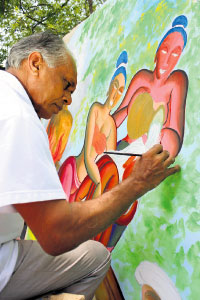
Colombo, Sri Lanka -- Vesak is a very special time for Buddhists, because it depicts the themagula, birth, enlightenment and parinibbana (death) of Lord Buddha. Pandals, or better known among us as Thoran, take a prominent place during the celebrations. Thousands of multi coloured bulbs, emphasise the beauty of the paintings and brings the various Jathaka tales or, incidents in Lord Buddha’s life, alive.


Not only Buddhists, but many others, irrespective of religion, are very enthusiastic of sightseeing during this season, just to view these vibrant pandals. The Nation met an artist, Somaratne Gomez, who has been making pandals for nearly two decades, to have an insight into the art of pandal making.

Inspired by nature

Even before I stepped into his house, I could see how dedicated this painter was for his life’s passion; art. The entire house, from the entrance, was transformed into an art workshop; brushes, palettes and paints placed in every nook and corner, and paintings were displayed, while the walls and the floor was speckled with dabs of paint. I could smell fresh paint, as he warmly welcomed me into his house. Sections of the pandal were completed and placed aside, while he had started work on detailing another, perched on a tall stool.

It is a common perception that art is a talent and not a skill which can be developed through techniques and tutoring alone, and without the knack for the medium since childhood. Gomez’s story as an artist had taken quite a different twist than the usual ones, because he was not at all interested in art as a child, until he was 14 years. “I never liked art and I got the lowest marks in school. But suddenly, when I was about 14-years-old, I developed a sudden passion for drawing and painting. I never had a master to help me develop my skills, they were techniques that I developed on my own, inspired through nature,” he tells us, while dabbing paint on the canvas. It was evident from his paintings that, the shades of colours used were those found in the environment around us. The drawings were very natural, real and very colourful and bright.

This sudden urge for art made him attempt at making small pandals. “When I used to go sightseeing during Vesak as a child, I thought of trying to make a pandal myself. So, since then, I made pandals during Vesak, displayed them in my garden, and put them safely back in my room cupboard until the next Vesak.”

Gomez’s first ever public exhibition of one of his pandals had been when he was about 18-years-old, as part of Vesak celebrations of a children’s society. “The pandal depicted the story of Patachara.” Since then, this skilled painter has been making pandals, with a collection of more than 30 pandals, including two pandals for Sirasa Vesak Kalapaya 2000. “I did not make them for money. I do not believe in marketing and selling my religion. It was only two years back that I began accepting money and that too, only to buy the colours and the necessary material, and to pay two other artists who assist me,” asserted Gomez, adding that, even so, sometimes, some organisers slip away without paying. “I do not mind that type of behaviour. I paint for my own personal satisfaction, not for money. Since my expectations are met, I am more than happy. I do not get affected by that type of people,” he says smiling.

From a sketch to a complete work of art

A pandal is a creation of hard work, dedication and unity. Apart from the main artist there is a whole team behind him that helps bring the story alive. Gomez started telling me the process of starting on this work of art. “The story which is portrayed is decided by the organisers. It is only afterwards the artist begins his work, breaking story into parts and giving them life through his skills. Usually I begin working on the work of a pandal at least four months ahead because then there is plenty of time for alterations if needed. Also painting should not be done in a hurry; it should be similar to that of a meditation.”

For starters, the thorana is designed in the form of a mini replica of the design. After the design is completed, the actual sized wooden frames are made. Then the raw material is first dabbed with rubber paint, left to dry and stretched and fixed onto the frame. He says that a medium sized pandal would require at least 50 yards of material. “This is the point where the artist begins his real work.” Pencil sketches are done on each component and afterwards the artist and his assistants begin their work. “I have two assistants. They are my students so they know my style best. They have been of great help and this venture would not have been successful without them,” added this wonderful artisan. He only uses acrylic paint for his work because of the high quality. “It gives the painting a glow and looks wonderful when the bulbs are lit.”

The next chapter begins when the completed components are assembled and fixed into the rough body of the pandal (Katu Thorana). “It is the most challenging in the entire process. Most don’t use a scale while making the wooden frames to match the mini block. So the trouble arises when the pandal is assembled because the components do not sometimes fit the rough body,” pointed out Gomez adding that this, results in additional work of cutting and chopping off pieces which can be quite complicating.

“So I follow a different technique. After designing the mini block, I make the actual sized pandal out of boxboard according to a scale. The wooden frames are cut and shaped to match the actual sized boxboard plan so that the components would in the end fit perfectly into the rough body. Also I make it a point to make both sides of the pandal in perfect symmetry. This adds up an extra cost of about Rs. 5000, but I follow this way because then the final creation is flawless.”

Traditions

The pandal makers follow a set of traditions when they begin working on the pandal “The main tradition is to begin the work at an auspicious time.” The propitious times are followed while handing over the advance money, while placing the first arecanut plank for the Katu Thorana, while assembling the components and finally during the opening of the pandal.

Another tradition called the Nethra Nakatha is also followed when working on painting Lord Buddha. “According to tradition, while painting the Buddha, the eyes are not painted by the artist until a certain auspicious time arrives.” However, Gomez does not follow these traditions. “It is important to follow the traditions. But this is my personal belief. I believe in Lord Buddha and his dhamma. So I do not feel the need to check auspicious times. Whenever I am ready I begin my work,” he said, while getting off the tall stool which he was on while working on one of the figures, to mix another batch of colours.

Adding more of his personal stance on painting pictures of Lord Buddha and sculpting the statues, he says that he does not agree with each and everyone painting or sculpting Buddha statues. “I have seen many artists paint the Buddha and even some sculptors, do not draw or mould the statue giving the figure the proper attributes. If you can not do a proper job, you should just refrain.”

A challenge

“Constructing a pandal is not an easy task now. Even if the paintings and other construction work is done with minimal cost, the bulbs and the other electrical fixtures are very expensive,” says Gomez pointing out that the wires which cost about Rs. 400 about three years back is now about Rs. 1500. He says that to build a thorana, currently at least Rs. 0.5 million is required.

This year Gomez is working on one of the main pandals to be displayed, organised by the Eksath Welanda Sangamaya of the Panadura market. It is 55ft tall and 55 ft in width and the tale portrayed would be the Mahasaala Brahmana Jataka. “Many pandals nowadays depict various Jataka tales and other instances of the Lord Buddha’s life, but not the most important incident. The themagula is the most important incident and that should be given priority. I always add at least one of these incidents in my pandals if they are done for the Wesak season. This time I am very happy to say that I included all three,” he concluded, smiling proudly.

Thursday, April 30, 2009

Buddhist Global Relief

Buddhist Global Relief (BGR) is an inter-denominational community of Buddhists and friends of Buddhism who seek to give concrete expression to the Buddha’s great compassion as an ongoing project in the contemporary world.

BGR addresses the plight of people worldwide afflicted by poverty, natural disaster, and societal neglect. It aspires to directly participate in the Buddha’s mission of liberating beings from suffering by addressing the most immediate causes of their distress and providing for their well-being and happiness.

Inspired by a sense of humane responsibility and commitment to social justice, its members seek to improve the lives of the men, women, and children that they serve, enabling them to lead fruitful lives of dignity, hope, and meaning.

Note from webmaster: BGR is still consider new in this world and has yet to establish themselves in every corner of the world. Nevertheless, we should not be hinder by the barrier that exist now. We can still do our part today for our own community.

Tuesday, April 28, 2009

Swine Flu FAQ

Information taken from The Star Online

What is swine influenza?

It is a respiratory disease of pigs caused by type A strains of the influenza virus. It regularly causes high flu outbreaks in pigs but with low death rates. There are four main sub-types of the virus, but the most recent isolated influenza viruses from pigs have been H1N1 viruses.

How does it spread?

Swine flu viruses do not typically infect humans though they do occur through close proximity or contact with infected pigs or contaminated areas. Cases of human-to-human spread have been documented.

What are the symptoms?

The symptoms are similar to those of regular flu:
- Fever
- Lethargy
- Runny nose
- Cough
- Sore throat
- Lack of appetite
- Vomiting and diarrhoea in some cases.

How common is swine flu infection in humans?

In the past reports of about one human swine flu virus infection had been received every one to two years in the United States. From December 2005 till February 2009, 12 cases have been reported.

Has this strain of flu been seen before?

No. Flu mutates constantly, so it is common for new strains to emerge. Pigs can also be infected with both human and avian influenza, and the current circulating swine flu strain appears to contain genetic elements from all three.

Can swine flu be treated with antiviral drugs and flu vaccine?

The swine flu is resistant to two common drugs – Amantadine and Rimantadine. The H1N1 swine flu viruses are very different from human H1N1 viruses. Therefore, vaccines for human seasonal flu would not provide protection. However, a “seed vaccine” has been specifically tailored to this swine flu and will be manufactured if officials deem it necessary.

Can people catch swine flu by eating pork?

No. Swine influenza viruses are not transmitted by food. Eating properly handled and cooked pork and pork products is safe. Cooking pork to an internal temperature of 70ºC and above kills the swine flu virus.

How long is someone with swine flu considered contagious?

People with swine influenza virus infection should be considered potentially contagious as long as they are symptomatic; possibly for up to seven days following the onset of the illness. Children, especially younger children, might potentially be contagious for longer periods.

What can I do to protect myself from the swine flu?

There is no vaccine available right now to protect against the swine flu.

However, you can help prevent the spread of germs that cause respiratory illnesses like influenza by:

- Covering your nose and mouth with a disposable tissue or handkerchief when you cough or sneeze. Throw the tissue in the waste basket after you use it.

- Wash your hands often with soap and water, especially after you cough or sneeze. Alcohol-based hand cleaners are also helpful

- Try to avoid close contact with sick people. - If you get sick with influenza, stay at home and limit contact with others to keep from infecting them.

- Avoid touching your eyes, nose or mouth.

- Consult your nearest healthcare facility if you think you have any of the symptoms.

Which countries have had cases of the swine flu?

The World Health Organisation (WHO) has confirmed human cases of swine flu in Mexico, the United States, Canada and Spain. Only Mexico has reported deaths from the new strain.

Are there any travel restrictions or advisories for Malaysians?

The Health Ministry on April 27 advised Malaysians against travelling to certain places in the United States, Mexico and Canada which have been affected by the swine flu.

What precautions are in place in Malaysia?

- The Health Ministry’s operations room in Putrajaya has started a 24-hour monitoring of the situation. The public can call 03-8881 0200/300 for enquiries.

- Those returning from Latin American countries and found to have flu-like symptoms will be quarantined.

- Health Ministry officials are conducting health screenings on passengers arriving from the United States.

- Thermal scanners will be placed at international airports to speed up the screening process for swine flu.

- Public and private medical practitioners have been instructed to report to the district health office any patient with influenza-like illnesses or severe pneumonia symptoms and who had travelled to the affected countries after April 17.

- Owners of the 797 pig farms nationwide have been ordered to immediately contact the nearest Veterinary Services Department office or the Animal Disease Control Centre if their workers or animals show symptoms linked to the swine flu.

Where can I get more information?

For more information, go to the Health Ministry (www.moh.gov.my) or call the Ministry's hotline at (03) 8881-0200/300.

Useful Links:
World Health Organization: www.who.int
Centers for Disease Control and Prevention: www.cdc.gov
Homeland Security Department: www.dhs.gov
WHO swine flu page: http://www.who.int/csr/disease/swineflu/en/index.html

Youth Camp Promo @ KCBA

Wesak Day is approaching. The committee members of KCBA English Dhamma Youth Camp for this year would be around to help out the Adult group in propagating Buddhism while doing our own propagating as well.

As usual, our main even of the year would be our KCBA English Dhamma Youth Camp 14: The Gems of Life.
Date: 17th - 20th December 2009
Venue: The Klang and Coast Buddhist Association
Fee: RM70 per person

More info, please visit us at our counter during Wesak Day or contact us at kcbadyc@gmail.com

Everybody, it seems, is a Buddhist now

by Douglas Todd, Canwest News Service, April 27, 2009

Vancouver, Cabada -- Have you noticed more friends and acquaintances quietly suggesting they have become Buddhists? I'm picking up the trend everywhere.


I take Buddhism very seriously as one of the great religions. There are important truths to explore in Buddhism. It is a profound and challenging system of belief.

But right now I just want to remark on how struck I've been by the way many North American searchers are making Buddhism their spirituality of choice. It is currently very cool to be a Buddhist.

Buddhism gets good media coverage. The Dalai Lama. Thich Nhat Hanh. Jack Kornfeld. These caring and charismatic men are high profile. Many Hollywood stars are also into Buddhism, spreading the word.

Unlike some of the world's two billion Christians, Buddhists are not linked in the public's mind with extremism or war or aggressive proslytizing (even though, believe it or not, there are Buddhist militants).

In contrast, it is definitely not cool now to be Christian, especially in Canada, despite the diversity of the faith.

And it's still not really socially acceptable to be a follower of Jesus in Canada despite Barack Obama being a liberal Christian.

Even Judaism, Sikhism, Hinduism and in some quarters Islam seem to be more cool these days. Yet nothing seems to touch the popularity of Buddhism as its been adapted to the West. I think many are drawn to a Buddhist-flavoured allure of meditation, inner calm, psychological insight and apparent open-mindedness.

I recently interviewed the rock-and-roll/punk singer Bif Naked. A smart woman, Bif has been noticing how young North Americans, as well as the not so young, are drawn today to "exotic" religions, and that typically means from the East.

A Vancouver yoga studio owner says, "Everybody's a Buddhist now." She also knows a few things about Buddhism. But, like me, she wonders how so many people can so casually say they're Buddhist.

Do they attend a Buddhist temple? Have they studied Buddhism, beyond a few books or articles or taking some meditation classes? What do they think about Buddhist basics, such as the Four Noble Truths? The Eightfold Path? Which stream of Buddhism do they follow?

There are so many different schools of Buddhist thought -- and they are incredibly complex, both philosophically and in their spiritual demands. I suspect some new Buddhists don't know the answers to these questions.

It's true that followers of many religions don't really know much about their tradition. And despite raising these concerns, in some ways I celebrate these new Buddhists' interest in this spiritual path. Maybe they're at the beginning of something creatively transformative for themselves, and even society.

Wednesday, April 22, 2009

Earth Day

Articles and pictures courtesy from Youth2 and Metro of The Star Publication. (Combination of a few articles)

What is Earth Day?

First Earth Hour, now Earth Day, what next? Earth Week?

Hate to break it to you, but in many countries, it really IS Earth Week now.

Don’t worry, it’s not about turning off electricity for a whole day. Earth Day is simply an event to remind everyone about the importance of protecting and appreciating our planet.

This year, the US-based Earth Day Network will be starting a Green Generation campaign which will slowly build up towards Earth Day’s 40th anniversary next year.

According to Wikipedia, the theme 40 years ago was overpopulation. In spite of that, world population has almost doubled since then, so imagine what would happen if we ignored the current themes of sustainability.

To find out more about the Green Generation campaign and how you can get involved, log on to earthday.net/node/13475.

Creative initiatives to protect our planet

GREEN business has become the trend of the century. While the Earth Hour was a short-term effort to create awareness about the environment, or as critics claimed, a mere publicity stunt, some organisations are going green by making long-term changes for sustainability.

The following are some examples of green business initiatives by several companies:

Waterless urinals in men’s washroom

At the Sunway Pyramid, there is no more need to flush at the urinals in the men’s toilets as each urinal is coated with BioCare liquid, a special chemical that breaks down urine into environment-friendly components without using water.

“This is part of the mall’s effort to conserve water and reduce wastage to help the environment. As the breakdown of the urine takes place immediately upon contact, this system ensures the urinals are always hygienic for use,” said the mall’s leasing and marketing general manager Kevin Tan.

According to Tan, the chemical is changed weekly to ensure its effectiveness.

Other green activities by the mall include a car park guiding system, the Alam Flora Recycling Buy Back Centre, and the Bring Your Own Bag campaign.

The parking system uses red/green LED (light emitting diodes) light to guide motorists to the nearest available parking bay.

“This system helps drivers to save time in locating available parking bays and reduces the time spent on finding available parking bays means less carbon monoxide emission from running vehicles,” Tan said.

“Shoppers and tenants can also recycle old cardboard boxes, newspapers, can and hard plastic for cash at the Alam Flora Recycling Buy Back Centre (BBC), which is open daily from 10am to 5pm except Thursday,” he said.

“A recycling buyback centre in the mall encourages not only the public but the retail outlets to trade in recyclables for cash as well.

In addition, the Sunway Pyramid will be rewarding shoppers with free parking every Tuesday (except public holidays) for supporting the environment. To qualify for the scheme, shoppers need to bring their eco-friendly bags (paper or plastic bags are not allowed) and buy product-based goods worth a minimum of RM50. They then have to present their receipts to one of the concierges and exchange their parking ticket for a free ticket.

“The main message of the campaign is not solely about the mall going green for the long-term, but that its shoppers take ownership and do their part for Mother Nature,” Tan said.

100% PCR PET Bottles

The Body Shop, known for its environment-friendly initiatives, is no stranger to the concept of green business.

According to The Body Shop marketing communication manager Jennifer Chan, one key value at The Body Shop is to protect the planet.

“Early last year, 100% recycled plastic bottles were introduced. That’s because some people still discard the packaging the usual way even if there’s a recycling centre or the option to return it to our outlets. The bottles are also 100% recyclable, from the cap to the label, even if it ends up in a landfill,” Chan said,

She said The Body Shop paper bags were made from 100% recycled paper with printing using water-based ink that did not harm the environment.

For the Green Office concept, the company’s workers are encouraged to practice the 3R — reduce, reuse and recycle.

Recycle bins are placed in the office for used paper and empty bottles.

Employees are advised to switch off all electrical appliances such as lights, air-conditioners, and computers when not in use, print emails or documents only when necessary and print all documents double-sided where possible, as well as publish, distribute or copy documents electronically.

As for reuse, the workers are encouraged to use scrap paper for taking notes and printing, re-use envelopes from internal mail and use own coffee mugs or water bottles for water and beverages instead of plastic/paper cups.

Up next is the “Kick The Bag Habit” on World Environment Day on June 5. Launched on Earth Day last year, the campaign raised RM91,953 towards the protection of the Temengor rainforest and over 77,000 paper bags saved over the period of the campaign.

For each shopping bag declined by every customer during the campaign, The Body Shop donated 50 sen to its campaign partner Malay­sia Nature Society (MNS). Customers who requested a bag donated 50 sen towards the campaign.

“The concept is same for this year, but customers can now have the choice to purchase a limited edition tote bag at RM5, where RM2.50 will be donated to the MNS for the Save Temengor campaign,” Chan said.

Reducing carbon dioxide emissions

Panasonic Malaysia Sdn Bhd is committed to reducing carbon dioxide (CO2) emissions from its production activities by 300,000 tonnes globally over three years from fiscal year 2008 to 2010.

According to its assistant general manager (corporate communication and branding), Azizah Wahid, as part of the company’s environmental sustainability management activities, it will focus on three initiatives: Eco ideas for manufacturing, Eco ideas for everybody and everywhere, and Eco ideas for products.

Internally, the company has adopted a series of activities such as “no overtime” day, saving energy by switching off air-conditioners and lights, “no driving out for lunch” day to save petrol and reduce carbon footprint as well as recycling and office cleaning to maintain a clean and healthy work environment and work culture.

Azizah said the company was also striving to develop technologies for resource conservation while improving product functions.

To reduce CO2 emissions in the group’s activities, Panasonic will improve productivity in all manufacturing processes, including product planning, procurement, marketing, logistics and recycling.

“Reducing resources will reduce the amount of material used; reduce the rate of non-circulating resources over their life cycles; use more recycled resources; and increase recyclable resources. At the same time, Panasonic will reduce CO2 emissions,” Azizah said.

For the Clean Factories initiatives, Panasonic emphasises preventing global warming, reducing total waste, and reducing the release and transfer of chemical substances.

The company is endeavouring to minimise all input and output and to make all their manufacturing sites into Clean Factories.

Panasonic also promotes green logistics and recycling waste to help prevent global warming and reduce air pollution.

Panasonic will expand its eco- activities to local communities around the world. The company is promoting awareness-raising activities such as Love the Earth Citizens Campaign to encourage employees and their families to be active parti­ci­pants in eco-initiatives at home, the workplace and local communities.

Panasonic is aiming to establish factories co-existing in harmony with local communities and societies.

In addition to giving environmental consideration to materials and promoting recycling-oriented de­signs, Panasonic will accelerate development of energy conservation technologies while eliminating products with low energy efficiency.

Green crusaders

FROM rearing their own chickens to adopting lightbulbs, the young people of Malaysia have sure risen to the challenge of preserving our planet.

It’s one thing to turn off your lights for an hour every year to reduce your carbon footprint as was done in the recent Earth Hour global campaign, and another altogether to spend your weekends saving the natural habitats of turtles, or cleaning up waterfalls.

But that’s exactly what some young people have been doing; and in conjunction with Earth Day today, R.AGE checked out some of the activities our youth are getting involved in to help protect our little blue planet.

Can’t adopt a tree? Try a lightbulb!

Planting trees may not be something everybody can afford to do in the concrete jungles that we have built around ourselves, so why not try something else more creative?

A group of 18 A-Levels students in Kolej Tuanku Ja’afar (KTJ), Negri Sembilan, came up with an idea for people to start living an environmentally sustainable lifestyle.

The students organised an “Adopt-A-Lightbulb” campaign as part of their school’s Eco Fair (taking place today at KTJ), and have so far raised enough money to sponsor over 200 energy-saving lightbulbs to various schools and charity homes.

“These lightbulbs are actually much more practical,” said Tai Yang, 19, one of the students.

“A Grade A energy-saving bulb can save up to 80% energy, and they have a lifespan of 6,000 to 15,000 hours, while normal bulbs last a maximum of 1,000 hours.

“That’s why a lot of businesses use energy-saving lightbulbs. They’re more expensive, but if you consider how long they last, it actually comes up to about the same price.”

Tai initiated the campaign as part of the Global Debate competition (organised by United Nations Foundation initiative The People Speak), a worldwide project that encourages youth to speak out about pressing global issues.

Tai hopes that the event won’t just impact his fellow schoolmates, but that it will help others beyond the school realise the benefits of even small acts like switching lightbulbs.


He said: “I used to think global warming was a myth. That’s what a lot of young people are still like. They don’t believe it’s a serious problem.”

Rearing to go

While the KTJ students are working on a campaign as a group, others choose to do it their own way.

Take Mah Chong Ee, 25, for example,whose hobby of rearing chickens ensures that he and his friends not only have healthy food to eat but also helps to do away with commercial waste associated with purchasing poultry from say, a supermarket.

“I just find it sad that we barely know what real chicken tastes like anymore. Once you have tried free range or kampung chicken, you’ll taste the difference. It’s like the birds we eat these days aren’t even real chickens anymore,” said Chong Ee who, together with his father, has been rearing a few small chicks for their meat.

Free range animals are those brought up in a more natural environment, compared to those mass produced in farms..

He was quick, however, to distance himself from those caught up in the organic food trend.

“I’m not some organic food freak. The rest of my eating habits are quite normal. I just feel that it’s a small step I can take to have a better lifestyle. I don’t expect people to start growing their own fruits and vegetables, but it would be great if they could,” he said.

Waterfall Survivors

In July 2008, nature enthusiast Joe Yap established a Facebook group called “Waterfall Survivors”, a group that would unite over 1,000 waterfall lovers in Malaysia.

“I found Kanching Waterfalls in Rawang, Selangor, online while searching for a perfect family outing venue,” Joe, 30, explained.

“I was immediately interested in locating more waterfalls, and decided it would be a good idea to hold waterfall expeditions.”

Waterfall Survivors organises regular waterfall exploration trips – day trips as well as overnight trips, where members gather to collect rubbish, socialise and, bathe in, as well as explore, the waterfalls.

Last Sunday’s expedition was the group’s most successful to date as 300 people, made up of the Facebook group members and their friends, showed up to clean up Kanching Waterfalls.

This was the first time Kong Yink Heay, a 25-year-old production executive, had taken part in a collective effort.

“Whenever I picked up a piece of rubbish during that campaign I feel I’ve given back something to nature. After clearing up the rubbish, the waterfall looks more undisturbed.”

Check out the Facebook page at tinyurl.com/dhjqe4 or e-mail waterfallsurvivors@hotmail.com for more information about the group.

PENYUinc

Mohd Amzari Abas, 29, last saw a Giant Leatherback turtle when he was a small child, on a trip to Rantau Abang, Terengganu, with his family.

“That was the first and last time I have encountered that mighty creature. From then on I vowed to do something to help preserve these beautiful sea turtles,” said the founder of PENYUinc.

In 2006, Amzari visited Turtle Sanctuary in Cherating, Pahang, and to his shock discovered that the Giant Leatherbacks no longer lay eggs on Malaysian shores. He decided then that he would set up a volunteer group to help the sanctuary out.

“At first it was just me and a few friends, but now we have around 600 members from all over the world who are passionate about saving the turtles,” Amzari said.

At the centre, volunteers clean up the beach, give information to tourists, learn about turtles and release baby turtles into the sea.

“The best part is helping the beach rangers during their night patrols on the beach and coming across sea turtles! The most valuable experience would be watching them lay eggs and learning about the process,” Amzari noted.

“I don’t want my grandchildren to only encounter turtles as figurines in a museum. They should have the same experiences we do,” Amzari added.

Those interested to take part in the programme must be over the age of 18. Visit myspace.com/penyuinc or e-mail penyuinc@yahoo.com.au for details.

Sri KDU River Rangers

At 17, nature lover Richard Liew already knows how to test water pollution levels, and, along, with 30 other students of Sri KDU, has cleaned a river.

Not many 17-year-old teenagers, let alone adults, have experienced anything quite like the River Rangers at the Sri KDU school in Selangor, who recently attended a training session run by the Global Environment Centre.

Prior to the river clean up last month, the students were given theoretical sessions at the school to educate them on the status of rivers in Malaysia, the main sources of pollution and its impact on our drinking water and health.

Richard and his peers went to Sungai Penchala in Petaling Jaya and were astounded by the strange things they discovered submerged in the river.

“Apart from regular rubbish, there were bicycles, cables, even a mattress floating in the river!” Richard shared.

“Being a part of this programme makes me feel useful. As a teenager, I have a role to play in society, and I’ve done my part and will continue to do it.”

The River Rangers will continue to carry out periodic checks and river cleanups and in the process learn to appreciate that rivers are the lifeblood of the environment.

Green on screen

THESE movies and songs will get us all in the right frame of mind, and strengthen our resolve to be good to Mother Earth.

This eye-opening and much talked about documentary is former US vice president Al Gore’s personal project to save Mother Nature. It captures viewers’ attention from the start with its predictions on the catastrophes waiting to befall humanity as a result of global warming.

The Inconvenient Truth explores climate change and how it affects humans today and in the years to come. Great lesson from this movie – don’t take too long to conserve Earth. Start now.

We may be a little tired of Eddie Murphy and his crazy antics but credit should be given where it’s due. Dr. Dolittle 2 has a strong message to share. Eddie reprises his role as Dr. Dolittle, the vet with the ability to talk to animals, who in this movie are preparing to launch a strike to save their woods.

Dolittle works with the animals to stop land developers bent on destroying the jungle and comes up with a brilliant plan to save the animals’ homes.

Who can forget this movie? Not only did it show the world that Julia Roberts has a great cleavage, it also tackled some serious environmental issues.

Based on a true story, Julia plays Erin Brokovich, a single mother who takes on a gas company which she believes is responsible for polluting the town’s water supply. She goes on to bust a cover-up that had taken place and almost single-handedly brings the gas company down.

Melting ice, rising waters and flooding are the issues this movie tackles. Manny the Mammoth, Sid the Sloth and Diego the Sabretooth Tiger discover that the ice wall surrounding their valley is melting and will soon flood their home.

The trio embark on a journey to save their lives and learn why their world is ‘melting’ around them. Okay, so we don’t have mammoths and sabretooth tigers roaming the Earth anymore, but what they face relates to the animals today nonetheless.

Leonardo DiCaprio has long outgrown the love-struck boy in Titanic. Now, the environmentally-conscious actor does movies that don’t necessarily make money but are educational.


The 11th Hour is a documentary, hosted by DiCaprio, featuring prominent scientists and environmental experts looking into how humans can stop destroying Earth and undo the damage we’ve inflicted upon it.

Okay, so the movie basically tells you not to dump pigs’ waste into lakes, but hey, that’s a lesson there. Springfield’s lake is so polluted that when Homer drops his pet pig’s poo container in it, the town becomes a dangerous zone.

The vengeful townsfolk, angered by Homer’s stupidity, descend on the Simpsons and wouldn’t rest until they see blood. The United States Environmental Protection Agency comes to the rescue and cleans up the town in a dramatic and dictatorial manner.

It’s up to Homer to save the town and reunite with his family ... and pet pig.

Unusual hailstorms and tornadoes hit Earth and the entire northern hemisphere is covered with a sheet of ice. Life as we (okay, the characters in the movie) know it ends, and the only one genuinely worried is scientist Roland Emmerich (played by Dennis Quaid).

The movie tries to scare us into taking global warming seriously, but unfortunately, it just comes out looking illogical at times.

Nevertheless, it’s a great step towards making people more aware of global warming and its consequences.

Also, check out these earth-friendly tunes that teach us a lesson or two about keeping nature they way it should be.

This tween queen discusses what most songstress her age don’t. Wake Up America, asks America(ns) to do just that – wake up, and see the destruction that they’ve wreaked on Earth. A catchy tune loaded with Earth-friendly messages, this song should definitely be on everybody’s MP3 playlist.

Our very own wake-up call song, Hijau is still remembered for Zainal Abidin’s smooth voice and its educational lyrics. Hijau bears a conservation message telling us to love our lush and green environment before we lose it all. Yikes!

Jacko is not only wacko for gloves and monkeys but also for the environment, apparently. This 1995 hit song got us all charged up about saving the Earth and watching its video clip still brings a tingle down our spine. Good job, Michael!

Jay Kay has always been passionate about the environment and this song (featured in the movie Godzilla) in particular, pokes fun at people’s indifference when it comes to environmental issues. Don’t let the funky music and beat fool you, this is a real save-the-Earth-now kind of song.

Showing the way

Everyone can do their bit to save the Earth. You can hold an environmental awareness event, design a poster or sign a petition to save endangered animals.

ONE Earth. Environment First. Action Now.

OK, fine, you figured out where that came from – it’s inspired from Prime Minister Datuk Seri Najib Tun Razak’s slogan for his team of cabinet ministers.

But consider the above slogan again. With climate change, depletion of natural resources and loss of habitats for animals happening around the world, we really need to take action now and make conscious decisions to protect this planet we’re living on.


You don’t have to be a scientist, researcher or activist with expertise in environmental issues to get started. At the Generation Green event in Sunway University College last week, students took part in big and small ways to conserve and protect the environment.

The two-day event was jointly organised by the Sunway Alumni Office and the Canadian International Matriculation Programme (CIMP) in conjunction with Earth Day today.

“Generation Green was organised to raise funds to help an environmental organisation. We also wanted to raise awareness of environmental issues and ways to solve the problems,” said CIMP student Ayesha Hannah Amer, 19.

According to her, the students stepped up to volunteer for the project. They also designed and voted for the best brochure to be used for the event.

At Generation Green, students stopped by to check out the exhibition booths set up by various NGOs and environmental groups. At the booths, they discovered composting techniques, learnt about water pollution and were made aware of the threats that coral reefs are facing.

Grace Sim found out about the conservation and community programmes held by Raleigh International Kuala Lumpur in Sabah, while her friend Sarah Chong took part in a signature petition to call for comprehensive federal laws to protect turtles, at the WWF Malaysia booth.

“This is something that everyone could do. It didn’t cost a thing to sign it,” said Sarah, 19.

Others pledged to cut down on plastic bag usage at the Project Daily Million booth and purchased reusable shopping bags and T-shirts with green messages such as “I do my part. Do yours too!”. There were also food sales, games, forums and screenings of documentaries and animated films such as The 11th Hour, The Story of Stuff, Kilowatt Ours, The Man Who Planted Trees and An Inconvenient Truth.

Ayesha, who had watched The Story of Stuff previously, now thinks carefully before buying an item. The videos screened showed how much impact each consumer has on the environment when seen collectively, and she hoped they will help students, as consumers, make better choices that will benefit the Earth.

“We don’t know how much we waste until we see it through a third person’s life (in documentaries),” she said.

Student Goh Yee Yin, who also volunteered at the event, said that while they can’t stop their friends from shopping, campaigning and having such an event on campus will raise their awareness and convince them to adopt good habits. For that to happen, students need incentives, geology student Kiret Singh suggested.

“They can introduce programmes such as giving some money to customers who return soda cans or giving bonus points to shoppers who reuse plastic bags in malls. Hopefully, people will make it a habit to reduce, reuse and recycle (3R) and less resources will be used,” said Kiret.

His poster on 3R and 3P (Plan, Play, Plant) was among those exhibited at Green Generation. Its tagline “Reduce as priority, reuse as a back-up and recycle as an alternative” encouraged students to cut down on unnecessary consumption of resources and keep recycling of the unwanted items as a last resort. The 3Ps, meanwhile, were about planting trees to make our world greener.

This generation of youths play a role to help make the Earth a better place for themselves and the generations to come, Ayesha believed.

“We have to take the initiative to learn about the various issues. There is information everywhere. We can make a difference.”

Thursday, April 16, 2009

Bittersweet 'School Days with a Pig'

by Shen Shi'an, The Buddhist Channel, April 14, 2009

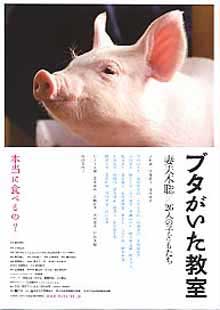
Singapore -- The award-winning movie ‘School Days with a Pig’ tells of a teacher’s special project for his class of grade 6 students to learn more deeply about the connection between life and food - by raising a piglet together, before eventually eating it.


This premise is actually rather disturbing (though there is not a single gory scene) as it’s quite bizarre that both the teacher and 28 students were agreeable to the conclusion of the project in the first place. It’s easy to assume the film to be a cutesy comedy with piggy misadventures, but the ending is such that it becomes a ‘horror’ movie - albeit not readily depicted. As expected, the class splits into two factions as the story progresses.

One side feels that pigs are to be eaten, and since humans need food anyway, while the other feels that it lacks compassion. What missed dwelling into was the fact that humans don’t really require any animal produce to survive. It’s out of ignorance and greed that meat-eating is perpetuated. Throughout most of the show, the teacher doesn’t educate on the possibility of taking up a kinder diet (vegetarianism or veganism), and remains mostly neutral and ambivalent, letting the class debate on the future of the pig.

Naturally, the pig gets named (P-chan) by the kids, which some felt to be a mistake - because it meant bonding with him, making the prospect of departure harder. Even the ones who were initially pro-eating him became attached to some degree. Some start questioning why P-chan must be eaten - especially since he became not just like a classmate, but a pet and friend too.

This reminds us of a famous quote by George Bernard Shaw - ‘Animals are my friends… and I don’t eat my friends.’ In fact, the Buddha even encouraged us to befriend all sentient beings with loving-kindness (Metta), and to practise harmlessness. The issue of hypocrisy arose too… Why would it be okay to eat other living beings if it’s not okay to eat P-chan? Is it just because they became attached to P-chan? But must attachment be a requisite for universal kindness to function? Not at all. The teacher didn’t want to use a chicken because he felt it would be ‘too easy’.

He wanted the kids to learn to care for an animal well, to maximise the lessons learnt. The kids learn to nurture P-chan, play with him, feed him and defend him. They even built a house for him, clearing his poop and pee, and he becomes the jolly mascot of the school.

The more the bonding deepens, the more disturbing it becomes as the date for the kids’ graduation looms closer. For what is their kindness to him ultimately for, when P-chan is to be sent to the slaughterhouse? Does the bad faith not intensify?

As the kids became preoccupied with P-chan, even eating less to save leftovers for P-chan, some parents wondered if they attend school to learn or to raise a pig. That’s short-sighted of course, because raising a pig offers opportunities to learn about priceless lessons such as unconditional love and responsibility to a fellow sentient being.

The film consists of many one-line debating points on the ethics of eating P-chan versus not. Here are some… One says that since the project’s conclusion was to eat P-chan, they should do just that, as a matter of principle. But isn’t sticking to principles rigidly and needlessly itself a poor principle in practice? Is raising an animal to eat cruel, or is it the eating itself that is so? What’s the difference between creating a supply for meat and sustaining a demand for meat? In the Lankavatara Sutra, the irrefutable economics of the interdependence of the meat-seller (killer) and meat-buyer (eater) is stated - a cycle of violence that one can opt out of.

Pigs, and any other animals, don’t exist just to be killed and eaten by others, just as humans don’t. Humans are the ones who decide how to relate to weaker beings. When we choose the easy way out for our convenience and greed, we are really spiritually weak beings, truly incapable of caring for other beings. If so, humans shouldn’t domesticate animals in the first place to exploit them. '

We don’t need to eat animals to stay alive, while animals need us not to eat them to stay alive. Since there was domestication of P-chan with no way to return him to the wild, the kids ought to care for him throughout his natural lifespan. Someone remarked that P-chan already lived a full life of six months, but to measure lifespan unnaturally by the yardstick of slaughterhouses is as twisted as it is to let someone determine you own lifespan.

Another kid rationalised that after P-chan is killed, he would just be meat, no longer P-chan. This is unsound logic, because one still kills P-chan as P-chan. Yet another rationalised that killing and eating is entirely not related, that eating inherits the life of the eaten to let them be part of us. If so, why are we not eating our beloved family and friends when they pass away?

The matter of discrimination arose a few times. Isn’t it clearly favourtism to fight for P-chan’s life, while eating other pigs? Isn’t it clearly speciesim to not eat P-chan, while eating other animals? A cook saw pigs as monsters, who are nevertheless ‘delicious’ when cooked well (with vegetarian seasonings actually). But isn’t the one who demonises and exploits animals the real monster? The kids mistakenly assume that pig farmers love pigs like pets, that they too feel attachment to them before they get killed. If the attachment is so real, why let them be killed… continuously in countless numbers? They have probably gotten numb to the suffering of the pigs.

A child feels that if they are responsible for P-chan’s uncertain future, they should eat him. This would save others the heartache of probably ‘needing’ to send him to the slaugherhouse later. This was accused as being heartless by another. The class hoped to handover P-chan to juniors to care for him as there was no farm which wanted to adopt him for life. Should P-chan be killed simply due to their lack of time to care for him? A class of grade 3 students volunteer to take over, but were deemed too small and young. But couldn’t they be taught how to care for them as a team with more guiding teachers? Isn’t it better to learn to respect life from young?

The ending of the story is a distasteful one. The class cast equal votes for letting P-chan be adopted by the grade 3 students versus sending P-chan to a ‘meat-centre’, which is really euphemism for a bloodily merciless slaughterhouse. The teacher was forced to take a side by casting the deciding vote. He chose the latter, because he felt that the kids were already overburdened by the whole issue. This is bad decision because he chose the easy way out for everyone - by sacrificing P-chan. He was just selfishly ridding self-chosen human misery by subjecting an animal to ultimate misery.

It also hinted that all domesticated animals should die and be eaten in the end? The truth is, the voting was totally unnecessary - because only P-chan’s vote mattered. How could he vote, since he can’t speak? He could vote a resounding ‘Yes! I want to live!’ by screaming and kicking when he faces the knife. It is this final scene of P-chan’s life that the kids and the audience never get witness. The teacher truly failed in teaching the kids about the source of their non-vegetarian food - by not arranging an excursion for them to see this.

The P-chan adventure was only half-lived. It does not do justice to P-chan, since it was partially based on a true story. Seeing P-chan go under the knife, not that I want to, could save many more animals. The movie was unfortunately just another desensitised film that failed to deliver greater lessons on respect for life.

When Siddhartha (the Buddha-to-be) was a child, he once rescued a swan shot by his cousin Devadatta. Reluctant to hand it over to him, it was judged by the wise that the swan belonged to those who saw value in its life, not its death, to those who wanted to save it, not to those who wanted to kill it. In this sense, the teacher’s special project to educate on the meaning of life and death had failed… in his own hands. If the kids were to be taught the true meaning of responsibility for P-chan all the way, they ought to kill him personally (since they voted for the death sentence).

Why pay others do the dirty job? Then again, true responsibility would mean not even considering killing as an option. It’s disturbing how the teacher voted against letting the grade 3 students take over when he had the final say over P-chan’s life. Also disturbing was how the pro-life half of the class never spoke up more enthusiastically to win the teacher’s vote. How could they collectively think that an early death is better for a hale and hearty P-chan?

What if sick and aged parents are involved here? Would we send our parents to the slaughterhouse? Also in the Lankavatara Sutra, the Buddha taught that all animals (all beings in fact) had been our parents at some point in time in our many previous lives. Even more disturbing was that the grade 3 students were deliberately concealed from the fact that P-chan would be sent away to be killed.

The bitter hard truth of the source of their meat was not passed down to them. However, I hope it has been passed on to you - via this review. May all beings be free from harm and danger. May all beings be well and happy.

Wednesday, April 15, 2009

Website for 30-Hours Famine, Malaysia

Fancy Being '17 Again'?

by Shen Shi'an, The Buddhist Channel, April 14, 2009

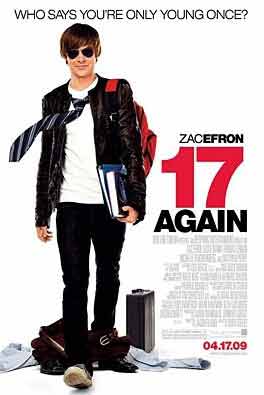
Singapore -- In a sense, the movie ‘17 Again’ is yet another version of ‘Groundhog Day’. A 37-year-old man gets to relive being 17. His renewed adolescent angst is combined with near mid-blue crisis though, as he realises how dear his family is to him and how urgent it is to reconcile with them.


He finally tries to father her teenage daughter with appropriate brotherly advice, and relearns how to charm his estranged wife as he once did. He gets a fair second chance as they did not realise it was him redeeming himself, thus being free of prejudice against him.

The truth is, we can consciously change ourselves to be ‘reborn’ spiritually for the better here and now. There’s no need to await some freaky magical or cosmic time warp to give us the opportunity to set things right. You don’t have to wait till your next life to be 17 again! There are always second chances, but we do not always take them in time. Even when we take them a little too late, it’s better late than never.

Similar to Groundhog Day, when he finally reconciles with his family, the time warp ends and normal life ensues. As long as we are caught in senseless cycles where we do not break through our negative habits, we are already trapped in a time warp too, even if we fail to recognise this due to lack of mindfulness. Are you living a truly normal life now? If not, it’s time to change.