Thursday, January 29, 2009

The 'Twilight' or Dawn of Desire?

by Shen Shi'an, The Buddhist Channel, Jan 21, 2009

Singapore -- What if you have the power of great strength and speed, and are able to remain ever youthful? Sounds like invincible eternal life? Not really, as the vampires in the movie 'Twilight', like others, can die too - especially when slayed by other equally powerful vampires.


What literally sucks about being a vampire is that you need blood to survive. The film doesn't clearly depict that Edward, the teenage vampire protagonist, sees his raison d'etre to be.

Apparently, he has gone to school so many times that he made a huge 'artwork' with his numerous graduation caps in jest. Does repeated schooling make him wiser? With a wider perspective of history, shouldn't it make him much more enlightened? Looks like he missed Dharma education! The vampires in this story don't need sleep too. Imagine the amount of time on hand! Why not simply enlighten oneself and help enlighten others best one can? There's simply no nobler cause.

It is an unwritten rule for the vampires that they try to stay clear of the affairs of humans - lest their identities get disclosed. For the survival of their kind, they would even hesitate to save a human in need. Now, what is the point of living entirely for your own kind? With such great power at stake, it's no wonder that some vampires fight one another. Seems like a perpetual demonic-bestial Asura-like existence. (Asuras are demi-gods who battle among themselves and with the gods for greater power.)

However, while typical vampires relish human blood attained by murder, Edward's family is what he erroneously calls 'vegetarian' - because they only drink animal blood. Trick question - are such vampires more 'humanitarian'? Is being humane limited to humans? Or is the real test of humanitarianism how anyone relates to those weaker than themselves?

Edward's clan run into conflict with another band of vampires, who are ruthless in their killing of humans, leading to a chase where they try to run from while hunting the other. This kind of reminds me of the frequent high tension between the activist causes of pro-vegetarians and pro-meat-eaters!

The stance of the first is that meat isn't necessary for food, while the latter believes its their unquestionable birthright, that animals are meant to be food. With a strong sense of what is right and what isn't, Edward and company is forced to kill one of the wayward vampires who threaten to harm Bella (Edward's human love interest), which would bring more needless attention to the discreet vampires, harming their reputation while endangering them. This is reminiscent of the X-Men impartially subduing fellow mutants in the Brotherhood of Evil Mutants!

Edward has the power to read minds, saying that money and sex are the items on most people's minds. Look like he forgot to read his own mind deeply enough. He could not understand his attraction to Bella, how he never had much human bloodlust till he met her. Seems like a subtle imagery of the marriage of sex and violence here. However, Edward maintains his abstinence from taking her blood, while claiming he does not have the strength to stay away from her. While Edward keeps his temptations in check, Bella would rather he give in to his. This almost seems like a cheeky message on understanding the desires that drive teenage sex, while urging abstention!

Some say life has value only because there is death. Not always true - though impending death does make us treasure our lives more. Essentially, no one really dies (or is born) since there is rebirth - but life has to be lived in the here and now. Bella laments that she is 'dying already', from moment to moment, hinting of her anguish of impermanence. He replies that that's the way it's supposed to be. If so, why is he defying the universal law of impermanence?

Then again, as in the opening paragraph, vampires don't really live forever - if they are real! Bella craves eternal love and asks to be turned into a vampire by him. Edward asks, 'Is it not enough just to have a long and happy life together?' As long as unenlightened, what guarantee is there that eternal life with the beloved will result in eternal happiness?

An 'eternal' love-hate relationship might persist instead! While Edward seems able to cope with the impermanence of his lover, Bella could not cope with the transience of hers. I guess such are the makings of intriguing love stories, that draw legions of fans, with their heavily samsaric dilemmas.

Ox of Prosperity

Dong Zen Temple, Jenjarom is one of the largest Buddhist temple in the country. Every year, during Chinese New Year, the temple would be a centre of attraction due to the beautiful CNY Lantern and Flora Festiva specially prepared by Buddhist volunteers.

This year, their main attraction is "The OX of Prosperity Lantern" which is really a huge and cute Ox...

So, if you have some time in between, do drop by this place.

I was one of the many people that was lucky enough to be there when the officially launch the Ox of Prosperity...

with metta,

Bro Wei Han

Wednesday, January 21, 2009

Happy Chinese New Year 2009

Year of the Ox

Gong Xi Fa Chai
from kcbadyc

Tuesday, January 20, 2009

The Ponyo Paradox of Change & Acceptance

by Shen Shi'an, The Buddhist Channel, Jan 19, 2009

Dharma Inspired movie review: http://www.imdb.com/title/tt0876563/

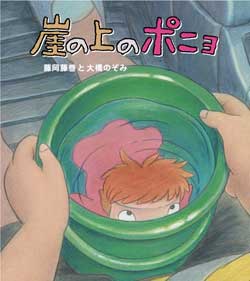
Singapore -- The Japanese animation feature 'Ponyo on the Cliff by the Sea' is a creative 'retelling' of 'The Little Mermaid' minus the tragedy of loss. It is largely an uplifting story on the universal themes of love, sacrifice, acceptance and change.

The boy Sosuke rescues Ponyo, a small mermaid of sorts, though he doesn't release her back into the sea immediately, which hints of childish infatuation with a new-found pet. Questions of whether domestication is the saving or trapping of animals comes to mind. Is domestication the path of natural or forced evolution? Does the security of a 'prison' protect or harm? Does love necessarily set the beloved free?

The issue of pollution runs as a background theme in the film. Ponyo was first trapped when she got stuck in a jar, while a ship was dredging the seabed for heaps of rubbish. Her father comments that humans' very breath is poison, that they have robbed the sea of life, that interaction with humans taints their genes. While he represents the strict conservative parent, he is also an ocean conservationist, who warns against the ills of humans. However, the line he drew between ocean and human life is one that is too long and broad. His wife, a sea goddess, is the more liberal and understanding one, who mediates to reconcile conflict instead.

A supposedly superstitious old lady expresses shock when she sees the human-faced Ponyo in a pail, exclaiming that the 'fish' is a harbinger of bad luck, a probable omen of an oncoming tsunami. An interesting thought came to mind - what if all ocean lifeforms have human faces? Would Japanese, whom in general love seafood so much hesitate to eat them? Would there be more 'positive' fear of enraging the forces of nature? Incidentally, all the major fishing seas in the world are already over-fished, on the verge of, if not already, in environmental collapse. (Later, Ponyo's second departure from the sea does cause a near-tsunami of sorts.)

Ponyo has a number of positive traits. She can heal, though she does it only once, and upsize stuff. Being the titular character, she's 'designed' to be cutesy, cheery, generous and innocent. Then again, it's hard to qualify innocence as a definite positive trait; it's more of a neutral one, as she literally caused a dangerous storm due to her reckless attachment to Sosuke. Ponyo has a number of negative traits too. She is fussy over food, throws tantrums, hyperactive and causes needless worry for her parents. Sosoke on the other hand, seems more lovable, though Ponyo easily steals the show with her antics. Sosuke is sensible, responsible, protective and conciliatory between his parents. In this sense, he is Ponyo's opposite. Hmmm… If we love someone for seemingly complementary qualities missing in ourselves, do we really love more of ourselves or the other?

It's easy to see why Ponyo loves Sosuke - for his selfless compassion, for being her 'personal Bodhisattva' (though true Bodhisattvas have universal compassion), even if in a kiddy way, while it is more of a mystery why Sosuke loves Ponyo. It is portrayed such that he doesn't seem totally sure either. Does Sosuke love Ponyo as a pet or a person? Or both, or as one who can transform to-and-fro from one to the other? Or does he love the changes themselves? What kind of love is his? Is it protective brotherly love for a little sister? Is it the love of friendship? Is it romantic love? (But aren't they too young to be lovers?) Is it purely altruistic spiritual love? Or perhaps it's purposely portrayed as a jumbled and open-ended mix of all the above - as in the case of the kind of shapeshifting love we have at times?

The ultimatum that Sosuke and Ponyo faced was that if Sosuke accepts her as she is out of True Love, she would transform into a human girl forever, while losing her powers. It's a test of the ability to sacrifice out of love too. If Sosuke's love wasn't true, she would turn to foam. (Of course, in real life, it isn't so straightforward or risky to prove love!) If Ponyo was a Bodhisattva with True Love for all, would she relinquish her healing power just to be with one person? Would it not be 'selfish'? Then again, she has no obligations to sacrifice for all if she isn't ready, while her willingness to risk love for Sosuke might be part of her path towards cultivating Bodhisattva love.

There's an intriguing paradox here… Sosuke was challenged to accept Ponyo as she is - a mermaid. However, if he did, she would become a non-mermaid (a human)! How then, is he supposed to accept her as a mermaid, without accepting her as a non-mermaid too? And don't all people (other than the fully enlightened) constantly change? If so, how can we really accept 'one' unchanging person for all time?

The truth is, the test of True Love is in the ability to accept not just the beloved as they are in the moment, but who they might change to be in time to come - for better or worse. If we are able to love despite changes in the beloved, would that not make us more likely to unconditionally love every being, since everyone changes as well? This is probably how our limited love can evolve to be the immeasurable love (loving-kindness, compassion, rejoice and equanimity) that Bodhisattvas have for all!

The Unseen 'Ip Man' Behind Bruce Lee?

by Shen Shi'an, The Buddhist Channel, Jan 19, 2009

Dharma Inspired movie review: http://www.ipman-movie.com

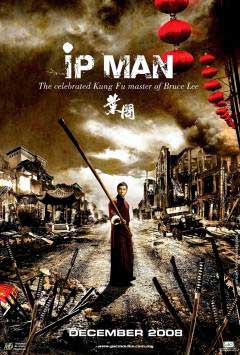
Singapore -- The mild-mannered 'Ip Man' (pronounced 'eep-mun': Bruce Lee's martial arts master) is a refreshing break from the typical genre of screen Kung Fu heroes. Come to think of it, Ip Man is in many ways the direct opposite of Bruce Lee's famous brash screen personas.

Then again, what we witness in the film 'Ip Man' is just another screen persona played by an actor too? Instead of being hot-headed or fantastically fancy in pugilistic moves, Ip Man is disarmingly humble. He is so unassuming during most of the featured fights that he almost takes the fight out of fighting.

Yet, he who wins with minimal or even no violence is a true victor indeed. Unlike the norm of the day, when arrogant pugilists challenge one another to prove themselves, Ip Man even hesitates to take up challenges deemed unnecessary, often politely turning them down.

Ip Man earns much respect by giving respect - even to those who lose in sparring matches with him, who were not really respectful enough of him in the first place. He neither gloats about winning or condemns the losers. Because the losers realise that he had graciously and unconditionally given them much leeway and face, they are greatly humbled by his magnanimity.

Buddhists would see Ip Man to be masterful with the practice of maintaining an 'ordinary mind' - the attitude that does not make a big deal out of the shifty worldly winds - whether they blow his way or others. These winds are after all but winds of change, of alternating praise and blame, gain and loss, fame and shame, pain and pleasure. A true hero must not just be a physical one - he must be a spiritual victor too. Even a gracious loser ultimately 'defeats' an arrogant 'winner'!

The arrogant is always haughty too soon - though there is never really a good time to be haughty. The winner of a prize is not always the winner of peace! Arrogance is a defilement that invites enemies who might be haughtier than oneself! It also humiliates the losers, readily transforming them into potential enemies. Such is the trouble with being obsessed with dualistic victory and defeat - on both sides.

The Buddha couldn't have put it any better when he warned thus in the Dhammapada - 'Victory begets enmity. The defeated dwell in pain. Happily the peaceful live, discarding both victory and defeat.' Even if it is not possible to totally discard all forms of victory and defeat in this competitive world, one should train to be able to win while winning any cockiness in oneself, to lose without losing confidence in oneself. Even if the world competes with you, one need not compete with it. Any gains or losses are just impermanent and unsubstantial by-products.

Facing guns held by an oppressive regime, what good can a martial artist do with his skills? How can he fight for justice? By not doing it alone if he can help it - but by inspiring the masses to stand up together. The odds will always be against the lone hero - but real heroes are the ones able to urge more to be heroic. In his war-torn homeland, Ip Man trains the ones he could to at least be able to defend themselves. How obsolete, one might think, martial arts are, in the face of guns. Then again, doesn't it offer the most fundamental physical defense? How can this skill ever be outdated? The enemies are not always armed too, while a good martial artist can disarm the armed! Anyway, martial arts are commonly practised as a form of discipline, exercise and art. When taught with honourable ethics, they can be a skilful means of imparting spirituality too. Just think Buddhism-inspired Shaolin Kung Fu.

The movie however, does show a scene where Ip Man becomes wrathful during sparring sessions with soldiers of the enemy - when he realised how his fellow countrymen were unjustly sacrificed. Nationalistic pride can be dangerous - both for the antagonists and the antagonised. One has to be mindful not to let personal pride well up collectively with others' to become explosive nationalistic pride. Ironically, while countries can go to war due to such pride, wars can also be ceased by them - though at a price. Is it alright to be wrathful when we encounter great injustice, when much is at stake? It is - only when it is a skilful manifestation of wrath without genuine rage. With real anger, one would be the first engulfed by its fire. Provoked by the heat of the moment, what we do in such rashness is unlikely to be wise or beneficial. In a showdown duel with the main enemy, Ip Man pulls back his possibly fatal coup de grace when he realises this. Not becoming ruthless like the enemy, he remains the hero. As taught by the Buddha, also in the Dhammapada, 'Greater than one who wins a hundred battles, is one who conquers oneself.'

Wednesday, January 07, 2009

Skytrex Adventures

Announcement: This is the 100th post of the blog... Yippie!

.......................................................

UPDATES: Skytrex Adventure (www.skytrex-adventure.com), where you can challenge yourself to a series of obstacles, suspended at about 3 to 17 meters above the ground. Lots of fun, lots of sweat.

Date: 31th January 2009
Time: 2.00 pm - 4.00 pm
Venue: Bukit Cahaya Seri Alam, Shah Alam
Fee: RM35 per pax (including entree fee to the park, training and renting of gears)
10% discount if more than 10 pax

What to wear: usual outdoors clothing (T-shirt and such) and sport shoe (very important). Gloves (also available for rent)...

Duration about 1 1/2 to 2 hours...

Interested? Please contact Bro. Wei Han (Mobile: 016 - 363 1254) to confirm your participation as advance booking is needed. (Just sms your name and be there on time....)

By the way, we should be going for Chinese New Year House Hopping in Subang Jaya in the morning of the same day...

UPDATES: Those who confirmed: Wei Han, Niro, Justin, Shin Dhee, Shin Ling, Mandy, Rachel, Quah Wei Jia, Jason, Su Ching, Leonie (with 2 friends)

Tuesday, December 30, 2008

Kung fu kids – out of Africa

By WANI MUTHIAH, The Star, December 28, 2008

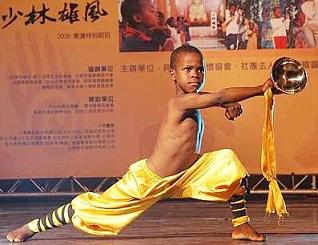
KLANG, Malaysia -- Enock Belo is every inch a Shaolin kung fu exponent. He throws flying kicks, jumps over obstacles and delivers his strikes smoothly. Belo is 10 years old. And he’s African.


The Malawian orphan, who is a resident of the Amitofo Care Centre (ACC) in Blantyre, southern Malawi, is one of the 200 children in the orphanage being trained in the ancient Chinese martial art.

ACC founder, Taiwanese Buddhist monk Hui Li, said Belo and the other children are being trained in the martial art form by three monks who are Shaolin kung fu masters brought in from China.

“The children are trained for three hours a day, six days a week by the Shaolin masters,” said Hui, who is currently here with 20 children from ACC.

The trip was made possible with sponsorship by several local Buddhist organisations, including the Ti-Ratana Welfare Society.

The monk and the children are putting up several shows around the country to raise funds.

Hui, who is known as the African monk within Buddhist circles, said he introduced the martial art form to the children to build their self-esteem.

“Most of the children here are either orphans or have only one parent and they come from very poor backgrounds.

“When they came to ACC, they were all very timid with very little confidence in themselves, and training them in Shaolin kung fu helps us counter this problem,” said Hui.

When asked why he liked Shaolin kung fu, Belo, who is the star of the troupe, said it helps him keep fit.

“Shaolin kung fu makes me strong and keeps me disciplined,” said the orphan, who has been living in ACC since it started operations in 2003.

Ti-Ratana Welfare Society founder and adviser Ven Rev K. Sri Dhamma­ratana said the group will be performing at the Buddhist Maha Vihara in Brickfields on New Year’s Eve.

“The event starts at 8pm and there will be dinner followed by the group’s performance, and a blessing ceremony starts at 11pm,” said Ven Rev Sri Dhammaratana, who is also the Buddhist Chief High Priest of Malaysia.

Friday, December 26, 2008

Letting Go, Moving On - Photo (selected)

Dear all,

As promised, here is a link to an album where selected photo taken during the camp has been uploaded...


Enjoyed!

p.s: due to some technical error while uploading, some of the photos have been uploaded twice. Will clear it somehow soon.... but until then, my humble apologies....

2nd p.s.: will bug kuan wei for the rest of the photographs.... hope to upload it soon....

with metta,

Bro. Wei Han

A very Buddhist Christmas

by Jennifer Moreau, Burnaby Now, December 24, 2008

Burnaby, Canada -- In the midst of Christmas spending and a national recession, one Burnaby family is keeping it simple for the holidays.


Yi Ling Chen and her husband, Brandon Lin, are among Burnaby's 9,360 followers of Buddhism, the city's second most common religion next to Christianity. But for Yi Ling, Buddhism is a philosophy of living that carries a message of simplicity during the holidays.

"A kind of philosophy of Buddhism is to reduce what we want," Yi Ling says.

"If we have desire, we always want more," she says, adding this leads to emptiness and dissatisfaction. "It's a bad cycle."

That "lowering of desire" cuts down on insatiable materialism and helps one lead a simple life.

"(We) just think of getting what we need ... and living an eco-friendly life."

Yi Ling and Brandon moved to Canada from Taiwan and later met through the Tzu Chi Foundation, an international Buddhist volunteer group founded and led by Cheng Yen. Yen believes that suffering is caused by material deprivation and spiritual poverty and that a lack of love for others lies at the root of many worldly problems. Yi Ling and Brandon now have a baby girl, Chloe, and a boy on the way.

As Buddhists, they wouldn't normally do anything for Christmas, but, since they are in Canada, they partake in family dinners and exchange presents.

But even gift-giving is carefully examined.

"We just buy what we need," Yi Ling says, a practice they follow every day. "We have to ask ourselves: Are we really getting what we need or are we getting what we want?"

Rather than giving each family member presents, they think about who really needs something replaced.

For example, they bought relatives a TV to replace their aging set. They also bought it and delivered it in November to take advantage of sales - much more practical, Yi Ling says.

"That's another way we do the gift exchange," Yi Ling says. "That's one way to save money and really give something they really need." And that helps reduce desire and lightens the load on Mother Earth. Many worldly problems, such as global warming, are caused by people's desire, Yi Ling says.

The family gets together for a hot pot dinner on Christmas Eve. Since Buddhism promotes compassion for all forms of life, both husband and wife are vegetarian. Dinner is usually tofu, vegetables, fruit and a lot of soy-based food. They also donate old clothes to charity.

"We believe it's time to give and time to share," says Brandon.

For Brandon, the message from Buddhism is to appreciate and give back to society.

"The idea is a lot of us are new immigrants, and we believe we are consuming (resources from) this society," he says. Volunteering is part of the Buddhist philosophy, and the Tzu Chi Foundation gives back to local causes, Brandon says.

According to Yi Ling, the Buddhist Christmas message is not that different from any other day: We should appreciate the day, the whole new start and the fact we are privileged to live in a country free of war, disease, political unrest and terrorism.

"In Christmas, we take the appreciation and turn it into compassion and sharing and respect towards others - not only human beings, but everything on earth."


'The Day the Earth Stood Still' in Shock

by Jianxie, The Buddhist Channel, Dec 24, 2008

Dharma-Inspired Movie Review: www.thedaytheearthstoodtillmovie.com

Singapore -- In the 2008 version of 'The Day the Earth Stood Still', the alien Klaatu, who represents an intergalactic congregation arrives from outer space to deliver his final judgement on humankind. In a cool and composed manner, he asks for a discussion with Earth's leader(s), so as to deliver his last warning.


If unheeded, the entire 'parastitical' human race would be wiped out to preserve the planet. But it becomes ambiguous as to who can truly represent Earth when 'leaders' vy for rights to be involved. Does this conflict represent a hopeless Earth?

The original 1951 movie was a not at all subtle take on why the Cold War and the rise of the atomic arms race was senseless. Klaatu was a 'Christ-like' figure with his 'human' name being John Carpenter. Note his initials and occupation! He was accompanied by a giant robot called Gort. An obvious allusion to God? The trinity is almost complete! It was literally a case of 'Believe in Klaatu's message to be saved... or thou shalt perish.' It was either his way or the highway... to unearthly 'hell' on Earth.

To show how serious he was, the dispassionately portrayed Klaatu brings the mechanised powers to a halt, but is seen as a serious threat instead. A natural reaction, albeit not definitely wise? Colder still is the silent but threatening Gort. Klaatu's reasoning is direct... a little too 'black or white' in fact - 'If the Earth dies, you die. If you die, the Earth survives.' A dire warning still, on why much humans should stop terrorising one another and the environment. Technology is clearly not in lack, but human will to change is.

Did Gort and company exhibit appropriate 'tough love'? Well, the value of the planet was seen as greater than that of human lives. As the story progresses, we see Klaatu becoming increasingly 'humanised'. He learns to be genuinely compassionate and generates faith in the good side of human-nature. Eventually, he gets Gort to call off the process of destruction. But isn't the 'trinity' one in essence? This is reminiscent of the 'paradoxically' (or contradictingly) wrathful God in the Old Testament versus his much gentler 'son' in the New Testament?

Klaatu learns to empathise, to be compassionate. He learns to not just be a 'friend of the Earth', who came to save the Earth from us; he learns to befriend Earthlings too. However, his very presence was cause for much panic, 'urging' the masses to rush madly to evacuate UFO occupied cities, clambering for food and fuel. In the end, there is only one race - the human race... racing for 'salvation'. The film is still a good wake-up call for our times. Then again, the backlash of environmental mayhem should already be warning enough?

A fellow resident alien who had been assessing humans for 70 years decides not to evacuate from the planet, even if Klaatu's verdict is to obliterate the human race. This is so as he had learnt to love humans, with warts and all. Is he more evolved than Klaatu, now that his compassion had widened to include those with shortcomings? Was Klaatu really an advanced being in the first place? In Buddhism, advanced Bodhisattvas, who are Buddhas-to-be, 'hang out' with the unenlightened as they do their best to enlighten them; they are not judgemental.

Klaatu says that his body is human, that it feels pain; but he isn't human. Doesn't that give him less rights to judge us? He is surprised that humans consider the planet theirs. Good point - we are merely guests; the planet will outlast us. But it's also surprising that he lords over humans' fate when it's not 'his' either. In the 1951 film, Gort was created by a race of robots to maintain peace throughout the galaxy. But how can peace be created by unforgiving 'hellfire'? That said, Gort was really a fictitous concoction of the human mind.

Did Klaatu save humanity in the end? Not exactly. One particular human saved the day - the one who care for him, who showed him that not all humans deserve to be annihilated, that there is a better side to humanity. It was this single human who tipped the scales back, who changed his mind, who helped to urge other humans to change their minds too. Our planet is near the environmental tipping point towards total chaos. Civilisations either collapse or make a (r)evolutionary quantum leap at this point. What will it be? We decide; not Klaatu or Gort.