Tuesday, April 07, 2009

Buddhism documentaries to air in Taiwan

CCTV.com, Apr 3, 2009

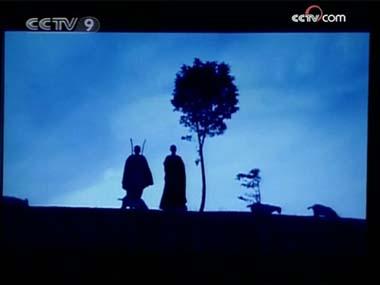
Taipei, Taiwan -- Three documentaries on Buddhism produced on the Mainland have been officially released in Taipei on the heels of the World Buddhism Forum,which closed on Tuesday.


One of the documentaries is "Master Xuan Zang," a film recording the Tang Dynasty monk's legendary journey to India, the cradle of Buddhist culture.

The second is a six-episode feature on the rise and fall of the Tang royal temple--- the "Famen Temple." Third is a 46-part TV documentary "Thousand-Year Buddhism Path", a vivid account of the inheritance and development of Buddhism in China.

Three documentaries on Buddhism produced on the Mainland have been officially released in Taipei on the heels of the World Buddhism Forum,which closed on Tuesday.

Gao Feng, vice-president of China Central Television said, "I believed the show will attract wide attention. Followers of Buddhism will be enlightened, and the mass public will feel the power and splendor of Chinese culture."

The "Thousand-Year Buddhism Path" is by the same cast who shot the widely-acclaimed 12-episode documentary, --the "Palace Museum". The production exhaustively visited over 200 temples over seven years. It's a million-yuan production. Both the "Thousand-Year Buddhism Path" and "Famen Temple" have aired on CCTV. People from local Buddhist and cultural circles are earnestly awaiting the chance to see them in Taiwan.

Imparting the Dhamma

By MAJORIE CHIEW, The Star, April 2, 2009

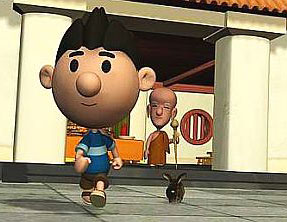
The Abbot & The Orphan is a new cartoon series with a mission

Kuala Lumpur, Malaysia -- IN this age of the Internet, printed literature may not be as effective as multimedia in reaching out to the young.


That is why Ng Lid Sine, 47, has come up with a cartoon series, The Abbot & The Orphan, to capture the interest of children and teach them moral lessons along the way.

Ng has come up with a cartoon series, The Abbot & The Orphan, to capture the interest of the young and teach them moral lessons along the way.

“Children today are so privileged. They have everything, so they may find it difficult to grasp the dhamma (Buddhist teachings). I want to share with them the story of a child who has nothing, not even parents,” says Ng, who wrote the script for the series, inspired by his observations around the Buddhist Maha Vihara in Brickfields, Kuala Lumpur.

The Abbot & The Orphan revolves around an orphan named Butterfly (featuring the voice of Ng Zen Ian) who has nothing. He is cared for by a blind and old abbot (voiced by Vijaya Samaravickrama).

“The characters of the abbot and the orphan are a reflection of the unsatisfactory nature of life. The whole drama becomes a stage to display and unfold Buddha’s teachings,” explains Ng, who is animation director of Cartoon Workshop, a Selangor-based local production house for animated and educational series.

The Abbot & The Orphan – The Shrine, Episode 1 in English and Mandarin was recently released on DVD in conjunction with the 80th anniversary of the Buddhist Institute Sunday Dhamma School (BISDS) housed in the Buddhist Maha Vihara.

The school was set up in 1929 by the Sasana Abhiwurdhi Wardhana Society. The oldest Buddhist Sunday School in the country, it has over 1,300 students (aged six to 20) and 200 volunteer teachers and staff.

Vandana, a collection of Buddhist recitals in Pali during the puja (offering) ceremony, was also launched. This DVD includes Karaniya Metta Sutta, the discourse on loving-kindness recited by Buddhist monks to bless devotees. Both DVDs are produced by Cartoon Workshop and BISDS.

Cartoon Workshop executive producer Catherine Heng says: “The Abbot & The Orphan series consists of eight episodes. A team of animators took four months to produce the first 20-minute episode of the 3D animated series. Voice talents come from students and staff members of BISDS.”

Heng, a volunteer teacher at BISDS, says: “Some 4,000 copies of Vandana and The Abbot & The Orphan have been produced with donations from sponsors. The second DVD,

The Abbot & The Orphan – Belief, Episode 2, is in the post-production stage and scheduled for release by middle of the year.

“In this episode, Butterfly is tricked by a fortune-teller who gave him two magic stones in exchange for goats. The storyline is aimed at instilling awareness that one should not believe blindly but investigate the truth.”

heng adds that there are plans to host the animation series on the BISDS website (www.bisds.org) to make it easily available to the Buddhist community.

The animation project also nurtures the creative talents of the Sunday school attendees, especially the children.

Vineeta Serisena, deputy principal of BISDS and animation series consultant, says: “The animation series is appealing, yet simple enough for children to understand. It has a deeper meaning within.”

To coincide with the BISDS anniversary and to commemorate the 90th birthday anniversary of the late Ven K. Sri Dhammananda on March 18, CDs containing dhamma talks by Dhammananda were launched.

Dhammananda had given 5,600 dhamma talks locally and abroad. Those interested in sponsoring The Abbot & The Orphan series can contact 03-2274 1141.

Thursday, April 02, 2009

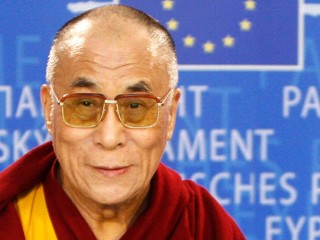
Dalai Lama completes 50 yrs in exile in India

by Anand Sankar, Business Standard, April 1, 2009

New Delhi, India -- Tibetan spiritual leader in exile, the 14th Dalai Lama, Tenzin Gyatso, today called upon the Chinese government to throw open Tibet to “independent, impartial observers” immediately.


Only that, he said, would settle the trading of opinions that occurs when the Tibetan Government in Exile and the People's Republic of China (PRC) sit down for dialogue.

The 74-year-old Buddhist monk was speaking to journalists in New Delhi on the eve of the 50th year of his exile in India.

On March 31, 1959, he evaded Chinese troops and entered India through the region of Tawang in Arunachal Pradesh. The Dalai Lama said he wanted to use the occasion to “tell India how much it has done for the Tibetan refugee community and himself.” “We are burdened to thank India,” he said. The Indian government considers Tibet to be a part of the PRC.

Through the day he visited five places of religious importance in New Delhi to pray for “peace in India and happiness for its people.” The journey started at the Gandhi Smriti, the spot where Mahatma Gandhi was assassinated and halted at the Acharya Sushil Muni Ashram, Nizamuddin Chilan, Judah Hyam Synagogue, Gurudwara Rakab Ganj, The Cathedral Church of Redemption, Mahabodhi Society and the Laxmi Narayan Temple. At all the spots, he prayed according to the traditions prevalent there and explained later that during his 50-year stay in India he had gained “new knowledge from following traditions other than Buddhism.”

Commenting on Chinese claims that Tibetan activists were gravitating towards violent protests, the Nobel Peace Laureate said: “No, I don't think so. Among 100,000 exiles, one or two may be.” He did acknowledge growing criticism of his Middle Way approach, which does not seek independence from China, from the younger Tibetans. “There are quite a number critical of our stand. That is their different opinion.” The PRC, in its official stand, states conditions are better for Tibetans under Chinese rule.

Recalling that he started taking his titular responsibility aged 16, he said he felt he has been correct on the major decisions and “many Tibetans agree also.” He said education is the key for the Tibetans to continue to fight for their rights.

The Dalai Lama said his fascination in the future was to learn more from science and science in turn to learn from Buddhism. “Meeting scientists makes me immensely happy,” he said.

Finally, the Dalai Lama was asked to comment on the upcoming general elections, especially the perceived “communalisation” of politics. He cheekily responded: “As far as Indian politics is concerned, I am happy to see it from a distance. A BJP leader came to seek my blessings during the last elections, as well as his opponents. I bless them all. I should be neutral.”

Monday, March 30, 2009

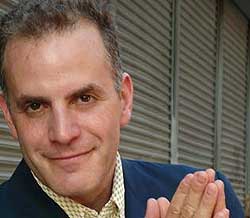
Actor Evan Brennan finds Nirvana as ‘Buddha’

By Jenna Scherer, Boston Herald, March 26, 2009

Boston, MA (USA) -- For most Westerners, knowledge of the Buddha doesn’t extend beyond a few groovy aphorisms and dime-store statuettes of a fat, smiling monk.

But one Westerner, actor Evan Brenner, is out to tell the full story. Brenner is currently performing his one-man show “The Buddha - In His Own Words,” at the Boston Center for the Arts before moving the production to the Cambridge YMCA.


Speaking from his New York City apartment, Brenner explained that the Buddha - also known as Siddhartha Gautama, an Indian nobleman who abandoned his life of privilege to find enlightenment - was just as human as the rest of us.

Herald: When did you first become interested in Buddhism?

Brenner: In high school. It promised a way out of my own suffering. And then, about five years ago, I was in a very dark period of my life. I turned back to the Buddhist sutras. . . . At that time, I wasn’t so much drawn to the doctrine as I was to the story of the man. He, too, had gone through tremendous hardships, and I identified with his story. It became apparent to me that his journey was mine, that his journey is all our journeys.

What made you decide to tell the Buddha’s story onstage?

I had immersed myself in these sutras, and they were just full of really great, compelling stories. I was reading the story of Angulimala (about a serial murderer who converts to Buddhism), and I went to my girlfriend and I said, “You’ve got to hear this.” And she kind of oohed and aahed at all the right times.

At that moment I thought, “Wow.” The life of the Buddha is one of the great archetypal adventure stories. I’d seen Alec McCowan do “St. Mark’s Gospel,” where he basically just recites the Gospel of Mark onstage. And I thought, why not do the Buddha’s story as a one-man play?

How has working on the piece affected you?

Getting to know and learn the Buddha’s life has been this process of getting deeper and deeper. To memorize this whole text kind of gets it inside myself, so to speak.

What do you hope that audiences will get out of watching the play?

When I was first curled up with those sutras I thought, “Wow, I would love to see this as a show.” I would like to imagine what it would be like to meet the Buddha face-to-face. It’s sort of deflating in a way, but it’s also great. Because if he was just a human being, it elevates the tradition in the sense that liberation is possible for us all. So I hope for people to have that opportunity.

Wednesday, March 18, 2009

Buddhists Connect Online Through Video Sharing and New Community at eDharma.com

The Buddhist Channel, Matrch 16, 2009

Jakarta, Indonesia -- www.eDharma.com launches this week, connecting Buddhists worldwide through a free social networking and video sharing service.


The community opens with a collection of educational videos on Mahayana, Theravada, and other Buddhist sects, as well as a forum where Buddhists and those interested in learning about Buddhism can meet and discuss the Buddhist way of life.

“eDharma.com is about two things,” says Rudy Hadisentosa, owner of the new online Buddhist community. “The site serves as a social network and online community where Buddhists from all over the world can come together and share thoughts and ideas. In addition to connecting people, eDharma.com is designed to teach others about Buddhism in a more interesting and interactive way. We’re working to accomplish this through the video sharing aspect of the site. For example, through current videos, visitors can learn about things like moral or Zen Buddhist teachings or watch English webcasts of the True Buddha School"

Creating an account at www.eDharma.com takes only a few minutes. After registering for an account, members have the ability to upload Buddhist videos, photos, or news to share with the eDharma.com community.

Videos can be shared by uploading them directly to eDharma.com. The site also supports embedded videos from other video sharing services such as YouTube and Google Video. The Buddhist forum gives all new members a place to introduce themselves and share ideas with the entire community. Membership at eDharma.com is free.

About www.eDharma.com

eDharma.com is a free online Buddhist community, connecting members of various sects of Buddhism with each other and with non-Buddhists. Launched in March 2009, the mission of eDharma.com is to educate people about Buddhism while giving active Buddhists a place to meet and interact.

For more information about the www.eDharma.com community or Buddhist video sharing service, please contact Rudy Hadisentosa at +62 21 56999720.

Tuesday, February 24, 2009

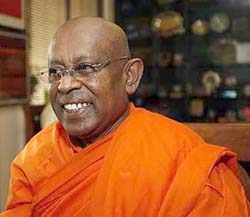
A Happy Monk

By MAJORIE CHIEW, The Star, February 23, 2009

A Sri Lankan Buddhist monk is tickled as he recalls his early days in the United States

Kuala Lumpur, Malaysia -- BHANTE Walpola Piyananda, a Buddhist monk from Sri Lanka, arrived in the West Coast of America on July 4, 1976. He was 33 then. During his early days in the United States, people had never heard of a Buddhist monk. He was ridiculed, humiliated and ignored; at times, he was a victim of mistaken identity.


However, all the nasty incidents did not deter Piyananda from settling down in the United States where he has been residing for 33 years.

“I wanted to go to America for new experiences and to explore a way of life that’s different from conservative Asia,” said Piyananda, 66, during a short stopover in Malaysia en route to Sri Lanka. Opportunity came knocking when he was offered a scholarship to study Christianity at Northwestern University in Chicago.

“It’s rare for a Buddhist monk to study Christianity. My (late) uncle Dr Walpola Rahula, a Buddhist scholar, suggested that I study Christianity to find out the differences and similarities,” said Piyananda.

Today Piyananda is the author of two books, Saffron Days in LA (Shambala, 2001) and The Bodhi Tree Grows in LA (Shambala, 2008) which feature funny and poignant tales of his life as a Buddhist monk in the United States. His third book is in the works.

Piyananda is the founder-president and abbot of Dharma Vijaya Buddhist Vihara in Los Angeles, California. It is one of the oldest Theravada Buddhist temples in North America. He is also president of the Sangha Council of Southern California, Chief High Priest in the United States, and advisor to the President of Sri Lanka on international religious affairs.

Ordained at the age of 12, he took the name of his village, Walpola, and the Buddhist name, Piyananda, which means “pleasant joy”.

It was written in the stars that Piyananda was destined to be a monk. When his parents brought him to register his birth at the temple, the high priest worked out his astrological chart. “It showed Saturn in Ninth House which meant that I was destined to be a famous Buddhist monk. So the priest convinced my parents that I had to be a monk,” said Piyananda.

Piyananda has a BA (Hons) in Buddhist studies from Kaleniya University, Sri Lanka, and a Masters in Pali from Calcutta University. India.

After his post-graduate studies in India, he returned to Sri Lanka to serve as a monk but felt the urge to go to the United States which he saw as a “great land of freedom, equality and opportunity”.

Eventually, he realised his dream to go to the United States to further his studies and graduated from Northwestern University in Chicago in 1980, and the University of California, Los Angeles, in 1985.

Harrowing tales

Piyananda recalled his early days in the United States which were fraught with challenges. There was the shocking incident at a bus stop in which a gentleman in a Mercedes Benz pulled up next to a curb, ran up to him and spat in his face. He was told to “go away cos he did not belong in the country”.

The following year, in1977, five youths mistook him for a Hare Krishna devotee and accused him of being involved in the kidnapping of a girl. Piyananda showed them his Northwestern ID card, explained his monk’s robe and convinced the group that he was not a Hare Krishna devotee as he did not have a ponytail but a clean-shaven head.

Perhaps the most amusing tale was when someone thought he was suicidal. A year after his arrival in Los Angeles, a Thai family had invited him to their apartment for dana (requisite offering). While waiting in the lobby for the driver to park the car, he decided to adjust his robe and wear it differently. Within minutes, the siren blared. He found policemen and paramedics rushing towards him.

Apparently a woman had called the emergency line and reported that “an Indian guru was trying to suffocate himself with his long robe!”

En route from Los Angeles to Berkeley, Piyananda was stopped from entering the men’s toilet in a rest area. Wearing a knit cap and in traditional monk’s robe, he was mistaken for an Indian woman in a saree!

In another incident, while waiting to catch a flight to Minneapolis, Piyananda went up to a police officer and asked for directions to the departure gate after other people ignored him. He was threatened with arrest and had to produce his boarding pass.

There was another harrowing incident he encountered while strolling along a pier in Santa Monica. Piyananda encountered a group of punks who taunted him for being “an alien” and “a shaved pumpkin”.

Piyananda teased them and joked that he was the “new punk” with a clean-shaven head, while they only shaved the sides of their heads.

Extending his hand in friendship, he told them that his name Bhante meant “spiritual friend”, piya for “pleasant” and ananda for “happy one”. Soon they were happily chatting away and he invited them to his temple. They have since become his students and one, a Buddhist minister.

Piyananda also had brushes with women that probably left him red-faced. In August 1979, an American woman in her 30s sought his advice at the Buddhist Meditation Centre in Los Angeles, his home base then. She was misguided by her guru’s advice to have sex more often to lose weight. She put up two posters in the centre, offering sexual favours; this angered the abbot who chased her out. Piyananda listened to her story, helped her understand her foolishness and persuaded the abbot to allow her to stay on.

While attending Vesak celebrations in Berkeley, a desperate woman outside the women’s toilet asked him to go into the cubicle to help her remove her pants!

Piyananda later saw her predicament: both her arms were in plaster cast and she was unable to remove her pants to use the bathroom. He ran up the stairs to get a woman to help her out.

On another occasion, a woman at a meditation centre where he taught gave him a generous donation of US$300. He thanked her and asked what she did for a living. She told him she was a hooker. Not understanding what “hooker” meant, he praised her for a “wonderful career” and added that she “must be very happy”.

When he realised his blunder, he went in search of the woman and convinced her to turn over a new leaf. Eventually she became a case worker for the protection of abused children.

Tuesday, February 10, 2009

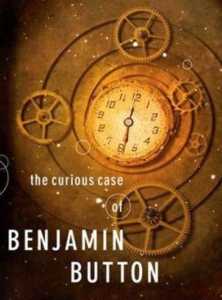
The Buddhism of 'Benjamin Button'

by Shen Shi'an, The Buddhist Channel, Feb 6, 2009

Dharma-Inspired Movie Review: www.benjaminbutton.com

Singapore -- 'The Curious Case of Benjamin Button' is based on a 'simple' premise. How would one (Benjamin) who lives life backwards (born old and dies young) experience it? Ben is not a hero; and not even an anti-hero – he is really the everyman who lived life with an extraordinary condition.


Though fantastical, the story remarkably highlights realistic themes on the significance of life and death. Reflecting on life in reverse seems to spur more insightful hindsights (literally) on itself! Below are some to share.
Meeting in the Middle

Daisy, Ben's love interest remarks when they are both in their prime that they are finally 'meeting in the middle'. The truth is, we are always 'meeting in the middle', in the flowing river of time. Buddhism sees the present moment as the centre of time's passage, which is but a measurement of change. We are always smack in the centre, between the past and the future. In fact, now is the only moment we have. There is no need to pine for the transpired past or for the unshaped future, while every moment taken care of now creates happy memories and a better future.

Existential Crisis

Prince Siddhartha, the Buddha-to-be stumbled upon the grim realities of ageing, sickness and death, thereupon becoming bent on seeking the path to transcend the suffering they entail. Though Ben doesn't realise enlightenment, he does become more enlightened in his approach to life. However, his passing, being in the state of an infant, did not hint that he passed in a more awakened state. Then again, there's always the next life to resume the path to enlightenment, and the potential to recall past lessons learnt.

Life as Disease

It is perfectly natural for the audience to feel empathy for Ben's bizarre condition, but should we really feel sorry for him? The truth is, we too are in a similar condition. Ben advances towards death (and rebirth) just as we do, albeit in a physically reverse way. Forward and reverse are relative notions too. We could just as well see our collective condition to be much more bizarre – since it's the reverse of Ben's. Ben did not really see himself to have a disease but this is perhaps our problem too – to not see the unenlightened life as problematic, a 'fatal' existential disease that we die of continually via the cycles of rebirth. The cure for endless rebirths though, is to be found within the same rounds of rebirth.

Direction of Time

A clockmaker creates a monumental clock that runs backwards, in the hope that turning back the clock can bring back the past, to give the young lost at war a second chance to live full lives. In Buddhism, time travel is impossible, since it messes up the intricate network of cause and effect of everything that had happened. However, we can relive the past to reminisce or relearn missed lessons, letting the past transform us in the present, instead of trying to transform the past itself. Even though we die, we will be reborn time and again, till we master all we should learn to transcend life and death.

Unpredictability of Life

To tragicomedic effect, the old man Mr Daws repeatedly asks, 'Did I ever tell you I was struck by lightning seven times? Once when I was… just in the field, just tending to my cows/ just sittin' in my truck just minding my own business/ repairing a leak on the roof/ just crossing the road to get the mail/ walking my dog down the road…' Though the chances of being struck by lightning are infinitesimally small, Mr Daws does remind us that life is not just unpredictable once, but often! As Queenie, Ben's foster mother said, 'You never know what's comin' for ya.' Mr Daws later remarks, 'God keeps reminding me I'm lucky to be alive.' It's unfortunate that he 'needed' to be reminded so many times! But what about others? Ironically, despite Mr Daw's naggy reminders of unpredictability above, most of us are going to forget them soon!

Purpose of Life

Ben's favourite childhood story is one of Rudyard Kipling's 'Just So Stories' called 'The Sing-Song of Old Man Kangaroo', about an animal that wanted to be different from all others. Ben exclaims that "This is just how I am", while Captain Mike later says "You gotta do what you're meant to do." But the question is how should we be different, and what are we really meant to be? In the story, the Kangaroo got more than he bargained for in the negative sense, though what he went through had positive transformative effects too. In Buddhism, the goal is not so much to be different from the crowd, but to be similar to the Buddhas, with perfect compassion and wisdom.

Gods and Monsters

Ben, who was born small but old, was ostracised from birth by his father, who assumed he was 'a creature not meant to last', while Queenie, Ben's foster mother believes that God has his reasons for creating him the way he is, that he is still a miraculous child of God. This prompts some questions. Who is the true monster? The creator of one or the one created? The one who assumes another is a monster or the one assumed to be a monster? Though fictitious, the author F. Scott Fritzgerald has his g(o)od reasons for creating Ben – for imparting many lessons! The inscrutability of a creator who is both a healer and destroyer is illustrated when Ben musters self-confidence (and/or faith?) to walk during a faith-healing session, while the healer drops dead right after.

Youth and Old Age

Perhaps gently touching on the subject of spring-autumn and 'underage' love relationships, Ben's case asks how do we decide if a one is too young or too old to be with someone else, granted that maturity sometimes has little to do with one's years? Some people are 'old souls', not unlike Ben, who despite getting younger physically, was becoming more seasoned with life. Never judge a person by his or her years or appearance! It is also possible to be reborn a child prodigy with ready skills well-honed from a past life. Youth is a state of mind more than the state of one's body. If we are able to live each moment anew, without clinging to self-limiting misperceptions gathered from the past, are we not always young? Though ageing is continual, the changes brought about can be gradual, hardly noticeable. Impermanence of youth does not sneak up on us; it already is happening!

Inevitability of Death

Ben realises that despite his unique condition, death is still inevitable. As his first encounter with death, he is surprised when he discovers a literally 'old' friend to had passed away. He later discovers the deaths of many when out at a war in which he almost dies. Death is seen as an equaliser of all mortals, that cannot be cheated (other than via attaining spiritual liberation). Not only is it eventual, it can come suddenly too. When Ben hears news that his foster-mother had passed on, he did not seem overly grievous or passive; just reflective. Perhaps he had learnt to have a more equanimous Middle Path attitude towards death?

Death Doing Apart

One of Ben's main sources of suffering was to see loved ones already conventionally older than him pass away before him. Then again, in real life, the young often witness the passing of elders too, just as elders sometimes witness the passing of the young. However, as Stonepeace put it, 'Though you might lose your lover (to departure or death), you need not lose your love.' Do we only learn to treasure the beloved when we know they will come to pass? Or rather, we should treasure the beloved now because they are already passing by, changing from moment to moment, even if subtly.

Symmetry of Time

The story of Ben's life illustrates an amazing symmetry of time in terms of the stages between birth and death. Just as we were small and helpless at birth, we get increasingly shrivelled and hapless when old. It's the other way round for Ben, yet the characteristics of ageing are similar. Ben develops dementia when he becomes a boy, not unlike how an old person might become senile. All children should reflect on the truth that their parents meticulously cared for them when they could not eat, walk, defecate or remember lessons properly. If so, what excuse do we have to be impatient towards our aged and sick parents when they can no longer eat, walk, defecate or remember well? The roles of guardianship in parent-child relationship switch in time. Though we began life in baby diapers, we could end up in adult diapers later!

Unconditional Love

Daisy wondered if Ben would still love her when she becomes old and saggy, while Ben asks if she will still love him when he has acne as a teenager. How conditional or unconditional is our love? There is really no way to be sure until the ravages of time transform the beloved to test our love. Paradoxically, love is to accept the beloved as they are, while also accepting that they will change in time to be who they are not now. An attribute of true love is that it must make peace with change, yet be unchanging in its devotion to be continually caring despite these changes.

Letting Go of Life

Into this life we come alone, with nothing, and we will leave it alone too… The cycle of samsaric rebirth is personal, yet common to us all. Captain Mike tells Ben, 'You can be as mad as a mad dog at the way things went. You could swear, curse the fates, but when it comes to the end, you have to let go.' True, though the more you are habitually resentful of life while alive, the more likely will you be resentful of life and/or death while passing away. Habits shape us. How we live is going to shape a lot of how we going to leave. As the Zen saying goes, 'To learn to live, learn to die. To learn to die, learn to live.'

Treasuring the Moment

Time seeps away, even as you try to cling to the moment. All we can do is to cherish the present moment best we can. If you love, you might regret (due to eventual loss). If you do not love, you might regret too (for not having cared). The question is 'How to love well without regrets?' As Stonepeace wrote, 'Because everything changes from moment to moment, we should treasure everything in this moment. Because everything changes from moment to moment, we should not be attached to anything in this moment.' Was Ben's wish to remember how Daisy and he were in their common middle-age attachment? Maybe. Compare this with Elizabeth, with whom he had an affair, who simply wrote him a goodbye note that read 'It was nice to have met you.' Ben remarked to Daisy, 'I was thinking how nothing lasts, and what a shame that is.' To which she replies, 'Some things last.' She doesn't say what these things are though. Could it be love? Or memories? What are we doing to create that which endures timelessly? How about the cultivation of compassion and wisdom to benefit one and all, to become more enlightened from day to day, moment to moment?

Renunciation for Love

Ben leaves Daisy and their daughter before she becomes old enough to know him, to form attachment to him. It was also a bid to avoid giving Daisy suffering when she eventually has to take care of him when he becomes a young child. It was renunciation of family not due to lack of love, but out of love. However, as he was still attached, he returns abruptly for a visit, thereby disrupting Daisy's new family (with a new husband) a little, stirring up mixed emotions. True Love lets go in good time. Perhaps he shouldn't have returned - if Daisy was already happy with their past times together? Love can still be love at a distance.

Never Too Late

Ben writes this to his daughter, 'For what it's worth: it's never too late or, in my case, too early to be whoever you want to be. There's no time limit, stop whenever you want. You can change or stay the same, there are no rules to this thing. We can make the best or the worst of it. I hope you make the best of it. And I hope you see things that startle you. I hope you feel things you never felt before. I hope you meet people with a different point of view. I hope you live a life you're proud of. If you find that you're not, I hope you have the strength to start all over again.' Indeed! In the course of countless rebirths from moment to moment and from life to life, it is truly never too late to try again, to change, but change must always take place in the now.

Cause and Effect

Ben says, 'Our lives are defined by opportunities, even the ones we miss.' Sounds a tad fatalistic, because our lives are defined by the opportunities we actively create too. Ben writes, 'Sometimes we're on a collision course, and we just don't know it. Whether it's by accident or by design, there's not a thing we can do about it.' He was reflecting on how Daisy could have missed a car accident if some event along the network of events that led up to it was otherwise. In the Mahayana Buddhist context, even accidents are never truly accidental, but are results of the natural karmic interplay of causes, conditions and effects. The good news is that with adequate spiritual cultivation, misfortunes can be minimised or averted.

Hummingbird of Time

Captain Mike talked about how hummingbirds' hearts might explode if you hold their wings still, that they beat in the shape of the sign for infinity. This seems symbolic of how it is impossible to pause the passing of time, which flows on ad infinitum. Hummingbirds however also symbolise stoppers of time due to their ability to hover in a one spot. Of course, this is an illusion, as their tiny wings need to flap furiously… in time! Their ability to fly forwards and backwards also remind us of how we can look back into our past to inspire our future. A hummingbird appears at unlikely places in the story, once at sea and once during a storm. This perhaps represents how the moments were as if frozen in time, to be recalled vividly in time to come? Just as a hummingbird needs to fly mindfully to navigate its way, we too need to mindfully learn from what happens in time, and from the passing of time itself. (If you have more Dharma lessons to share on this movie, please send them to moonpointer@gmail.com for further compilation!)
Wednesday, February 04, 2009

Video from Skytrex Adventure


Third flying fox - from high above


Flying fox Max - the longest and fastest flying fox in Skytrex

Tuesday, February 03, 2009

kcbadyc goes Skytrex-ing

kcbadyc goes CNY house hopping and skytrex-ing. House-hopping take place on 31th January 2009 (Subang) and 1st February 2009 (Klang). Skytrex-ing after Subang house hopping...

At Rachel and Regina's place

Shin Dhee doing the initial trial (training)

Swing to the net

Climbing the Big Ladder

Regina is abit afraid of going up...

Walking on the net...

harness... the equipment to keep you safe

Zig-zag...

Doing a flying fox...

The pipeline (one of the hardest here)

The long bridge

again...

Swinging to the big net

Group photo before going off...
Those participated:
Standing (Left to Right): Justin, Rachel, Kuan Wei, Niro, Wai Yee, Shin Ling, Wee Kiat, Mandy, Chia Wei, Jessy, Tuck Long, Zen Wei
Sitting (Left to Right): Jason, Yuan Ping, Shin Dhee, Leonie, Wei Han, Regina

Photos courtesy from leonie and Shin Dhee

p.s.: Will upload photo of the house hopping (Saturday only) soon...

Monday, February 02, 2009

House Hopping and Skytrex-ing

kcbadyc goes skytrex-ing...

Yes... apart from the two days house-hopping on 31st January 2009 (Subang houses) and 1st February 2009 (Klang houses), kcbadyc also went for skytrex-ing in Bukit Cahaya Seri Alam, Shah Alam.

So, you wanna see us in action? Stay tune as we are gathering those photos before being post here....